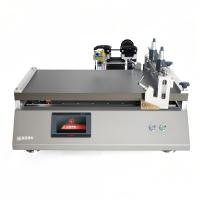
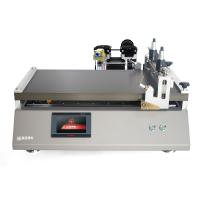
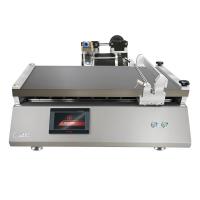
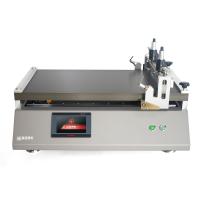
The laboratory is doing well, and it overturns frequently as soon as it arrives at the pilot line - this is a nightmare that many R&D personnel have experienced.
A well-coated formula on the flat coater, on the roll-to-roll pilot line, either the thickness is not right, or the surface is full of defects, or it simply cannot be coated. What's the problem? It's not that the formula can't work, it's that there is a gap between the laboratory process and the pilot process that needs to be crossed with care.
Today we will talk about how to successfully scale the samples made by the small flatbed coating machine in the laboratory to the roll-to-roll pilot test.
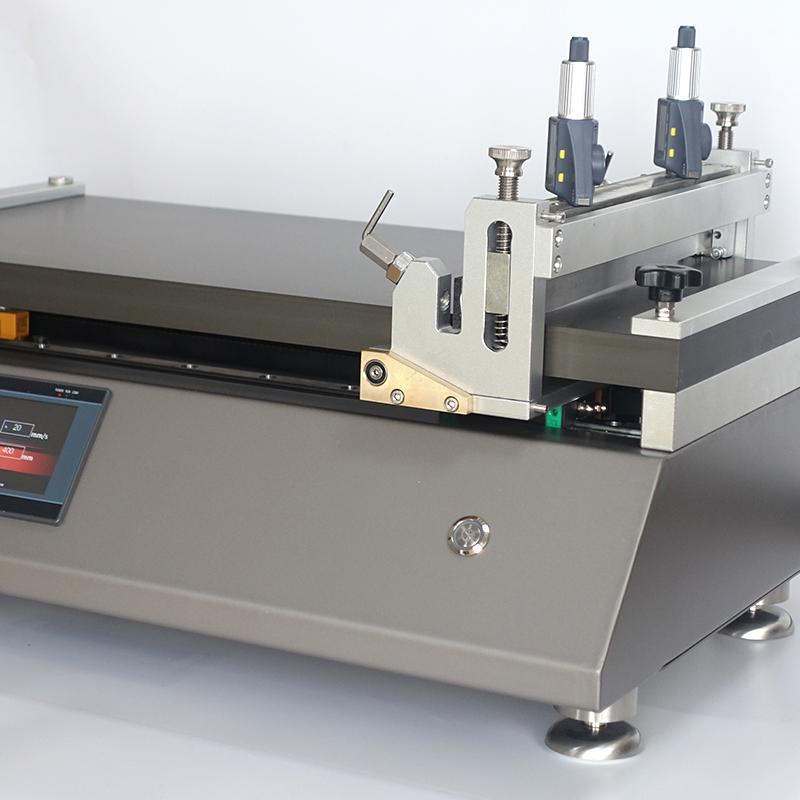
1. First recognize a fact: tablet and roll to roll, the essence is two different things
Many people take it for granted that the flatbed coating machine is a smaller version of roll-to-roll, and the parameters on the small machine can be directly enlarged.
This is the biggest misconception.
Although flat plate coating and roll-to-roll coating are both called coatings, the logic of fluid mechanics is completely different:
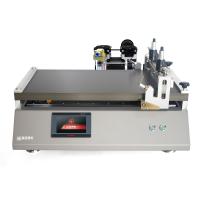
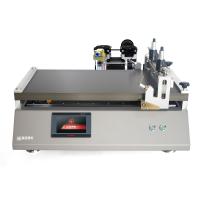
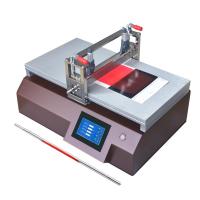
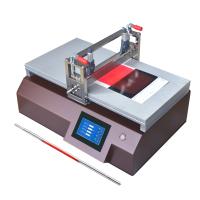
Flat Coating (Wire Bar/Scraper):The substrate is stationary and the coating head is moving. The slurry is quantitatively scraped onto the substrate, and the whole process is intermittent.
Roll-to-roll coating (slit/slightly concave/transferred):The substrate is in continuous motion and the coating head is stationary. The slurry is continuously transferred to the substrate under the combined action of shear and pressure.
One is "pushing and walking" and the other is "continuous flow". The stress state, rheological behavior and drying dynamics of the slurry in the two modes are different.
Therefore, amplification is not a simple multiplication multiple, but a transformation of process logic.
2. Before zooming in, do these four things on the tablet
Before handing over the formula to the pilot line, the flat coating stage can be done a few more steps to pave the way for scale-up.
1. Find out the "temper" of the slurry
Roll-to-roll coating is extremely sensitive to the rheology of the slurry. You can observe it roughly on a tablet, but if you really want to zoom in, you need more systematic data:
Viscosity vs Shear Rate Curve:Is your slurry thinning or thickening shear? How fast does it thin? This determines whether it can flow in the slit.
Thixotropy:The slurry thickens after resting and thinns after stirring, how fast does this recovery speed? When roll-to-roll coating, the slurry is constantly stirred in the tank and pipeline, and too strong thixotropy will lead to unstable coating volume.
Solids and solvent ratio:The slower volatilization of solvent on the plate may have little effect, but the roll-to-roll coating speed is fast, and the volatilization of the solvent too fast will cause the die to block and dry edges.
Suggestion: If conditions permit, send some slurry for rheology testing. Or at least do comparative experiments with different solids content and different solvents on the flat plate to observe the changing trend of the coating window.
2. Find the "Coating Window"
The coating window is simply the range of parameters that can be applied with a good film.
On the tablet, you can deliberately explore the boundaries:
The speed goes from slow to fast, when do the stripes start to appear when they are applied?
Is the thickness change linear from small to large?
How much difference is the result when the slurry is left to rest for different times before being applied?
These boundary data are the direction beacon for debugging when they reach the pilot line. For example, if the plate exceeds 50mm/s, there will be stripes, and the pilot line starts at 1m/s, you know that you must adjust the slurry formula, and you can't be hard.
3. Record the relationship between dry film thickness and wet film thickness
Is it easy to measure the thickness of the moisture film on the flat plate? It is not easy. But you can think differently:
Record the scraper gap/line rod number, solid content, dry film thickness of each coating, and reverse wet film thickness and shrinkage.
This shrinkage rate is still valuable for reference at the pilot line. Although absolute values may not match, the trend of shrinkage (e.g., a 10% increase in solids and a thickness increase) can guide the initial parameter setting of the pilot.
4. Do a drying kinetics test
A hot table or a small oven can be used on the plate to simulate drying behavior at different temperatures:
At what degree does surface crust begin?
How many degrees dry the fastest but not bubbling?
How big is the drying difference between thick film and film?
This data directly guides the temperature zone setting of the pilot line oven. The low temperature and slow drying effect is found on the tablet, and the first oven of the pilot line should not be turned on too high a temperature.
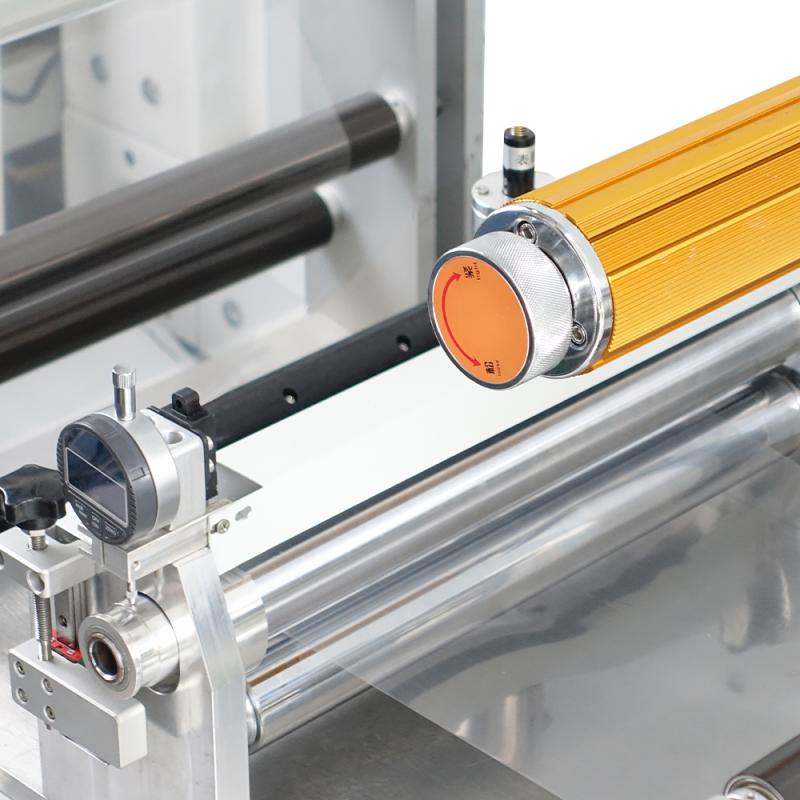
3. From tablet to roll-to-roll, which parameters can be used directly and which need to be refound?
parameters that can be directly referenced
Final dry film thickness: The target dry film thickness of the pilot line, consistent on the flat plate.
Solid content range: The solid content that can be painted on the flat plate can be coated with a high probability that the pilot line can also be coated (but the pipeline conveying capacity should be considered).
Substrate type: The same substrate, hydrophobic, surface energy, and treatment methods can be used.
parameters that need to be re-optimized
Coating speed:A few centimeters per second on the tablet and a few meters per second on the pilot line are not an order of magnitude at all. As the speed changes, the shear rate changes, and the rheological performance of the slurry also changes. The pilot line should start slowly and gradually find the boundary.
Wet film thickness:The gap between the flat scraper and the slit gap in the pilot test cannot be directly converted. Because the plate is "scraped", and the pilot slit is "squeezed", the pressure is different. The pilot line should be adjusted down from the theoretical calculation value, and then corrected after actual measurement.
Drying curve:The heating table on the plate is single-sided heating, and the pilot oven is suspended blowing, and the heat transfer mode is completely different. The oven temperature of the pilot line needs to be re-explored, but the "crust temperature" and "bubbling temperature" on the plate can be referred to as the boundary conditions.
Slurry supply:The flatbed is manually loaded, and the pilot line is pumped. The type of pump (progressive cavity pump, gear pump), line length, and pressure fluctuations can affect coating stability.
4. Typical steps of pilot scale-up
If you are preparing to transfer the tablet sample to the pilot line, you can refer to the following process:
Step 1: Slurry pretreatment
The filtration requirements for slurry in the pilot line are higher than those of flat plates. Before the slurry feeds the tank, it must be sifted (generally 200 mesh or more) to filter out large particles and gel particles. The particles on the slab may be just a small dot, and the particles on the pilot line are stuck in the slit as a scratch that runs through the entire width.
Step 2: Start slowly
When the pilot line starts, start from the lowest speed (such as 0.5m/s or 1m/s), use the clearance/flow rate confirmed on the plate as the initial value, and apply a piece of paper.
At this time, don't pursue efficiency, the focus is to see: can the slurry flow out steadily? Does the applied film look like the film on the flatbed? Are there macro flaws?
Step 3: Gradually speed up
After confirming that the low speed is stable, the speed is gradually increased, increasing by 20%-30% each time, and the change of coating state is observed.
You will notice that when the speed reaches a certain point, longitudinal streaks or uneven edges begin to appear. This point is the limit speed of the current slurry. If you want to speed it up further, you have to adjust the slurry formulation (e.g., reduce viscosity, adjust the rate of solvent volatilization).
Step 4: Drying curve matching
The speed is set, and the oven is adjusted. Generally, the pilot line oven is divided into several sections, and the temperature is set from low to high.
Refer to the drying data on the plate: the hot table on the plate is 100°C without crusting, and the oven in the first section of the pilot line can be set to 80-90°C; The plate is thoroughly dried at 120°C, and the last section can be set to 110-120°C. Smooth transitions in the middle sections.
Step 5: Debugging of winding and tension
This is the most easily overlooked link by tablet users.
Flat coating has no tension issues, but roll-to-roll does. If the tension is too large, the substrate will be stretched and deformed or even broken; The tension is too small, the winding is uneven, and the coating surface is crushed.
When debugging the pilot line, it is necessary to find a suitable tension range to allow the substrate to run smoothly but not stretch. This depends on experience, and you can also refer to the recommended tension value provided by the substrate manufacturer.
5. Common amplification problems and countermeasures
Problem 1: The thickness of the pilot line is much thicker than that of the flat plate
Reason: When the pilot slit coating, the flow rate of the pump is large, or the substrate speed is slow, and the slurry per unit area is accepted.
Countermeasure: Reduce the pump speed or increase the speed of the substrate. If it is a micro-concave coating, check whether the rotation speed of the micro-concave roller matches.
Question 2: The pilot line is painted with vertical stripes
Cause: There are bubbles or particles in the slurry; there is dirt on the lip of the die; The slurry leveling is not enough, and it cannot keep up with the speed of the substrate.
Countermeasures: slurry degassing treatment; Cleaning dies; Reduce speed or adjust slurry viscosity.
Problem 3: The edges are thick and the middle is thin
Causes: die head gasket design problems; Edge effect (rapid volatilization of solvents leading to edge concentration).
Countermeasures: Adjust the shape of the gasket (some pilot lines use notched gaskets to compensate for the edges); Edge plus auxiliary airflow to slow down volatilization.
Problem 4: The coating cracks after drying
Reason: Drying too quickly, the solvent will not have time to run out of the surface crust, and the internal stress will crack.
Countermeasures: Reduce the temperature of the oven in the first section, increase the solvent saturation concentration (turn off the small exhaust air), and let the coating dry slowly.
Problem 5: The coating is embossed after winding
Cause: Too much tension, or too tight reeling, the coating and the substrate on the back press together to leave an imprint.
Countermeasures: reduce the tension of winding up; Addition of a separator film (protective coating); Adjust the retraction angle.
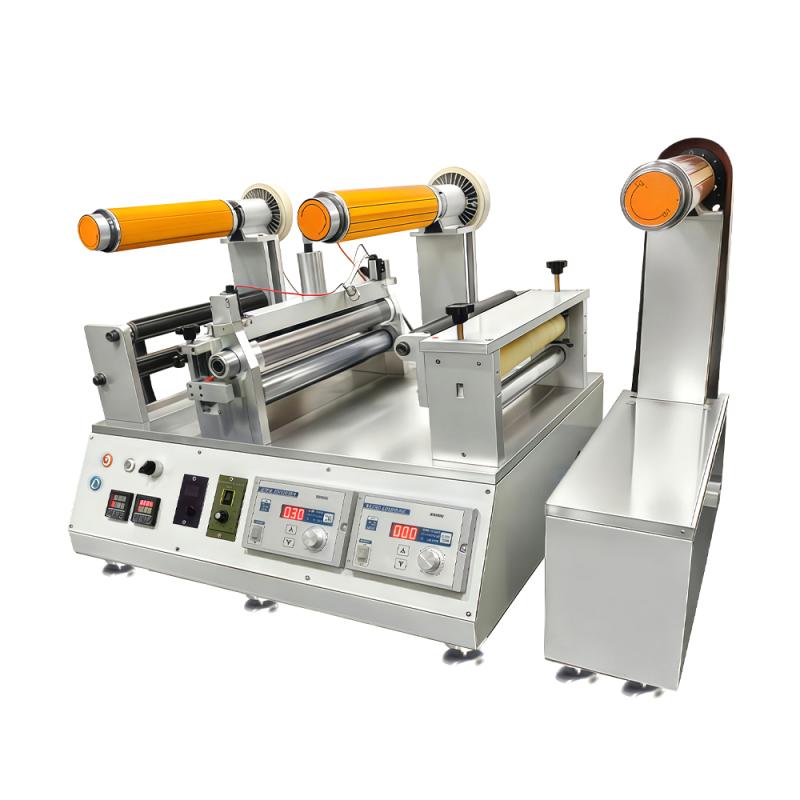
6. Be mentally prepared
From tablet to roll, it is not a one-time success. The essence of pilot scale-up is to use small batches of trial and error to accumulate data for mass production.
Even if it is repeated a hundred times on the tablet, there may be moths on the pilot line. This is not a failure, it is the only way to develop a process. Every time you encounter a problem, solve it, record it, and your craft package will be more perfect.
Flat coating gives you proof of formula feasibility; Roll-to-roll gives you a validation of industrialization capabilities. The combination of the two can truly turn a good formula into a product.