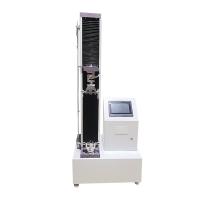
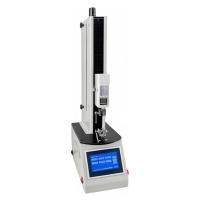
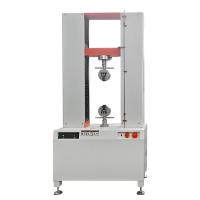
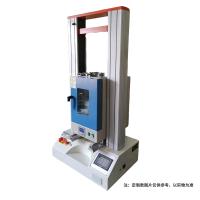
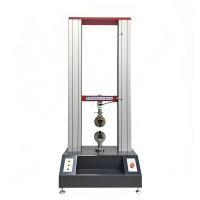
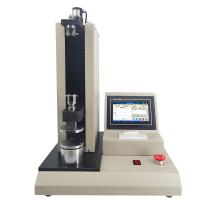
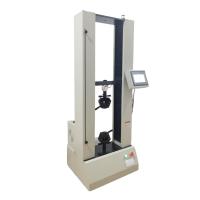
As the basic equipment for material mechanical property testing, the accuracy of the test results directly affects the judgment of product quality and the decision of R&D direction. In the process of assisting many laboratories to build test systems, we found that novice operators often cause data failure or even equipment damage due to some seemingly small operating deviations. This article aims to dissect several common operational mistakes and provide scientific correction solutions.
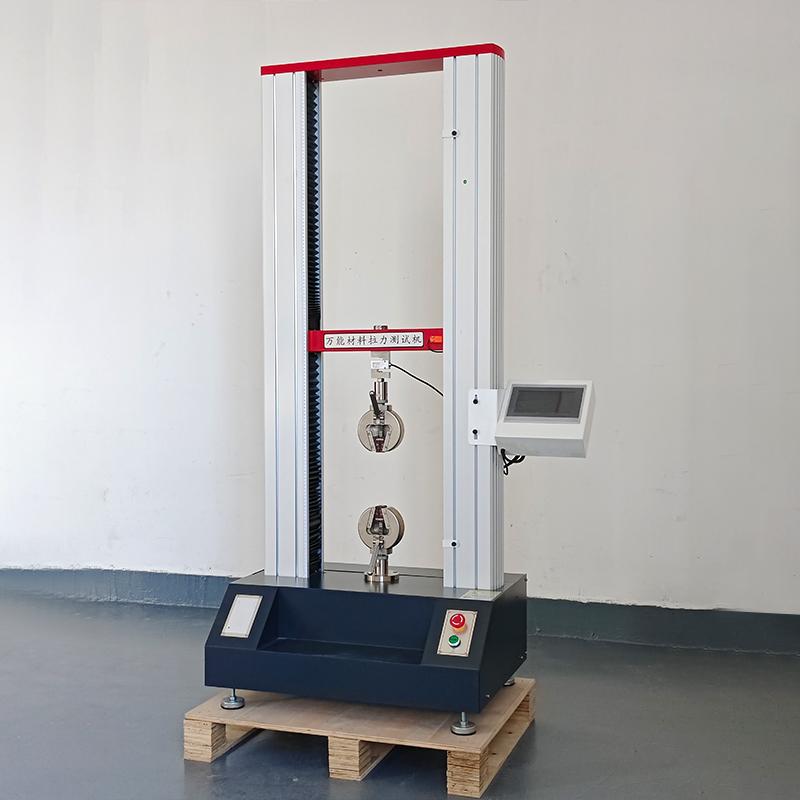
Myth 1: The arbitrariness of the clamping distance
Many novices often rely on visual or experience to roughly locate the specimen holding distance. However, the initial clamping distance (gauge) is the benchmark for strain calculations. If the clamping distance is large or small, the calculated elongation at break will cause systematic deviations.
Corrective plan:Strictly follow the provisions of testing standards such as ASTM or GB/T series. When entering test parameters, be sure to check the clamping spacing using a high-precision ruler or the device's own measuring system. For the use of extensometers, ensure that the blade is blessed at the exact position of the specimen gauge line and avoid clamping in the transition arc or inside the fixture.
Myth 2: Ignore force calibration and sensor range
It is a common risk point to mistakenly believe that the equipment has always been accurate from the factory, and that it is not routinely calibrated for a long time. The other extreme is to test very light films or filaments with a large number of range sensors, resulting in a test force value of less than 0.5% of the sensor's full scale, where the nonlinear error of the sensor will be dramatically amplified.
Corrective plan:Establish daily calibration habits, and after starting and warming up every day, you can use standard weights for simple qualitative verification of force value. When selecting a sensor, ensure that the test force value is between 20% and 80% of the sensor range, which is the range where the sensor linearity is good. If the force value of the specimen is unknown, a pre-test should be carried out first to select the appropriate sensor according to the peak force.
Myth 3: The off-axis force of the specimen clamping
The failure to coincide with the centerline of the upper and lower fixtures during operation results in non-axial shear or bending stresses during stretching. This off-axis force will cause the specimen to break in non-standard positions, and the measured tensile strength is often lower than the true value.
Corrective plan:Before holding the specimen, it is adjusted by the alignment mark on the fixture or using a laser aligner. When clamping, the upper fixture should be pre-tightened first, and the specimen should be used to make it naturally hang down and center, and then the lower fixture should be clamped. For brittle materials, it is recommended to paste thin gaskets on the clamping surface to avoid damage to the end of the specimen caused by excessive clamping force and early fracture.
Myth 4: The physical meaning of speed control is confusing
"Tensile speed" is simply understood as the speed at which the beam moves, ignoring its essential difference from strain control. For specimens with different gauge, the same beam speed means a completely different strain rate (amount of deformation per unit time), which can significantly affect the test results of viscoelastic materials such as polymers.
Corrective plan:Clarify whether the test standard requires a constant beam speed or a constant strain rate. If the standard requires a strain rate, it is according to the formula v = L₀ × ė Calculate the beam speed, where: v is the beam speed,L₀ is the initial gauge,ė is the set strain rate. Do not apply the same speed to tests with different gauge.

Myth 5: Interception and revision of data processing
After the test, the "maximum value" displayed by the software is read directly as the result, without observing the force-deformation curve. If the curve has abnormal oscillations or false peaks near the maximum value, the data read directly will be misleading. In addition, the determination of the location of the fracture should be ignored, and if the fracture occurs inside the fixture or where there is an obvious defect, this data should be excluded.
Corrective plan:Develop the habit of "looking at the curve first, then reading the data". After confirming that the fracture form is valid (usually a break in the middle area of the gauge), the data is saved. For repeatable tests, when calculating the mean and standard deviation, the data modification rule should be followed, for example, the tensile strength is usually revised to 0.1 MPa or 1 MPa, and avoid leaving too many invalid places after the decimal point.
Mastering the above points can not only effectively extend the service life of the tensile testing machine, but also ensure the authenticity and traceability of the test data. Every standardized operation is an accurate measurement of the essential properties of the material.