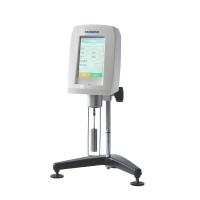
Before the material is purchased and put into the warehouse, corresponding inspection and acceptance should be carried out to avoid possible quality accidents during the coating process, resulting in production delays and a series of economic losses. Product sampling is in accordance with GB3186-88 The implementation and testing items are described as follows.
1. Appearance
Visually observe whether there is delamination, muddyness, change of tone, gelatinization, regrouping and serious subsidence of the material. Corresponding inspections should also be carried out for the removal of materials that have been stored for a long time or have reached or exceeded the storage period. Generally, the storage period of paint products is 6 to 12 months. Due to the high density of the frequency material, flow drop will inevitably occur during the storage process. It is soft and the scraper is easy to insert, then the sedimentation layer is easy to be traced and re-dispersed, and the paint can continue to be used after other properties are checked.
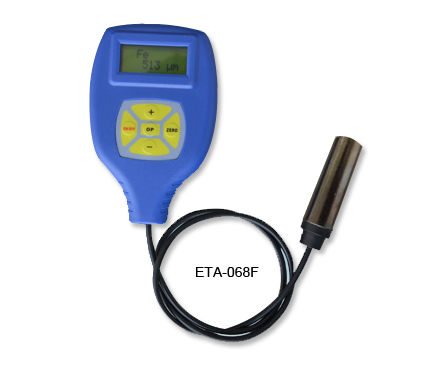
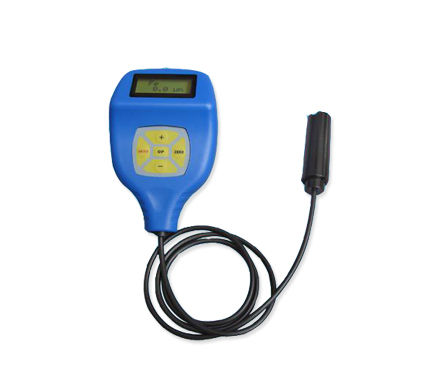
The sedimentation and agglomeration of the coating is also a means to evaluate the storage stability of the coating. The degree of settlement can be measured by a dynamometer (Figure 8-1). Move slowly, the instrument head is gradually pressed into the sediment, and the Recorder will record the resistance and depth of the probe when it is inserted into the sediment, so as to judge the hardness and thickness of the sediment. According to the measured penetration force of the probe , can determine the ability of the sediment to be re-stirred and dispersed, and the corresponding relationship is shown in Table 9-1. This dynamometer can also be used to measure the sedimentation amount within a certain period of time, and the relationship between the sedimentation amount and time is recorded by the Recorder. (Related instruments: Hardness Tester, Thickness Gauge)
2. Viscosity (GB/T1723-93)
For the original paint that is evenly stirred, at the specified temperature (such as 25°C), use 4 cups to measure the time required for the paint to flow out of the cup in a linear manner. The volume of the cup is 100m1. The viscometer should be kept horizontal during the test. The paint liquid level is flush with the edge of the cup mouth (scraped with a glass rod), and the viscometer should be cleaned and dried with solvent after each use before testing the next sample.
Paint viscosity greatly affects the construction performance of paint. It is an important parameter for paint testing. The viscosity of the original paint is generally relatively high. Tu-4 cups can only be used to measure the paint with a viscosity below 150s. When diluting, it is also necessary to use Tu-4 cups to measure the viscosity in order to determine the paint dilution ratio under the construction viscosity. .

3. Fineness (GB/T6753.1-86)

The fineness seriously affects the smoothness, flatness and brightness of the paint film. Moreover, some pigments are easy to flocculate and return to coarseness during storage and dilution, so the detection of fineness becomes particularly important. Generally, the fineness is measured by a scraper Fineness Meter Test. Take a few drops of French material at the deepest end of the groove, hold the scraper perpendicular to the plate, and pull it quickly from the deep groove to the shallow part (≤3s), (related instrument: scraper Fineness Meter)
Make the paint sample fill the groove of the flat plate, within 5s, observe the exposed particles at an angle of sight of 15°~30° from the surface of the groove, write down the corresponding scale line, and within the adjacent demeanor line above the reading, no more than three particles (See Figure 8-2).
The fineness requirements of various coatings are as follows:
High decorative topcoat 15~20μm
Flat paint 30~40μm
Semi-gloss finish 25~35μm
Anti-rust primer≤50μm
4. Solid content
Dry the paint sample at the specified temperature to a constant weight, and calculate the percentage of the residual mass in the total mass of the sample. The solid content of the paint directly affects the richness and economic benefits of the coating film. (Related equipment: oven)
See Table 8-2 for the machine-drying specification temperature of different kinds of coatings when measuring the water content. See Table 8-3 for the water content of various coating products and the dilution rate from thinning to construction viscosity.