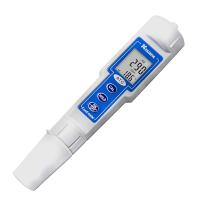
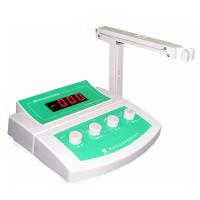
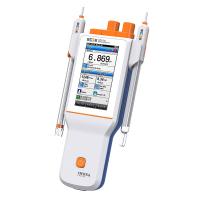
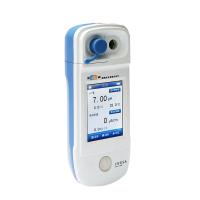
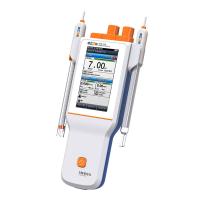
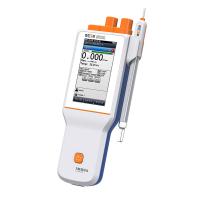
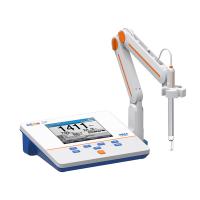
The national standard method is HG/T3335-1985. The following describes the conductivity meter measurement method, expressed in µS/cm.
Materials and Instruments
①Conductivity meter; ②Balance with a sensitivity of 0.1g; ③Beaker with a capacity of 15 omL; ④Thermometer 0~50°C, with a scale value of 0.5°C; ⑤Constant temperature Water Bath;
test methods
① Install and debug the conductivity meter according to the requirements of the conductivity meter instruction manual.
② Prepare 1oOmL electrophoretic paint solution in a beaker according to the product standard requirements (or directly extract about 1oOmL bad liquid with known solid content from the electrophoresis tank), and keep the temperature at (25±0.5) °C on a constant temperature Water Bath.
③Insert the conductivity electrode calibrated according to the instruction manual into the electrophoretic paint solution to be tested at a constant temperature, and operate according to the requirements of the instruction manual (the conductivity electrode constant adjustment knob of the conductivity meter must point to the calibrated conductivity electrode constant value). Read out the pointer to indicate the reading, repeat the measurement three times, and take the average value, which is the conductivity of the electrophoretic paint solution under test.
Accuracy
The difference between the conductivity value and the average value of each parallel measurement shall not exceed 3%, otherwise it shall be re-measured.
notes
① When the DDs-11A or Leici 27 conductivity meter measures the conductivity of the electrophoretic paint solution, the conductivity electrode should be calibrated first to obtain the conductivity electrode constant, and then measure the conductivity of the electrophoretic paint solution. The conductivity (µS/cm) of the measured electrophoretic paint solution is calculated as follows:
K-QS
In the formula, S is the electrical conductivity of the electrophoretic paint solution, µS;
K—conductivity of electrophoretic paint solution, µS/cm;
A conductance cell constant, 1/cm.
Note: A. Calibration of the conductance cell constant can be carried out regularly according to the usage conditions. When the conductance cell constant is adjusted unchanged at ordinary times, it is better to adjust the conductance cell constant knob once and not adjust it again, so as to reduce unnecessary cell constant adjustment errors.
a Potassium chloride solution to calibrate the conductivity cell constant, the concentration is 0.01mol/L.
② If the conductivity electrode constant changes due to paint liquid pollution, place the conductivity electrode in 10% NaOH solution, boil for 10 minutes, rinse with distilled water, and then calibrate until it returns to the original constant. If the original value cannot be restored after repeated several times, it can be measured according to the newly calibrated value.
③ In order to avoid contamination of the conductivity electrode, it can be soaked in 10% NaOH solution for 10 minutes after each use, then rinsed with distilled water, and then stored in distilled water.