Non-volatile matter is the mass fraction of the residue obtained from the volatilization of the sample under the specified test conditions. The non-volatile content of the sample is not an absolute quantity, it depends on the heating temperature and time used in the determination. Due to the retention of solvent, thermal decomposition and volatilization of low molecular weight components, the obtained non-volatile residue content is only a relative value rather than a true value. Therefore, the following methods are mainly used for testing different batches of similar products. For the determination of paints, varnishes, paint bases for paints and varnishes, polymer dispersions and polycondensation resins such as phenolic resins (resol, novolak resin solutions, etc.) and those containing pigments, fillers and other additives (such as thickeners) adjuvant and coalescent) dispersion method of non-volatile content.
equipment
Common laboratory instruments and equipment and the following instruments and equipment.
(l) Suitable for paints, varnishes, binders and polymer dispersions for paints and varnishes
Flat-bottomed dishes of metal or glass, with a diameter of (75 ± 5) mm and a height of at least 5 mm at the rim.
Dishes of different diameters may also be used upon agreement by the parties concerned, and the diameter of the agreed upon dispensing shall be within the range of ±5% of the specified value.
Note: ① For latex samples, it is recommended to use a dish with a lid.
② Viscous polymer dispersion or emulsion, it is recommended to use about 0.1mm thick aluminum foil. Cut it into a rectangle with a size of about (70±10)mmx(120±10)mm that can be folded in half, and spread the viscous liquid completely by gently squeezing the two folded parts.
(2) Suitable for liquid cross-linked resin (phenolic resin)
Flat-bottomed dish of metal or glass, the inner diameter of the bottom surface is (75 ± 1) mm, and the height of the edge is at least 5 mm.
Dishes with different diameters can also be used. At this time, use the following formula to calculate the mass m of the sample used for the test, and the unit is g (grams):

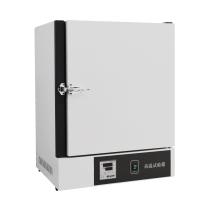
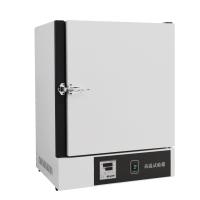
(3) Oven
The test can be carried out under safe conditions. For the maximum temperature of 150°C, it can be kept within ±2°C of the specified or agreed temperature; for the temperature of 150~200°C, it can be kept within the specified or agreed temperature. within the range of soil 3.5°C. The oven should be equipped with forced ventilation. The exception is phenolic resins, in which case a natural convection oven with perforated metal shelves at 1/3 the height of the oven can be used.
WARNING: To prevent explosion or fire, samples containing flammable volatile substances should be handled with care. It should be implemented in accordance with relevant national regulations.
For some applications samples are better dried under vacuum. At this time, the test conditions should be negotiated or carried out according to the method specified in GB/T8298-2001. For referee tests, ovens of the same construction shall be used in all respects.
(4) Analytical balance
Can accurately weigh to 1mg, 0.1mg.
(5) Drying Oven
Packed with a suitable desiccant, such as dry silica gel impregnated with cobalt chloride.
sampling
According to the provisions of GB/T3186-2006, take representative samples of paints, varnishes and paint bases for paints and varnishes. Take representative samples of polymer dispersions and latex samples as specified in ISO 123. According to the provisions of GB/T20777-2006, inspect and prepare samples of paints and varnishes, and the sampling volume shall comply with the relevant provisions.
experiment procedure
Two parallel determinations were performed. Degrease and clean the utensils. In order to improve the measurement accuracy, it is recommended to dry the utensils in an oven at a specified or agreed temperature for a specified or agreed time. Then place in a desiccator until use.
Weigh the mass of the clean and dry dish (m0), weigh the sample to be tested (m,) and spread it evenly in the dish (all weighing is accurate to 1 mg). For high-viscosity samples (when the shear rate is 100s-', the viscosity 1≥500mPa·s, or the outflow time t≥74s measured with a 6mm outFlow Cup according to GB/T6753.4-1998) or crusted samples, Spread the specimen flat with a weighed wire such as an unpainted bent paper clip. If necessary, add another 2mL of suitable solvent.
Polycondensation resins used in paints and varnishes and other uses (e.g. abrasives, friction linings, foundry adhesives, molding materials), in which larger sample sizes are weighed because thicker The coatings were tested so that the units of the polycondensation resin could undergo cross-linking reactions. For comparative tests, the coating thickness of the samples to be tested in the dish should be the same. Therefore, the diameter of the dish should be (75 ± 1) mm, or calculated according to the given formula.
Note: Whether the sample to be tested is completely paved and the time of paving has a great influence on the non-volatile content. If the sample to be tested is not completely paved due to reasons such as high viscosity, the apparent non-volatile content will increase. In order to improve the measurement accuracy, it is recommended to add 2 mL of suitable solvent for volatiles.
It is recommended that the dish should be covered during the weighing process.
For volatile samples, it is recommended to put the well-mixed sample into a bottle with a stopper or into a weighing straw or a 10mL syringe without a needle, and weigh the sample by the subtraction method (accurate to 1mg) into the dish, and spread on the bottom of the dish.
If a solvent is added, it is recommended to place the dish containing the sample at room temperature for 10-15min.
Aqueous systems such as polymer dispersions and latexes will splash when heated. This is because the surface will form a skin, and the skin will also be affected by the temperature, air velocity and relative humidity in the oven. In this case, the thickness of the material layer in the dish should be as thin as possible.
After the weighing is completed and the diluent is added, the dish is transferred to an oven adjusted to the specified or agreed temperature in advance, and kept for the specified or agreed heating time.
After heating, transfer the dish to a desiccator to cool to room temperature, or place it in a dust-free atmosphere to cool.
NOTE: Failure to use a desiccator will affect the precision of the method. Weigh the mass (m2) of the dish and the remainder, accurate to 1m9.
Supplementary test conditions
For the implementation of this test method, the following test parameters shall be specified, as appropriate, see Tables 21-10 and 21-11.

representation of results
Use the following formula to calculate the mass fraction w of non-volatile matter, and the value is expressed in %

If the difference between the two results (two determinations) for paints, varnishes and binders is greater than 2% (relative to the mean value) or the difference between the two results for polymer dispersions is greater than 0.5%, for example 53.7% and 53.1%. It is necessary to redo the test steps, calculate the average of two valid results (two determinations), and report the test results with an accuracy of 0.1%.
precision
(1) Repeatability limit (r)
Repeatability limit r means that under repeatability conditions, the absolute difference between two single test results (each single test result is the average value of two determinations) obtained by using this test method is lower than this limit , with a confidence level of 95%. Reproducible conditions refer to the same laboratory,
Conditions under which the same test specimen is tested at short intervals of time by the same operator using a standard test method. This test method is used: For paints, varnishes and paint bases, r is 2% of the average of the two test results. For polymer dispersions, r is 0.6% of the average of the two test results.
(2) Reproducibility limit (R)
Reproducibility limit R means that under reproducibility conditions, when the absolute difference of two single test results (each single test result is the average value of two determinations) obtained by using this test method is lower than this limit, A 95% confidence level can be expected. Reproducibility conditions refer to the conditions under which operators in different laboratories use standard test methods to measure the same sample. This test method is used: for paints, varnishes and binders, R is 4% of the average of the two test results, and for polymer dispersions, R is 1% of the average of the two test results.