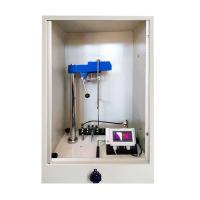
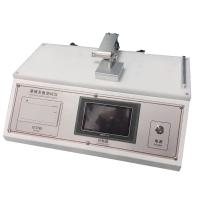
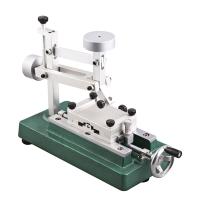
The hardness of the coating is related to the type of coating and the degree of curing of the coating. The coating hardness of oil paint and alkyd resin paint is lower, while the hardness of synthetic resin paint is higher. In some curing agent-cured coatings, the hardness of the coating is also related to the amount of curing agent used. In most cases, increasing the proportion of curing agent increases the hardness of the coating. At the same time, the flexibility and impact resistance of the coating increase. In addition, the degree of curing of the coating also directly affects its hardness value, that is, the hardness from small to large is a function of the time in the drying process of the coating, and the completely dry coating has its specific maximum value. hardness. If some self-drying coatings can be baked at an appropriate temperature, the hardness of the coating can also be improved to a certain extent.
The national standard analysis methods are: GB/T1730-93 "Paint Film Hardness Determination Method Pendulum Damping Test", GB/T6739-1996 "Paint Film Hardness Pencil Determination Method". Factory analysis methods include: double swing bar damping test, pencil scratch method.
pendulum hardness method
(1) Method points
It means that when the pendulum that touches the surface of the paint film swings at a certain period, if the surface is softer, the swing of the pendulum decays faster. On the contrary, the attenuation is slower, and the ratio of the damping time of the swing attenuation in the swing angle range to the damping time of the swing attenuation in the same swing angle range on the glass plate is usually used to represent the hardness of the paint film.
When two kinds of pendulum-type damping Testers of Konig and Persoz are used to test the hardness of the coating, the structure, weight, size, swing period and swing amplitude of the two pendulums are different. In addition , the interaction between the pendulum and the coating also depends on the complex elasticity and viscoelasticity of the coating, so between the measurement results of the two pendulums, i, ; can establish a general conversion relationship. Therefore, when measuring the damping time of a certain paint film in the product standard, only one pendulum instrument is specified.
(2) Factors to be considered in choosing a pendulum damping Tester
① Usually the damping time of the Koenig pendulum is close to half of that of Persaz;
②The Persaz pendulum may slip on surfaces with a low coefficient of friction, which will invalidate the results, but for general paints and varnishes, this situation is difficult to occur;
③The sub-environmental conditions have a great influence on the damping time of the paint film. Therefore, the test should be carried out under controlled temperature and humidity conditions, and without vibration and airflow. In addition, the thickness of the paint film and the material of the substrate also affect the damping time.
The structures of Koenig’s pendulum and Perthalz’s pendulum are shown in Fig. 21-18 and Fig. 21-19. Although their shapes are different, the main structure is connected with an open frame by a cross bar. A steel ball is used as a fulcrum, and the lower end of the frame forms a pointer-like tip.

The hardness of the paint film is tested by the pendulum method, and the paint should be painted on (90~100)mmX(100~.120)mmX(1.2~5)mm (according to JG40-62) float flat glass or polished flat glass Drying should be carried out according to the conditions and time specified in the product standard. Unless otherwise specified, the dry test panel should be dried at least under the environmental conditions of temperature (23 ± 2) ℃ and relative humidity (50 ± 5)%. Adjustment 16h, the entire test process should also be carried out under this condition.
(3) Instrument
①Double pendulum damping Tester complies with GB/T1730-93 regulations, ②Stopwatch division value 0.1s, ③Glass plate.
Before the test, the supporting steel ball should be wiped clean with a soft thick cloth (or tissue paper) moistened with ethyl alcohol. Place the pendulum under the same environmental conditions as the test panel for 10 minutes. The paint film of the panel to be tested should be placed upwards on a horizontal workbench, and then the pendulum rod is slowly lowered onto the test board. If the tips are not in the same vertical position, they shall be adjusted.
Deflect the pendulum at a certain angle (6° for the Koenig pendulum and 12° for the Persaz pendulum) without lateral displacement of the support shaft, and stop at the predetermined stop point. Then, release the pendulum, start the stopwatch, and record the time (s) when the swing ranges from 6° to 3° (Koenig pendulum) or from 12° to 4° (Persatz pendulum). Different, it can be measured at three different positions on the same test plate, and record the results of each measurement and the average of the three measurement results.
(4) calculation

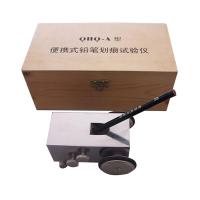
Pencil hardness test method
 A set of drawing pencil leads of known hardness is used to scratch the paint film. The hardness of the paint film can be expressed by the pencil hardness level that can penetrate the paint film to reach the substrate.
(1) Material instrument
A set of Zhonghua brand high-grade drawing pencils with hardness grades of 9H, 8H, 7H, 6H, 5H, 4H, 3H, 2H, H, F, HB, B, 2B, 3B, 4B, 5B, 6B, among which 9H is the most Hard, 6B is the softest. Drawing eraser, 400# water sandpaper, pencil sharpener, pencil Hardness Tester.
(2) Operation method
Manual methods or instrumental test methods can be used. Different operators may get different results by manual method, so the instrument test method should be used as the referee test.
Use a pencil sharpener to cut off the wooden shaft of the pencil, exposing the core of 3~6mm (do not loosen or scratch the lead), hold the pencil so that it is at 9o° to the surface of the 400# sandpaper, and keep drawing circles on the sandpaper to Rub the end of the lead until you obtain a flat end with sharp edges (the edges must not be chipped or chipped). The pencil should be rotated 18o° after each use, or re-sharpened before use
①Manually operate the test method as shown in Figure 21-20. Fix the painted sample on a horizontal surface, hold the sharpened lead, and make it form an angle of 45° with the surface of the paint film. degrees) push forward about 1cm at a speed of 1cm/s. Pencils of each level of hardness plow five marks, if two or more of them scratch the paint film, use a harder pencil to scratch until the pencil that does not plow the paint film is found, the hardness of the pencil represents Pencil hardness of the measured paint film
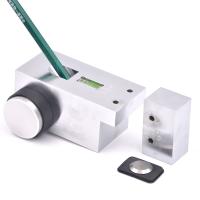
②Instrumental test Put the painted sample on the test piece table of the Tester, with the painted side facing upwards, adjust the vertical line passing through the weight center of the Tester to the intersection point between the pencil end and the paint film, and put the sharpened pencil Install it so that it forms an angle of 45° with the paint film, adjust the load on the pencil with a balance weight so that the pencil just touches the sample, tighten the stop screw so that the end of the pencil leaves the surface of the paint film, and place it on the weight platform (1±0.05)kg weight, loosen the stop screw so that the pencil end is in contact with the paint film. Move the moving arm of the test bench to move the sample and the pencil end 3mm in the opposite direction at a speed of about 0.5mm/s, then tighten the stop screw, turn the pencil 180° (to ensure that the end of the pen is not damaged) and change the sample Use this method (see Figure 21-21) to start testing from the hardest pencil, and replace it with a lower level of pencil one after another until only one of the five marks is found to damage the paint film. pencil, the pencil hardness of the measured paint film is represented by its lower level pencil. If the paint film is not plowed, use the pencil of this grade to represent the pencil hardness of the paint film to be tested.

③ The evaluation of the sample can be carried out in the following two ways,
A. The coating film is scratched. For two pencils whose hardness marks are adjacent to each other, find out that more than two coating films (including two lines) have been scratched on the substrate or the bottom layer and the pencils that are less than two lines, and the less than two lines. The pencil hardness label is used as the pencil hardness of the coating film, that is, the softer level of hardness that cuts through the two paint films.
B. Coating film scratches For two pencils whose hardness marks are adjacent to each other, after finding out the pencils whose coating film has been scratched more than two times (including two lines) and less than two lines, use the pencil hardness label less than two lines as Pencil hardness of the coating film.
Note: Scratches refer to tiny scratches on the surface of the coating film, but the phenomenon that the coating film is sunken due to pressure is not considered. If there is no scratch on the coating film at the test site, use an eraser to remove the carbon powder, and record the visual inspection at 45° to the surface of the test sample facing the direction perpendicular to the scratch. hurt.
indentation hardness test
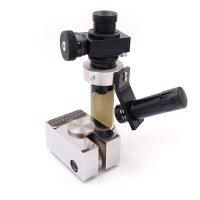
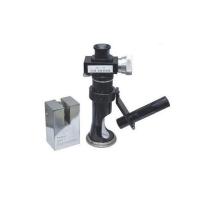
The indentation hardness of the coating refers to the ability to resist the pressure of the indenter into the organic coating. The indentation Hardness Tester is shown in Figure 21-22. Under a certain load, the higher the hardness of the coating, the stronger its ability to resist the pressure head from entering the organic coating, and the smaller the coating indentation. In order to achieve greater accuracy, when using this method to determine the coating hardness, the minimum allowable thickness of the coating should be such that the indentation depth does not exceed 3/4 of the coating thickness, so as to minimize the influence of the substrate.
Knoop indenter and Pfund indenter can be used to test the indentation hardness of the coating. The Knoop indenter is a diamond cone of specified size and the Fender indenter is a hemispherical quartz indenter or sapphire indenter of specified size. The hardness value provided by the former is expressed in Knoop hardness number (KHN). The latter provides hardness values in terms of the Phender hardness number (PHN), but the Knoop hardness number is more accurate than the Phender hardness number.
The indentation hardness test of the coating consists of two steps: the first step is to apply a load to the coating surface through the indenter, and the second step is to calculate the measured indentation value into a hardness number.
Calculation of the Knoop hardness number: