In actual use, household appliance control boards are often exposed to temperature fluctuations and alternating wet and dry environments at home—especially during humid seasons and temperature fluctuations day and night—making circuit boards prone to moisture absorption, condensation penetration, solder joint oxidation, deterioration of conformal coatings, and reduced insulation performance. Compared to constant damp heat, which only tests static moisture resistance, alternating damp heat simulates the full process of moisture absorption, condensation, and drying in real environments through periodic changes in temperature and humidity. It can effectively expose implicit quality issues such as micropores in circuit board coatings, poor interface adhesion, pin sealing defects, and insufficient circuit corrosion resistance. It is the most commonly used environmental testing item for home appliance motherboard reliability verification, process revision comparison, and batch quality screening.
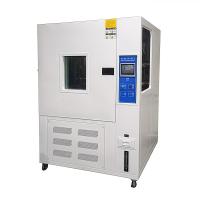
The test was conducted using a programmable constant temperature and humidity test chamber. The equipment must have stable multi-stage program operation capability and temperature and humidity follow-up control capabilities to ensure humidity does not drift or lose control during temperature adjustment and adjustment. During the calibration period, the sensor's air duct, humidification system, and drainage system operate normally, preventing abnormal conditions such as frost, water accumulation, and temperature and humidity overshoot during the test process. Test samples are finished control boards made from normal mass production processes, with no repairs, defects, or obvious appearance defects on the board. Dust and residual stains on the panel surface should be cleaned in advance to ensure the sample condition matches the actual mass production conditions. Before testing, the sample should be fully exposed to room temperature for recovery, with visual inspection and baseline tests of electrical function and insulation performance. Only after confirming the sample is in its original state should it be put into the chamber for testing. The entire test process should be unpowered to avoid condensation causing short circuits and breakdowns, which would affect test authenticity.
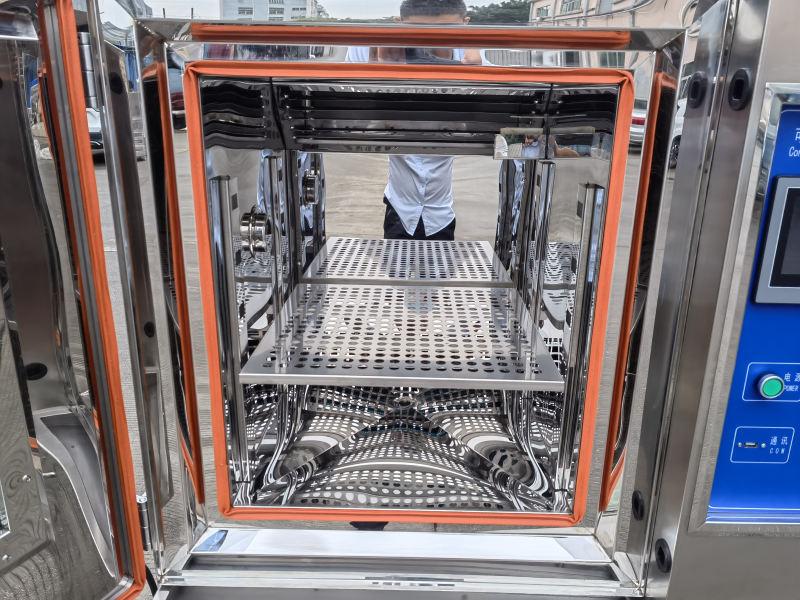
Sample placement follows unified practical standards: all circuit boards are placed suspended without sticking against walls, stacking, or blocking the cabinet's air vents. Uniform ventilation gaps are reserved between boards to ensure consistent airflow circulation, moisture absorption, and condensation conditions on each board surface. Components are placed facing upward to prevent moisture and water accumulation at pins and plug-in pads, eliminating false failures caused by local excessive corrosion and ensuring uniform and uniform testing conditions throughout.
The entire alternating wet heat program adopts the industry-standard 24-hour single cycle mode, with multiple operating stages running continuously and automatically, and a standard six-cycle complete cycle. The program is divided into four stages: heating and humidification, maintaining high temperature and high humidity, cooling condensation, and room temperature drying and recovery. The inter-section stable wait function is fully enabled, and timing must only begin after temperature and humidity stabilize and meet standards, to prevent parameter fluctuations from being counted in the valid test duration. During the heating phase, the temperature is raised at a constant rate while matching high humidity, allowing the circuit board substrate, paint layer, and gap structure to slowly absorb moisture, preventing rapid heating that could cause humidity to fail to keep up and operating conditions to be substandard. High temperature and humidity maintain constant temperature and humidity for long periods, allowing moisture to fully penetrate the coating and device interface, magnifying tiny process defects and filtering out samples with poor coating adhesion, insufficient sealing adhesive, and insufficient weld corrosion resistance. The cooling phase is the most critical part of the entire test. It is essential to control the cooling rate to drop at a constant rate. As the temperature drops, the moisture content in the air decreases, forming uniform micro-condensation on the panel surface, truly recreating the damp condensation conditions at night. Excessive cooling can cause large amounts of water to accumulate on the panel surface, leading to abnormal corrosion and distorted test data. Finally, it enters the drying recovery stage at room temperature, medium humidity, and moisture on the panel surface to naturally evaporate, completing a dry and wet alternating aging cycle. The entire program runs automatically and backwards without manual intervention.

After the test, samples should not be tested immediately; they should be left to rest in a normal temperature and humidity environment for a sufficient period to recover. Testing should only proceed after the condensation on the board surface has completely evaporated and the material properties have stabilized. Testing focuses on appearance and electrical performance, observing whether the board surface has defects such as mold, oxidation or blackening, weld joint corrosion, paint layer bubbling, peeling, delamination, and re-testing the control board's functions, signal response, insulation resistance, and leakage status, and comparing data differences before and after the test.
The final judgment is that there is no appearance deterioration, no structural delamination, no corrosion or mold, electrical functions are normal, and insulation performance shows no significant degradation. If the sample exhibits any issues such as coating failure, circuit corrosion, solder joint oxidation, abnormal functionality, insulation degradation, or leakage failure, it can be determined that the sample's moisture and heat resistance reliability is substandard.
In daily testing, most abnormal data and invalid tests stem from irregular operational details. If the program editor does not enable stable waiting, the cooling rate is set too quickly, the sample placement is crowded and blocks the air duct, the low-temperature section runs in high humidity, or program parameters are modified midway, all these can cause operating conditions to deviate from standards, resulting in false failures or defects that cannot be exposed. Strictly following the alternating cycle logic setting program, standardizing sample placement, and pre-no-load verification of equipment operating conditions can ensure good test repeatability and reliable data, accurately verifying the long-term resistance to humidity heat, aging, and condensation of the appliance control board.