In coating application, measuring wet film thickness (WFT) is one of the direct and effective means to prevent rework and coating failure. Construction personnel, inspectors, and standard-setters only need to master the calculation, measurement, and verification methods for wet film thickness to confirm whether the coating meets standards before curing. This article systematically explains the calculation logic, measurement methods, and practical application points for wet film thickness, helping you control coating quality from the source.
Why measure the thickness of the wet film during construction?
If the coating is applied too thin or too thick, the ideal time to detect it is during the application process, not after it has dried and cured. Real-time measurement of wet film thickness allows workers to quickly adjust spraying techniques, spray gun parameters, movement speed, overlap amplitude, and other variables.
Once the coating has cured and then thickness issues are corrected, it often results in additional labor costs, the risk of surface contamination, and may even affect adhesion and overall coating integrity. Spend 30 seconds performing wet film inspections during construction, which may save several hours of rework time afterward.

Wet Film vs. Dry Film: Why Are They Different?
Wet films contain solvents or water, and these volatile components evaporate during drying and curing, causing the film thickness to decrease. Therefore, the thickness of the wet film is usually greater than the residual dry film thickness (DFT) after curing.
The relationship between wet and dry films mainly depends on the volumetric solid content of the coating—that is, the portion of the liquid coating that ultimately remains to form a solid film. This data can usually be found in the coating manufacturer's Technical Data Sheet (TDS).
Key point: Volumetric solid content must be used, not weight solids.
Solid weight content measures mass, not volume, and cannot be used for accurate thickness conversion. Using incorrect values can lead to significant thickness errors.
How to calculate the target wet film thickness
Formula 1: Use paint directly (without thinner added)
When the paint is removed from the container and applied directly without dilution:
WFT = DFT ÷ (SV ÷ 100)
Among them:
WFT = wet film thickness
DFT = target dry film thickness
SV = Volumetric solid content of coating (%)
Example: Target dry film thickness 100 microns, volumetric solid content 60%
WFT = 100 ÷ 0.60 = 167微米
Formula 2: Paint after adding the thinner agent
Adding thinner increases the volume of the liquid, but usually does not increase the solid components. The effective volumetric solid content after mixing decreases, so a higher wet film thickness is needed to achieve the same dry film thickness.
WFT = DFT × (1 + t) ÷ (SV ÷ 100)
Among them:
t = ratio of thinner to paint volume (e.g., 10% thinner = 0.10)
Example: Target dry film thickness is 100 microns, volumetric solid content is 60%, add 10% diluent
WFT = 100 × 1.10 ÷ 0.60 = 183微米
Important note: The above calculations assume that the diluent does not contribute any volume solids. If additives containing solids or resins are added, the results may differ.
Practical case: Heavy anti-corrosion epoxy coating application
A certain construction worker needs to use epoxy coating with 65% volumetric solid content, achieving a dry film thickness of 150 microns (6 mils). To improve spray flowability, a 10% thinner is added.
Calculation process:
Target DFT: 150 microns
Volumetric solid content: 65% (0.65)
Thinner dosage: 10% (0.10)
WFT = 150 × 1.10 ÷ 0.65 = 165 ÷ 0.65 ≈ 254微米
Conclusion: Construction personnel should control the wet film thickness at about 250–260 microns to ensure the cured dry film target of 150 microns.
Why is diluted paint so easy to "deceive"?
Adding thinner increases the volume of liquid but does not increase the solid component. This means that to achieve the same dry film thickness, more wet film coatings are needed.
If no adjustments are made, the film left after solvent evaporation will be thinner than the specified value, which may lead to pinholes, reduced corrosion resistance, and even premature coating failure. Therefore, when using diluted coatings, measuring the thickness of the wet film is especially critical.
How to measure the thickness of the wet film
Once the target wet film thickness is determined, the next step is to conduct inspections during construction.
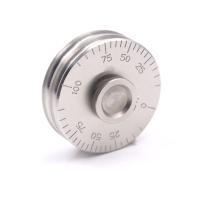
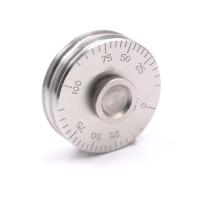
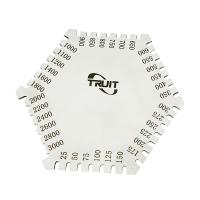
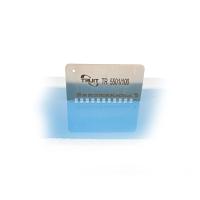
The standard tool for measuring wet film thickness is the wet film comb (notched gauge). It is simple, inexpensive, and can provide a thickness range immediately during construction.
How to use the wet film comb
A wet film comb is an aluminum, plastic, or stainless steel sheet with notches for different heights.
Steps:
Coating the coating
Immediately press the wet film comb vertically and smoothly into the wet membrane
Lift it vertically upward to avoid dragging or shaking to prevent disturbing the paint and causing inaccurate readings
Identify the highest notch covered by paint, and the next, higher notch that remains uncovered
The thickness of the wet film lies between these two values
Example: If the 8-mil notch is stained with wet paint and the 10-mil notch is clean, the wet film thickness is between 8–10 mil.
The wet film comb is not a precision instrument, but it is very practical for estimating the approximate thickness of the wet film, especially suitable for parts with limited size or geometry.
Precautions for using a wet film comb
Use only on smooth, unremarkable surfaces
When measuring on a curved surface, it is measured along the surface axis direction (i.e., along the curve length direction), rather than transversely
Coatings that dry extremely quickly may have already started to cure before measurement, resulting in inaccurate readings
Clean the wet film comb immediately after each measurement to prevent paint buildup
Refer to ASTM D4414 for the standard procedure for measuring the thickness of notched wet films
Wet film thickness is only an estimate; when is dry film needed to be verified?
Wet film inspection is very useful for process control, but it is still only an estimate of the final dry film thickness. Actual results may be affected by the following factors:
Coating shrinkage characteristics and curing mechanism — some coatings shrink more noticeably during curing
Substrate texture and surface roughness—anchor pattern depth affects effective film thickness
Construction methods and techniques—spraying patterns, overlaps, and spray gun distances all cause differences
Dilution and mixing accuracy—on-site mixing ratios may not be precise enough
Component geometry and edge effects—film thickness at edges, corners, and welds often differs
Leveling and flow—especially important for powder coatings, as they flow during curing
When to measure the cured dry film thickness
For critical applications—especially steel structures, immersion environments, or specifications requiring strict dry film thickness tolerances—the final dry film thickness should always be confirmed after curing using an appropriate dry film thickness gauge and relevant standards.
Wet membrane measurement during construction = process control
Cured dry film measurement = acceptance validation
Although the two serve different purposes, both are essential steps in quality assurance.
Frequently Asked Questions
Question 1: Where can the volumetric solid content be found?
It is usually listed in the coating manufacturer's Technical Data Sheet (TDS) and often in the physical performance table.
Question 2: Can the solid content by weight be used as a substitute?
No, you cannot. Weighted solid content cannot replace volumetric solid content used for calculating wet/dry film thickness. The two measure different attributes, and confusion can lead to incorrect results.
Question 3: Does dilution definitely reduce the thickness of the dry film?
If the wet film thickness remains unchanged, dilution usually leads to a decrease in dry film thickness because the solid is diluted by the additional solvent volume. To achieve the same dry film thickness after dilution, a higher wet film thickness is needed than when undiluted.
Question 4: What should I do if the wet membrane reading deviates from the target?
Immediately adjust spraying techniques, spray gun parameters, speed, or overlap. This is precisely the point of measuring wet membranes—to detect problems while they are still easy to solve.
Question 5: How many wet film readings should be measured?
Follow project specifications. It is generally recommended to measure at multiple locations in the coating area to reflect construction differences. Edges, corners, and areas near welds usually require extra attention.
Summary
Measuring the thickness of the wet film during construction is a simple and effective way to prevent costly rework and coating failure. Whether using calculators, reference charts, or manually applying formulas, the goal is the same: to confirm that the coated material is sufficient to achieve the specified dry film thickness.