In quality testing of alkyd ship paint, the Karl Fischer moisture analyzer is the core device for detecting trace moisture in coatings. However, the special chemical properties of alkyd resin can cause data deviations from conventional testing methods, making it one of the most common pitfalls in the industry. The alkyd ship paint system contains a large amount of hydroxyl groups and free carboxylic acids. These active groups are chemically reactive. If conventional liquid direct injection tests are used, the sample will react directly with Karl Fischer reagents, not just free moisture. The final moisture values will remain elevated and cannot serve as a basis for quality control.
For the system characteristics of alkyd ship paint, a reliable industry testing solution is to use a Carthée heating furnace for assisted testing. During testing, the coating sample is placed in a heating furnace, and precise temperature control allows the free moisture inside the sample to fully evaporate. Only water vapor is introduced into the titration cell for testing, so the sample body does not come into contact with Carteslai reagents, fundamentally eliminating chemical reaction interference caused by resins or organic acids, thereby ensuring the authenticity and stability of the test data to some extent. It is suitable for routine scenarios such as routine batch quality inspection and raw material acceptance of ship paint.
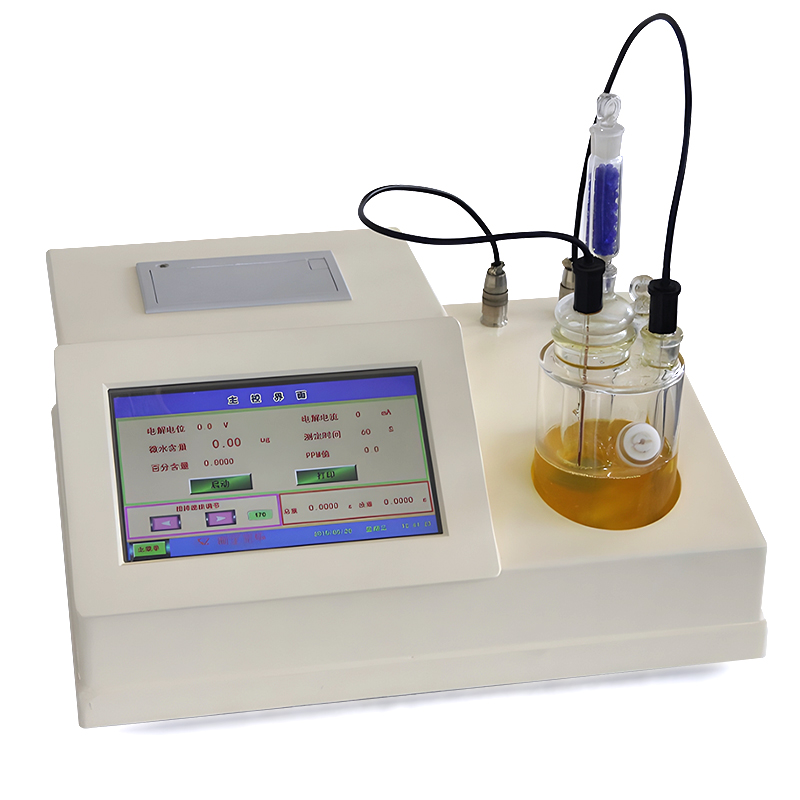
Temperature control is a key point during practical operation. If the heating temperature is too low, the moisture inside the coating cannot be fully released, resulting in low test results; Excessive temperatures can trigger thermal decomposition of alkyd resin, generating volatile impurities that interfere with titration, which also leads to data distortion. It is necessary to explore the temperature in advance by gradient adjustment and fixed test parameters to ensure data repeatability. At the same time, alkyd ship paint has high viscosity and pigment fillers tend to settle easily. Before sampling, thorough mixing and homogenization are required to avoid uneven sampling that could cause parallel sample deviations.
In addition, the entire testing process must be properly treated for environmental moisture protection; laboratory air humidity and titration tank sealing conditions can affect baseline stability. It is strictly forbidden to directly apply liquid injection parameters for ordinary solvent coatings. If special conditions require direct injection, prior marking and recovery verification must be completed, and testing must be carried out only after confirming no interference is necessary to ensure the accuracy and reliability of alkyd ship paint moisture detection data.



