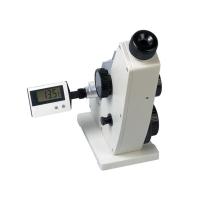
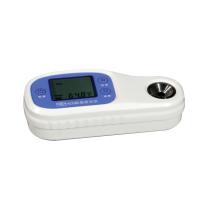
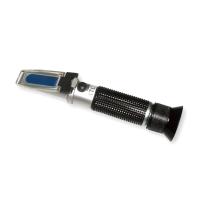
The refractometer measures honey moisture by relying on the relationship between the honey's refractive index and moisture content. It is frequently used for raw material purchasing and workshop storage, making it quick to learn. It doesn't take long to measure a sample.
Before testing, use distilled water to calibrate the instrument and wipe the prism clean, making sure not to leave any honey residue left from the previous test. Honey samples must be thoroughly mixed. If crystallized, they should only melt slowly at low temperatures, not baked at high temperatures, as high temperatures will destroy the honey components and the measured data will be inaccurate. Take a small sample and drop it onto the surface of the prism, cover it with a cover, and try not to wrap bubbles in them, as bubbles block the light and cause large fluctuations in readings. Once the temperature stabilizes, the value is read and converted into moisture.
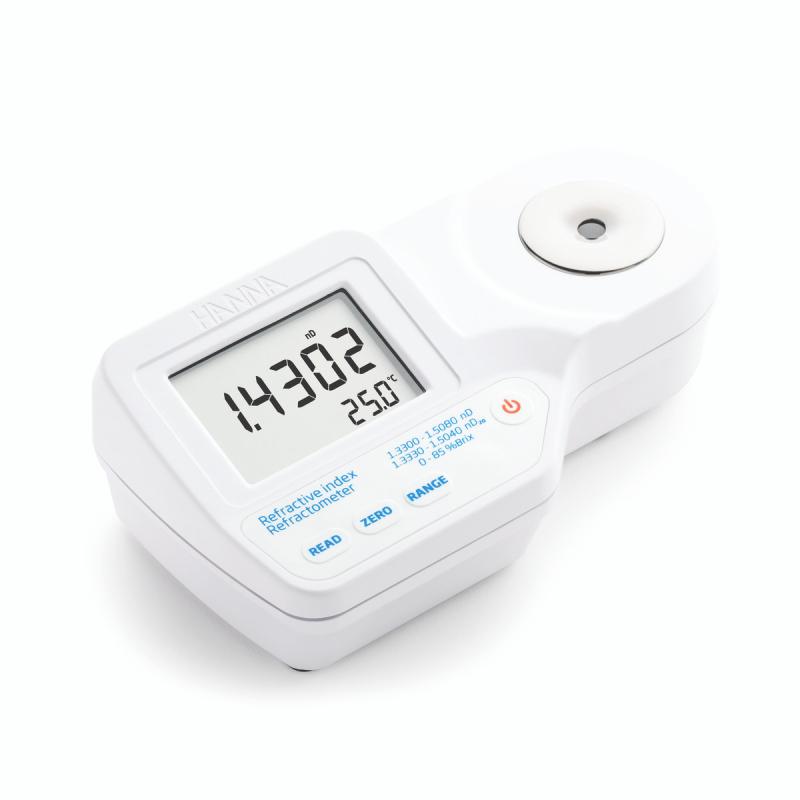
The advantage of this method is that it requires a small sampling volume, does not require complex pretreatment, and allows for rapid screening of large incoming materials. However, this is an indirect test. Different sugar compositions, fine crystals, or impurities in honey can all affect the refractive index. When controversial samples arise, the drying method must be used for verification. Refractometer results can only be used for rapid internal screening and cannot be used as arbitration data.
Temperature has a significant impact on refractive index. Instruments with temperature compensation can offset some deviations, while those without compensation require recording sample temperature and manually correcting results. After each measurement, the prism must be cleaned immediately. Once the honey dries, hard sugar stains form, which can easily scratch the prism surface and damage the equipment.
During the raw material harvesting stage, using a refractometer for initial screening is very suitable to quickly pick out batches with high moisture content and those prone to fermentation and spoilage. If you encounter samples with values stuck at the edge of the standard or abnormal data, keep them separately and retest and confirm using the benchmark method.