Phenomenon
During the spraying and drying process, the coating film on the vertical, inclined and curved surfaces forms a flow mark from top to bottom or a thickening phenomenon at the bottom edge, which is called sagging. According to the shape of flow marks, sagging can be divided into sinking, sagging, dripping, flowing and so on.
Sinking: During the period from the completion of coating to the drying period, the coating partially hangs down, showing a semicircular shape with uneven thickness, ice tumor shape, and wave shape.
Sag: A phenomenon in which excessive amounts of paint accumulate near the vertical surfaces and edges of the object to be coated, solidify and adhere firmly (Figure 9_1b).
Drip flow: drop-like flow marks appear in the coating film on the vertical surface of the object to be coated (Figure 9-1a).
Flowing: the large-area sagging phenomenon of the coating film on the vertical surface of the object to be coated (Figure 9-1c).

(2) Reason analysis
① The viscosity of the paint is too small, which is prone to sagging.
② Improper spraying operation, the Spray Gun is too close to the spraying surface, moves too slowly or stops, and sprays too thickly at one time. (Related Instruments: Thickness Gauge)
③ Improper setting of the Spray Gun, use a nozzle with a large paint output and an air hole with a low air output, the spraying air pressure is too low, the spray width has become smaller and the paint output has not been reduced accordingly.
④ The thinner used is not compatible with the paint, the volatilization is too slow or excessive moisture-proofing agent is used.
⑤ Poor spraying environment, lack of proper air flow and temperature. The ambient temperature is too low or the solvent vapor content in the surrounding air is too high.
⑥ When the "wet on wet" method is used, the time between spraying and drying is insufficient. (Related instrument: drying time Tester)
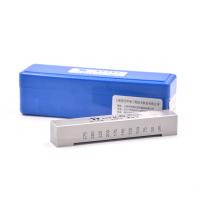
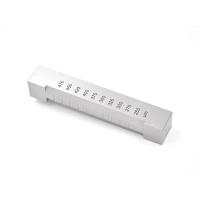
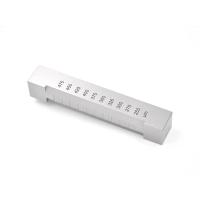
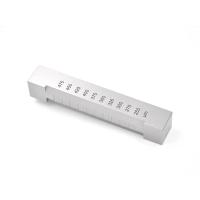
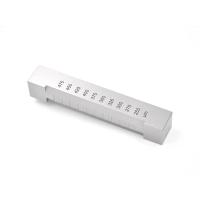
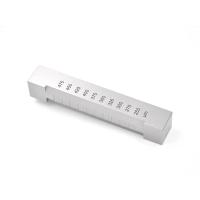
⑦The spraying is uneven, the weight of the spraying width is too large, and the resulting coating film is uneven in thickness. The thick surface dries slowly, and if the lower part is thin, it is easy to form sagging. (Related instruments: Sag Tester)
⑧When the paint is sprayed on a polluted or oily surface, or on a smooth old paint film, it is also prone to vertical flow.
(3) Prevention
①According to the paint construction requirements and construction environment, accurately adjust the construction viscosity of the paint.
② Apply the correct spraying technology (spray distance, angle, moving speed, trigger operation skills, mist beam direction, spray width overlap). Spray one layer thinly first, and then spray the second layer normally after the surface is dry.
③Set the Spray Gun correctly, check the Spray Gun to ensure its normal function (spray shape, atomization quality, constant air pressure, smooth air flow, liquid flow, etc.).
④ Increase the air temperature in the spray booth to ensure that the wind speed is normal (see the technical requirements for the spray booth).
⑤ Select the correct matching thinner specified by the paint manufacturer or a qualified thinner that evaporates quickly. Avoid excessive use in the case of desiccant.
⑥Make sure the surface to be coated is effectively cleaned before spraying, and the smooth paint surface should be pre-polished.
(4) Remedial measures
Allow the film to dry effectively, then wet sand and polish with very fine sandpaper (see Film Drying and Restoration), wet sand with paper, and respray. Note:
①If the underlying paint film is still soft after the initial smoothing, it should be allowed to dry completely before continuing to repair.
②If the vertical flow is still wet and the next layer can be sprayed, use a soft brush to gently brush the vertical flow, and then spray, it can also get the effect.