1. Putty residue
(l) phenomenon
When the car is repaired and painted, there will be scars or loss of light on the parts where the putty is scraped.
(2) Reason analysis
① Insufficient grinding of the parts where the putty has been scraped.
② The part where the putty has been scratched is not coated with primer, and the putty layer has a large amount of paint absorption, or its color is different from that of the primer layer.
③The shrinkage of the putty used is large, and it will continue to deform and even crack after curing.
(3) Preventive measures
① The putty part should be fully polished, and special attention should be paid to the smooth transition quality at the edge joint.
②Apply a sealing primer on the puttyed part or spray a topcoat first to seal the edge.
③ Choose putty with low shrinkage. For example, nitro putty has a large shrinkage and is only suitable for filling defects such as sand holes and scratches.
(4) Remedies
The same treatment method as sunken color and shadow defect.
2. Poor dryness and dryness
(1) phenomenon
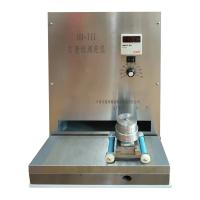
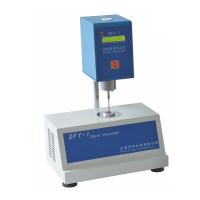
After the coating film is dried according to the process specification (self-drying or drying), it is not completely dry, and the coating film feels wet and soft when touched by hands, and the hardness does not reach the specified hardness or there are phenomena such as surface dryness and inner dryness. (Related instrument: drying time Tester)
(2) Reason analysis
① The mixing ratio of the two-component paint is incorrect.
② The ventilation in the self-drying place is too fast or too slow, the humidity is high, and the temperature is low; the technical state of the drying room is poor, the temperature is low, the drying room is loaded with too many objects to be dried, or workpieces with different heat capacities are in the same place Dry in a drying chamber.
③ Excessive use of slow volatile solvents or excessive use of moisture-proof agents. When spraying two-component polyurethane coatings, the thinner contains water, alcohol or acid.
④ The thickness of one spray coating is too large (especially for oxidation-cured coatings). The drying agent contained in the self-drying paint is invalid or the amount of surface-drying drying agent is too much.
⑤ There is wax, silicone oil, oil, water, etc. on the object to be coated.
⑤ There is wax, silicone oil, oil, water, etc. on the object to be coated.
(3) Preventive measures
① Two-component coatings must be formulated in strict accordance with the ratio required by the manufacturer, and the long-term storage of the curing agent must be prevented from failing.
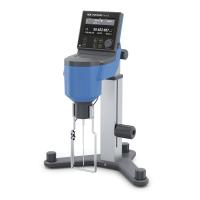
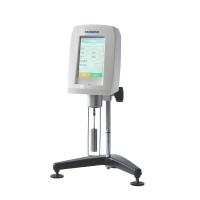
② The amount of slow volatile solvent contained in the paint with working viscosity should not exceed 1.5%. (Related instrument: viscometer)
③ Check and adjust the environmental conditions of the self-drying place and the technical status of the drying room, which should meet the conditions required by the process.
④ Self-drying (oxidative curing) coatings should not be applied too thickly at one time. If the thickness exceeds 20µm, it should be applied several times. If it is caused by the failure of the drier, add the drier, and pay attention to the amount of the desiccant for surface drying.
⑤Workpieces with different heat capacities should have different drying specifications; the loading capacity of the drying chamber should be controlled within a certain range. (Related instrument: oven)
⑥Prevent compressed air from bringing oil, dirt, water, etc. into the coating.
⑦ The two-component paint should use the manufacturer's matching thinner.
(4) Remedy
① If the drying process specifications can be changed (such as increasing the air temperature, drying temperature or changing from self-drying to drying) to make the coating dry, then change the drying specifications to remedy it.
②If the above method cannot be remedied (still not dry, or dry on the outside), or not dry due to oil pollution, it should be rubbed off or removed, and repainted.