| Click here for Fineness gauge prices and stock |
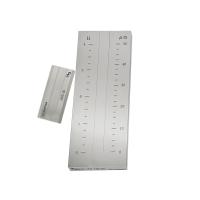
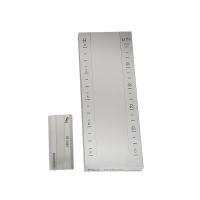
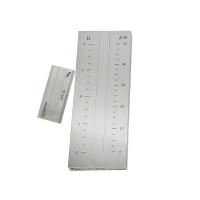
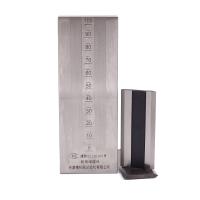
Fineness gauge before use:
Fineness gauge needs to be carefully washed and dried with solvent before use, and a soft wipe should be applied when scrubbing.
Fineness gauge operation:
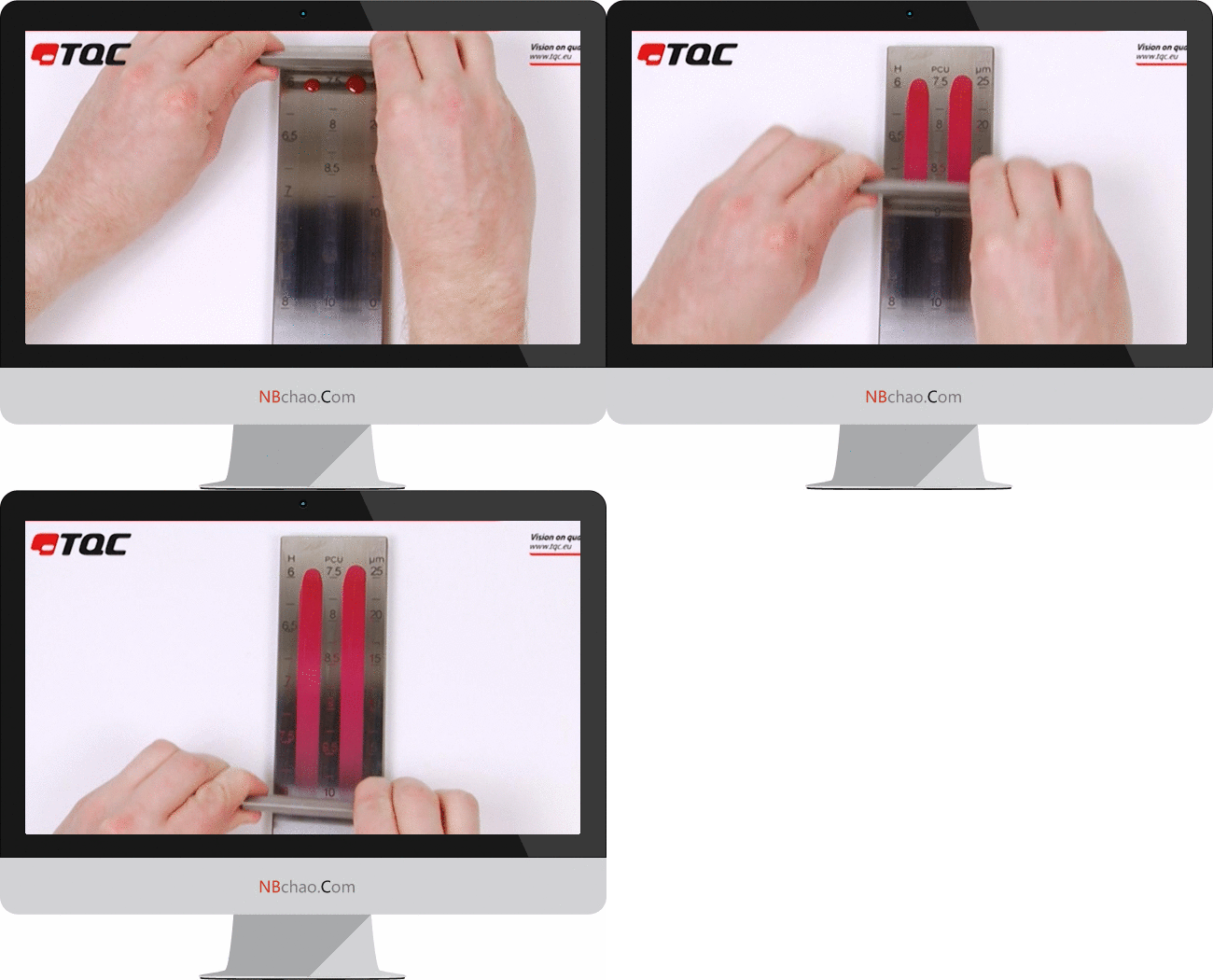
The first step is to mix the sample that meets the standard viscosity index of the product with a small paint blender, and then drop a few drops of the sample in the deepest part of the scraper Fineness, so that it can fill the groove and be slightly redundant.
In the second step, the drawdown blade is placed horizontally on the upper end of the polishing plate (at the edge of the sample) so that the drawdown blade is in vertical contact with the surface of the polishing plate.
In the third step, within 3s, pull the drawdown blade from the deep part of the groove to the shallow part, so that the paint sample fills the groove and there is no residual paint left on the plate. After the drawdown blade is pulled, immediately (no more than 5s) make the line of sight at a 15-30 ° angle to the plane of the groove, observe the uniform exposure of particles in the groove with light, and note the reading (accurate to the minimum Graduation). If individual particles are exposed on the Miscellaneous indexing line, the reading shall not exceed three particles within the range of the adjacent indexing line.

Fineness gauge operation precautions
1. The drawdown blade is in vertical contact with the surface of the polished plate
2. The determination of Coating Fineness should be tested three times in parallel, and the test results should be the arithmetic average of two similar readings.
3. The error of the two readings should not be greater than the minimum Graduation of the instrument.
4. When the Fineness is 30μm and below, apply a Fineness gauge with a range of 50μm. When 31-70μm, apply a Fineness gauge with a range of 100μm, and when it is above 70μm, apply a Fineness gauge with a range of 150μm.


The above Fineness gauge is for reference only, please refer to the actual operation.