Illuminometer and Luminance Meter Definition
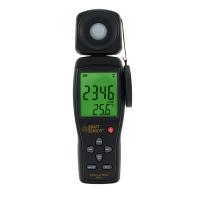
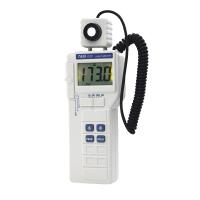
An illuminometer (or lux meter) is an instrument that specializes in measuring luminosity and brightness. It consists of a host and a light sensor. The measurement range is 0-50000. The average indoor illuminance is from 100-1000lux, and the outdoor solar illuminance is about 50000lux. lux is a unit of illuminance, which represents the density of light on the surface. Its applications are mainly indoor, office, laboratory, and environmental research.
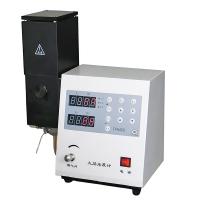
Luminance meter is a kind of metering and color measuring instrument. Luminance meter is one of the commonly used instruments and equipment required by every chemical analysis laboratory, and has been widely used in various quantitative and qualitative analyses.
Principle of illuminance meter and luminance meter
Illuminance meter
A photovoltaic cell is a photovoltaic element that directly converts light energy into electrical energy. When light hits the surface of a selenium photovoltaic cell, the incident ray passes through the metal film 4 and reaches the interface between the semiconductor selenium layer 2 and the metal film 4, producing a photoelectric effect on the interface. The magnitude of the generated photogenerated current is proportional to the illuminance on the light-receiving surface of the photovoltaic cell. At this time, if an external circuit is connected, a current will pass through, and the current value is indicated by a microammeter with lux (Lx) as the scale. The magnitude of the photocurrent depends on the intensity of the incident ray. The illuminance meter has a gear changing device, so it can measure the high illuminance or the low illuminance.
Types of illuminance meters:
1. Visual illuminance meter: inconvenient to use, low precision, rarely used
2. Photoelectric illuminance meter: commonly used selenium photovoltaic cell illuminance meter and silicon photovoltaic cell illuminance meter
luminance meter
The luminance meter mainly uses a pair of light holes with a certain distance to receive the luminous flux of the fixed solid angle and fixed light projection area. This value does not change with the distance of the object, as long as the surface area of the object is large enough. In order to target the measured object, an imaging system is often used. The measured light source is imaged on a mirror with a hole (front light hole) after passing through the objective lens, and a part of it is received by the human eye through the reflector and eyepiece to aim and monitor the clear imaging surface and overlap with the perforated mirror; the other part of the light passes through the small hole on the mirror and reaches the V (λ) receiver through the rear light hole. The luminance value is displayed with a pointer or a digital header.
Illuminance Meter and Luminance Meter Features
Illuminance meter
1. Illuminometer classification
Visual illuminance meter: inconvenient to use, low precision, rarely used
Photoelectric illuminance meter: commonly used selenium photovoltaic cell illuminance meter and silicon photovoltaic cell illuminance meter
2. Requirements for the use of photovoltaic cell illuminance meters
① Photovoltaic cells use selenium (Se) photovoltaic cells or silicon (Si) photovoltaic cells with good linearity; they can still maintain good stability and high sensitivity after working for a long time; when high E, photovoltaic cells with high internal resistance are selected, and their sensitivity is low and linear. Good, not easily damaged by strong light
② There is a V (λ) correction filter inside, which is suitable for the illuminance of different color temperature light sources, and the error is small
③ Add a cosine angle compensator (milky white glass or white plastic) before the photovoltaic cell because when the incident angle is large, the photovoltaic cell deviates from the cosine rule
④ The illuminance meter should work at or near room temperature (photovoltaic cell drift changes with temperature)
luminance meter
1. Adopt microcomputer control and data processing.
2. Using an interference filter as a spectroscopic element, the photocell performs photoelectric conversion.
3. With potassium and sodium concentration direct reading, curve fitting, sensitivity drift, automatic correction, automatic full adjustment. Operation error display, printing results and other functions.
4. Linear stability and good reproducibility, especially suitable for clinical application.