1. Why measure color
The determination of color is not only a quality indicator of the product, but also a control item for some raw materials and semi-finished products. It mainly determines the degree of color depth of transparent liquids (varnishes, varnishes, paints and thinners). The determination of the color of liquid coatings is usually an inspection item for non-pigmented coating products such as varnishes, varnishes or paints. Liquid coatings such as varnish and varnish produce different colors due to the absorption of light, and the depth of the color will directly affect its film-forming performance and application range. Generally, the lighter the color, the better. The depth of color can comprehensively reflect the composition and purity of the product. Dark varnishes are not suitable for making single-gloss paints, nor are they suitable for making white or light-colored paints. Colored paint is a colloidal body containing color, which plays a decorative role. The colors are divided into red, yellow, blue, white, black, etc., and can be formulated into hundreds of different shades of multi-colored paint. The requirement for the color paint is that the color is consistent. The same batch of paints that do not produce floating colors must be consistent in color from top to bottom, and the color is not allowed to be dark or light. To test the surface color of opaque paint products containing pigments, the sample is usually painted on the test board, and compared with the standard paint color after it is completely dry.
Observe whether the depth of the color is consistent.
2. Color measurement method
To check the color of the paint, it is usually observed with the naked eye. It can be compared with the standard color plate provided by the manufacturer, and it should meet the specified color difference range. The conventional detection method is the standard color scale method, which is to compare these paint products with a series of The principle is to compare the solutions of the standard color scale under the natural scattered light or the transmitted light of the specified artificial light source, and use transparent liquids such as varnish and varnish to produce different shades of color on the light-absorbing surface to determine the shade of the color. . Conditional users can use iron-cobalt Colorimeter or Lovibond Colorimeter to visually measure the color according to GB/T·1722-92 "Determination of Color of Varnishes, Clear Oils and Thinners". Commonly used are iron-cobalt colorimetry, platinum-cobalt colorimetry, and Gardner colorscale.
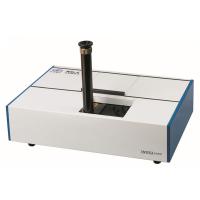
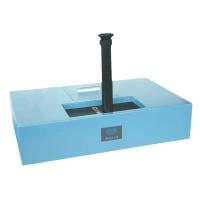
The iron-pin Colorimeter is equipped with a wooden dark box or visual colorimetric device, colorless glass test tube, etc. When measuring, put the sample in a test tube, put it in a wooden dark box or a Colorimeter, and compare the sample with a series of standard color scale solutions visually. The color that is most similar to a certain number i solution of the iron-cobalt Colorimeter represents the color of the sample, expressed in numbers, with No. 1 being the lightest and No. 18 being the darkest. The platinum-cobalt Colorimeter is mainly used for light-colored transparent liquids. It is equipped with a platinum-cobalt standard colorimetric solution and a sodium tube. The measurement operation is the same as that of the iron-cobalt Colorimeter. The color that is closer to the colorimetric standard solution is expressed in platinum-cobalt unit value, with a total of 25 levels, with 0 being the lightest and 500 being the darkest.
When evaluating the color of a transparent liquid using the Gadden color scale, the color that is closer to the glass color standard or the Gadden color standard is the color of the sample. Similarly, No. 1 is the lightest and No. 18 is the darkest. Since the above methods all require visual evaluation, there are certain errors and limitations, so in recent years it tends to popularize the use of instruments for determination. One of them is the Lovibond colorimetric method (Lovibond), which uses a Lovibond Colorimeter, which is also called a comparative Colorimeter in CHINA. Although this method has been adopted in other industries for a long time, and it is still mainly based on visual inspection, but because the instrument is simple in structure, easy to use, and expressed in digital color language, the Lovibond chromaticity value is internationally recognized and commonly used. The instrument uses a combination of 72 red, yellow and blue primary color filters to quantitatively represent the color of the sample with thousands of combinations of Lovibond chromaticity values, thus greatly improving the accuracy and level of color representation. For the paint industry, the use of three primary color filters and a neutral gray filter can be combined and matched to match the color of the sample, thus solving the problem of the color of the sample and the color of the color scale when performing iron-cobalt colorimetry. The problem of "difficult to judge due to different hues". Use the Lovibond Colorimeter to measure the Lovibond chromaticity value of the iron-cobalt Colorimeter 7~12 color scale and the calculated Lovibond chromaticity total value as shown in Table 2-2.
Color scale number of iron-cobalt Colorimeter | Lovibond color value | Lovibond Total Chroma | ||
| Yellow (Y) | red (R) | Neutral gray (L) | H=(R z +Y z +L z ) 1/2 | |
| 7 | 10.1 | 1.0 | 0.6 | 10.17 |
| 8 | 20.0 | 1.3 | 0.7 | 20.05 |
| 9 | 30.0 | 1.9 | 0.8 | 30.07 |
| 10 | 50.0 | 4.1 | 1.1 | 50.18 |
| 11 | 60.0 | 6.0 | 1.3 | 60.31 |
| 12 | 70.0 | 8.0 | 1.1 | 70.46 |
The other is to use a color difference meter dedicated to the color measurement of transparent liquids, such as Japan Minolta CT-210, CT-310 series. Its observation condition is C light source or D 65 , and the data can be expressed by tristimulus value and color difference (DE). Effective quality management has also been carried out through this instrument.
Author: Chen Yanwu "Paint Analysis and Testing"