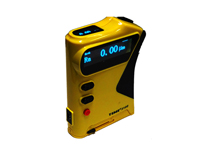
Each coating has a corresponding wet film thickness for a certain dry film thickness. In order to make the dry film thickness meet the specified film thickness without being too thick, it is necessary to strictly control the wet film thickness during coating. There are two methods of wet film thickness control.
(1) A certain amount of paint is applied to a certain area of the coated surface
Each paint has its theoretical coating amount per unit area for a specified film thickness, based on which the theoretically required paint amount for a certain area of coating can be calculated.
In actual construction, due to the unevenness of the coated surface, the influence of wind speed, the influence of environmental conditions and surface roughness, the difference in the types of tools used, etc., the paint must have different degrees of loss. Therefore, for the coating of a certain area of coated surface, when calculating the amount of coating, it is necessary to take the loss factor into consideration.
inside. Usually, the amount of coating on a real ship is about 1.5 to 1.8 times the theoretical amount.
The actual amount of paint used can be calculated as follows:

The loss factor of the paint. It is determined by various factors, and is related to the type of ship, the state of the surface to be coated, the requirements for film thickness distribution, and the type of coating used. In general, the specific determination of α value can be found in Table 2_3_1.
After calculating the actual amount of paint required, the operator should try to make the paint completely and evenly cover the entire surface to be coated.
This control method of wet film thickness is often used in the construction of ship bottom antifouling coatings. In order to reduce the error caused by human factors, when constructing a large area, it should be divided into smaller areas for control.

(2) On-site inspection of wet film thickness
Coating operators should use the wet film thickness meter to check, apply and adjust the wet film thickness at any time during construction. During construction, the detection frequency of wet film thickness can be arbitrary. When spraying a large and flat surface and the operation is more skilled, the detection frequency can be smaller. On the contrary, if the structure of the coated surface is complex, or the operation is not very skilled, the frequency of detection should be higher. By continuously detecting the wet film thickness and adjusting the spraying amount at any time, less paint can be spent; a more uniform coating meeting the specified film thickness requirements can be obtained.