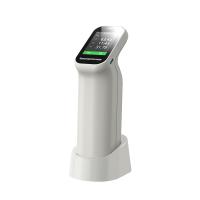
For the color difference and color detection of the measured object containing patterns or textures, it is usually necessary to measure the local color difference and the overall color difference.
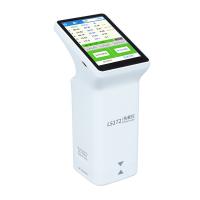
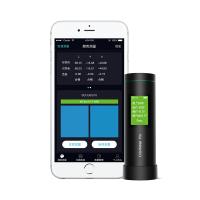
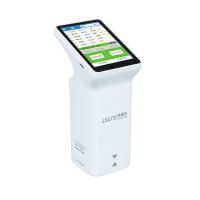
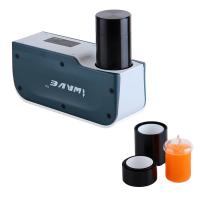
The measurement of local color difference can be done with a portable Colorimeter or a microscope. Specific steps are as follows:
Identify the local area to be measured and measure it using a transparent measuring port or a microscope.
Measure the color of a local area and record its color difference value.
Repeat the above steps for other local areas that need to be measured to obtain the color difference data of all local areas.
The measurement of overall color difference can be done with a camera or a scanner. Specific steps are as follows:
Place the object under test against a uniform background, and use a camera or scanner to photograph or scan it.
Use image processing software to process the entire image, remove the background and irrelevant factors, and obtain the image of the measured object.
Perform color difference analysis on the entire image and record its color difference value.
North and South Chao reminds you: For objects with patterns or textures, the chromatic aberration and color may vary due to the lighting and viewing angles of different locations, so it is necessary to ensure the consistency of lighting and viewing angles when measuring, and cover as much as possible location to obtain more accurate data.