1. Sampling of paint products
The inspection and sampling of coating products is extremely important, and the test results must be representative, and the reliability of the results has a certain relationship with the correctness of sampling. The national standard GB3186-82 stipulates the specific method of taking samples, and the inspection department will conduct experiments after sampling. Generally, there are the following requirements.
(1) The user department has the right to inspect the product quality according to the product standard. If it is found that the product quality does not meet the standard requirements, both parties will jointly re-inspect or ask for arbitration at the upper level testing center. If it still does not meet the relevant regulations, the user department Right to Return.
(2) Randomly sample from each batch of products, and the sampling number is 3% of the total number of packaging barrels of the same manufacturer (for batches of less than 100 barrels, no less than 3 barrels; for batches of less than 4 barrels, not less than 30%) .
(3) When sampling, open the lid of the barrel, visually observe the fluid paint product in the barrel, and record the surface state, such as whether there is skinning, precipitation, gelation, delamination, etc.
(4) Stir the paint in the barrel fully and evenly, and the sampling of each barrel should not be less than 0.5kg. Divide the sample taken into two parts, one part (about 0.4kg) is sealed and stored for future reference, and the other part (the quantity should be such that all the specified test items can be carried out) shall be inspected immediately. If the test results do not meet the requirements of this standard, the entire batch of products shall be considered unqualified.
(5) The tools and utensils used for sampling should be clean. If possible, select special QYG series sampling tubes and clean them after use. Do not fill the container with samples, leave a 5% gap and cover tightly. Samples can generally be placed in clean, dry, well-sealed small metal cans or ground glass bottles, labeled with relevant details such as the date of sampling, and stored in a cool and dry place.
(6) For the sampling of the production line, the same amount of samples should be taken from the discharge port at an appropriate time interval and then mixed. After stirring evenly, take two samples of 0.2-0.4kg each and put them into the sample container, cover it tightly and mark it.
2. Visually inspect the state of the paint
Observe whether the coating has skinning, gelling, delamination, precipitation, etc. Users who have the conditions can measure the storage stability of the coating according to GB6753.3-86.
(1) Skinning: Alkyd, phenolic, chlorinated rubber, and natural oil coatings often have a layer of skinning on the top layer of the coating, which is formed by oxidation and curing of alkyd and other types of coatings. Observe the degree of crusting, if there is crusting, remove it along the inner wall of the container. The crust layer can no longer be used, and the lower layer of paint can continue to be used, and it should be stirred evenly during use. The coating to remove the skinning should be used up as soon as possible, otherwise, if it is left for a while, skinning will occur again, or even be scrapped.
(2) Gelling: gelation occurs in paints and varnishes, which can be stirred or mixed with solvents, and filtered when used. If it cannot be dispersed into a normal state, the paint is scrapped.
(3) Layering and precipitation: After long-term storage of paint, layering may occur. Solvents and resins float on the upper layer, and pigments settle on the lower layer. When checking, you can insert a stick into the paint bucket. bottom, indicating that the precipitate is loose and can be mixed before use. Use a stirrer to fully mix the paint sample. The skill of mixing is to first pour out part of the upper layer of solvent, and stir the lower layer of pigment and resin liquid. After the initial dispersion is uniform, pour the poured solvent back and continue to stir evenly. Use time to filter. If it cannot be inserted into the bottom of the barrel, it means that the precipitation time is too long and it has dried hard. You can pour out the flowable part first, use a spatula to scoop up the sediment from the bottom of the container, grind it, then pour the flow medium back into the original bucket, and mix thoroughly. If it still cannot be mixed according to this method, and there is still dry precipitation, the paint can only be scrapped.
3. The color and appearance of the paint
The varnish is required to be clear and transparent, without impurities and sediments, because the varnish used as a single light can clearly show the color and texture of the underlying layer. It can be detected by visual inspection, and it is required to be transparent, full and not turbid. Paint is a colloidal body containing color, which plays a decorative role. The colors are divided into red, yellow, blue, white, black, etc., which can be formulated into hundreds of different shades of multi-color paint. The requirement for the color paint is that the color is consistent. The same batch of paints that do not produce floating colors must have the same color from top to bottom, and the color is not allowed to be dark or light. Check the color of the paint, usually with the naked eye, and compare it with the standard swatch provided by the manufacturer, and it should meet the specified color difference range.
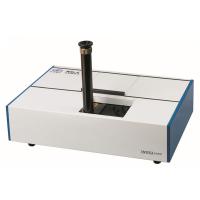
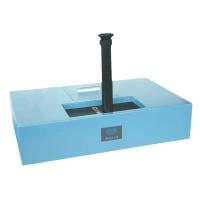
Users who have the conditions can measure according to GB/T1722-92 Varnish, varnish and thinner color determination method, and use iron-cobalt Colorimeter or Lovibond Colorimeter for visual colorimetric determination. You can also carry out color inspection and deployment according to the content of Chapter 4 about color matching and color matching.