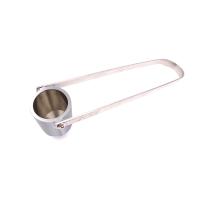
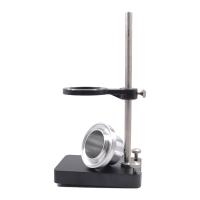
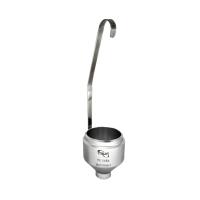
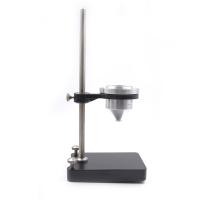
The viscosity ( consistency ) of the paint mainly expresses a characteristic that the fluid itself has cohesive force, which hinders its relative flow inside the fluid. This index is related to the consistency of the paint, which meets the requirements of use, and it directly affects the construction performance, leveling and sagging of the paint film. By measuring the viscosity, you can observe the degree of polymerization of the paint after storage for a period of time, and adjust the viscosity with a suitable diluent according to different construction requirements, so as to achieve different viscosity indexes required by brushing, air spraying, and airless spraying.
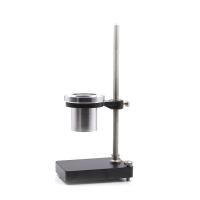
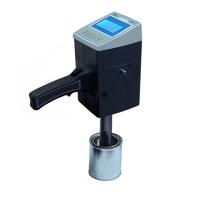
The national standard GB/T1723-93 stipulates three methods for measuring viscosity, including the method of measuring coating viscosity by Tu_1, Tu_4 Viscosity Cup and falling ball viscometer, among which the commonly used method is Tu_4 Viscosity Cup measurement method. This method is simple and easy, that is, 100mL of paint liquid flows out from an aperture with a diameter of (p4mm) at a specified temperature, and the time is recorded, expressed in s, which is used to measure the viscosity of the paint sample.
Pay attention when measuring
(1) The specified temperature for the measurement should be between 21 and 25°C. Because the temperature is too high, the viscosity measured is relatively thin, and the temperature is too low, the viscosity is relatively thick, which is not a standard value.
(2) 4 cups of paint should be cleaned after each measurement, and the solvent corresponding to the paint to be tested should be selected to prevent the small hole of the measurement from being blocked.
(3) First use fingers or utensils to block the small holes and leaks, fill up 100mL of paint liquid, and use glass rods to pick air bubbles and excess samples into the groove to prevent the samples from falling short of or exceeding the standard.
(4) When the finger is removed quickly, start the stopwatch at the same time, and stop the stopwatch immediately when the sample stream is just interrupted, and time it.
The empirical detection method for the viscosity of coating products is to stir up the coating with a stick for observation after stirring. Normal paint should fall freely and continuously, if there is interruption and retraction, it means that the paint is thick. Generally, the paint on the stick and the paint in the barrel will flow continuously in a short period of time, and the connection distance is 30~50cm, which is close to the level of brushing. If it is less than 30cm, it means that the viscosity of the paint is too small, that is, the paint is too thin; if it is greater than 5ocm, it means that the viscosity is too high, that is, the paint is too thick. This kind of viscosity, which is subject to the construction requirements and has been applied many times without using a viscometer, is called the working viscosity.
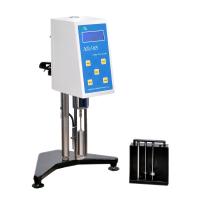
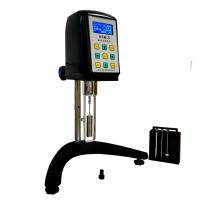
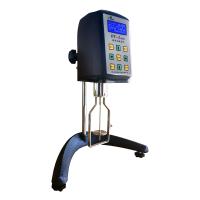
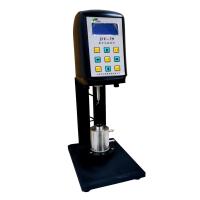
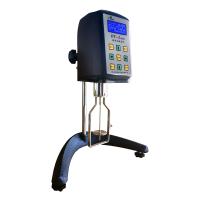
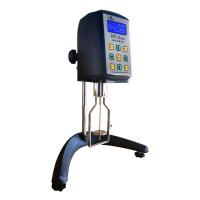
The method of measuring viscosity by coating _4 cups is the most commonly used method. Generally, the viscosity value of coatings is between 40 and 150s, but the viscosity measured by this method is too high for angle-changing coatings, and a Rotational Viscometer is required. Drum rotary viscometer, cone-shaped plate viscometer, etc., such as the determination of the viscosity of architectural coatings using the Stormer viscometer (a type of rotary viscometer) method, the measured viscosity at this time is what is required to produce a rotational speed of 200r/min The load, expressed in g or Ku.
When adjusting the viscosity of the paint, appropriate diluent should be added as appropriate, and mechanical stirring should be used to make the paint uniform from top to bottom. The amount of diluent generally does not exceed 5% of the total mass of the paint, and the paint that is applied by high-pressure airless spraying generally does not add diluent.