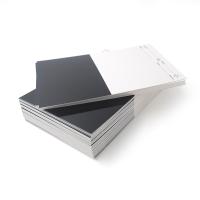
What is paint hiding power? It mainly expresses the minimum amount of paint that can be evenly applied on the surface of the object and can cover the original background color of the object surface, in units of g/m2. For detailed measurement standards, see the national standard GB1726-89 (79). This standard specifies two coating methods: brushing and spraying. The brushing method is to use the paint with the viscosity specified in the standard, and use a paint brush to evenly paint the paint on the black and white grid glass plate (10cmx20cm), under scattered light or in the specified light source equipment, until the black and white grid is just invisible So far, use the subtraction method to obtain the amount of paint used for the black and white grid area, and calculate the hiding power of the paint. The spraying method is to use a Spray Gun to spray the paint with appropriate viscosity on the black and white grid glass plate, and the black color cannot be seen visually. After the paint film is dry, peel it off and weigh its mass, and calculate the covering power of the paint (calculated as a dry film) ).

If the difference between the two results is not more than 5% of the average value, take the average value, otherwise the test needs to be repeated.
The hiding power of paint is closely related to the size of pigment particles and its dispersibility in paint. With the same quality of paint, under the same construction conditions, the paint with good hiding power can coat more areas than the paint with poor hiding power. Each pigment has different hiding power due to different factors such as color depth, particle thickness, density, and refractive index. Generally speaking, high-grade paint has better hiding power than low-grade paint, and dark paint has better hiding power than light paint.