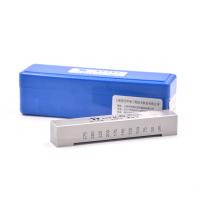
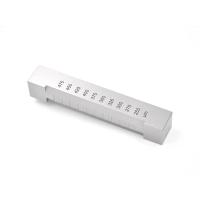
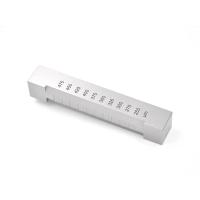
Dip coating refers to the process of immersing the workpiece into the paint manually or mechanically, and then lifting the workpiece to drain the remaining paint, so that a layer of coating film is formed on the surface of the workpiece. The biggest advantages of the dip coating process are: simple equipment, high degree of mechanization, high utilization rate of paint, little pollution to the environment, and no dead angle of painting. Its disadvantage is that the coating surface is thin on the top and thick on the bottom, which is easy to cause sagging, and the workpiece of Yixiong paint is not suitable for this method.
(1) Dip coating process
①Selection of paint varieties Generally, baking paint is more suitable for dip coating, because its solvent volatilization speed is slow, it is not easy to form skin in the tank, the paint is relatively stable for a long time, and because of the baking conditions, it is suitable for large-scale production, such as Amino siphonic acid coatings, one-component epoxy resin coatings, etc. Other one-component self-drying coatings can also be used for dip coating, such as Xixiang acid resin coatings, asphalt coatings, etc., but need to increase the natural day. Beijing drying site.
Two-component coatings such as two-component polyurethane resin coatings, etc., are not suitable for dip coating due to the problem of service life after mixing; dense coatings are prone to precipitation and are not suitable for dip coating; fast drying Due to the characteristics of fast drying, poor leveling, fast solvent volatilization, and potential safety hazards, the dip-coating process is not suitable.
② Selection of dip coating process conditions The construction viscosity of coatings is an important process condition for dip coating, which directly affects the appearance of the coating film after dip coating. The construction viscosity at room temperature (20°c) is generally controlled at ~30s (apply a 4-cup viscometer, 25°c). During construction, the construction viscosity should be adjusted continuously according to the change of construction temperature. The lower the construction temperature, the greater the construction viscosity requirement; the higher the construction temperature, the corresponding decrease in the construction viscosity requirement. When the construction viscosity is too low, the leveling property of the coating film is improved, but defects such as exposed bottom are prone to occur; when the construction viscosity is too high, the leveling property of the coating film is reduced, and defects such as sagging are prone to occur.
The application temperature of the paint is ~30°C. Maintaining a certain temperature range during construction is conducive to maintaining the stability of the dip coating tank and the quality of the coating.
During construction, the appropriate construction viscosity should be selected according to the temperature. As the construction continues, the viscosity of the paint will change. When the viscosity decreases, the original paint can be added to adjust, and when the viscosity increases, the release agent can be added to adjust. The specific addition ratio should be determined according to the test results. The dip coating tank is generally stirred once every 3~4h, and the construction should be carried out after the bubbles disappear after the stirring is completed.
When the workpiece enters the groove, the largest plane of the workpiece should be vertically entered into the groove as much as possible, and the other planes should be at a certain angle with the coating to reduce the resistance of entering and exiting the groove.
(2) Dip coating equipment
The dip coating tank is the main equipment of the dip coating process, which can be divided into intermittent type and continuous type according to the working mode. The intermittent dip coating tank is mainly used for small batch production, the tank body is small, generally rectangular or cylindrical tank body, and the lifting of the workpiece is done manually or by row. The continuous dip coating tank is mainly used for mass production, the tank body is relatively large, generally boat-shaped tank body, and the transportation of workpieces is mainly completed by catenary.
In order to ensure that the paint in the tank does not appear to precipitate and delaminate, the dip coating tank needs to be equipped with a stirring device. Commonly used stirring devices can be divided into pump stirring devices and mechanical stirring devices. The pump-type stirring device is mainly used in continuous dip coating tanks, consisting of pumps, overflow tanks, and filter screens. The pump sucks the coating in the overflow tank and discharges it into the dip coating tank through the pipe at the bottom of the dip coating tank, and then the coating on the surface of the dip coating tank together with the foam in it overflows into the overflow tank and passes through the overflow tank at the same time. The filter screen will filter out the impurities.
In order to maintain a fixed temperature range, a temperature adjustment device is required. The temperature regulating device includes a heating device and a cooling device.
When the temperature drops in winter, the viscosity of the paint increases and it is difficult to apply, so heating devices need to be added. Commonly used heating devices include coil type, jacket type and electric heating type. The coil heating device is located at the bottom or west side of the tank, with hot water or steam as the heat source. The heating speed of the device is fast, but it is prone to local overheating, and at the same time, it is easy to cause inconvenience in construction because the coil is located in the tank. The jacket type heating device adds an interlayer to the outside of the tank body, and hot water is used as the heat source in the interlayer. The temperature difference between the hot water and the paint in the tank is low, and local overheating is not easy to occur. At the same time, due to the large contact angle area, the temperature rise speed is faster. Electric heating heating devices are less used now because of the danger of electric leakage.
When the temperature rises in summer, the solvent volatilizes faster, which not only causes a lot of waste but also is prone to fire hazards, so it is necessary to increase the cooling device. Most of the cooling devices are jacket type, and cooling water is passed through the interlayer, and the cooling water can be deep well water.
The large-scale dip coating tank needs to be equipped with an accident discharge port, and it is necessary to ensure that all the paint in the tank is automatically discharged to the outdoor paint storage tank within 5 minutes when an accident occurs. In addition, the notch needs to be provided with an automatic fire extinguishing device.