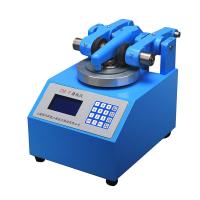
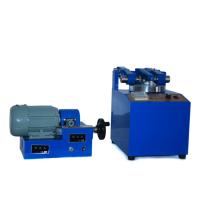
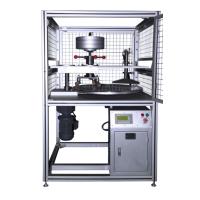
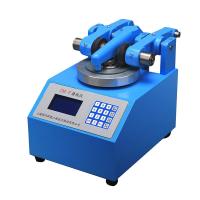
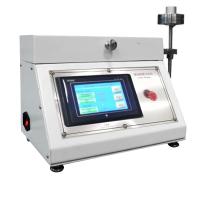
 With the continuous development of wear Testers, wear instruments have now been applied to various industries. By using wear Testers, their wear resistance can be effectively tested, thereby helping manufacturers to improve product quality.
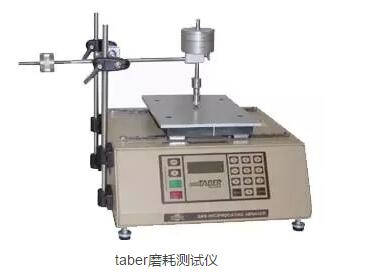
taber abrasion Tester
So many people will ask, what are the precautions for abrasion Tester testing?
First before the wear test:
We should be aware that the physical properties tested may be affected by the conditions. For example, abrasion resistance is tested such as the effect of the natural condition of the abrasive; the variable action of the abrasive on the wear area of the specimen; the tension of the specimen; the pressure between the specimen and the abrasive; and the dimensional change of the specimen.
When doing laboratory testing, if you are not in a given wear test, the following effects should be carefully considered:
1. Contact geometry
2. Exposure duration
3. Interaction between material surfaces
4. Normal force
5. Sliding speed
6. Environmental conditions
7. The composition and hardness of the material
In addition, pay attention to the following aspects:
1) Whether there is a relationship between a specific type of wear test and service performance not only depends on the similarity of the grinding mechanism, but also to a certain extent, this mechanism is maintained during the wear test.
2) Wear resistance is the basic performance of the sample, such as elasticity, hardness, strength (including cohesiveness, tensile strength and shear strength), toughness, especially in wear resistance and thickness.
3) The wear mechanism depends on the surface morphology of the abrasive. In most cases, it's better to use it only once, unless it can be flushed.
4) Different types of wear can occur in combinations or in different areas of the same component.
5) Particles responsible for wear or erosion are typically between 1 µm and 500 µm in size.
6) Materials may not exhibit the same relative order of wear resistance when tested by different methods.
7) Test methods that lack critical procedural information may have repeatability problems.
8) The substrate plays an important role when evaluating multilayer systems. Use caution when evaluating test results on different substrates.
9) Effect of humidity and loading system on the dynamics of the test system.
10) Do not assume that the wear rate is always a linear function of time or the number of contact cycles - it is highly dependent on the material, type of wear, and contact conditions.
11) Conditions to ensure steady state. Certain materials may require a break-in period.
12) Be cautious when extrapolating results.
13) Do not use loads that exceed the ultimate strength of the material or velocity that may result in a hot state.