1. Scope and description
Density refers to the mass of a unit volume of liquid at a specified temperature, that is, the relationship between mass and volume of a substance. Expressed in g/ml.
This method is suitable for determining the density of liquid paints, varnishes and other related products at a specified temperature. The principle is to first use the density of distilled water to calibrate the volume of the pycnometer, and then use the pycnometer to weigh the mass of the sample at a certain temperature. Then, according to the mass and volume of the sample, the density of the sample is calculated.
2. Instruments and materials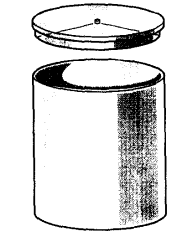
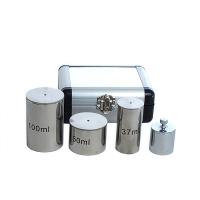
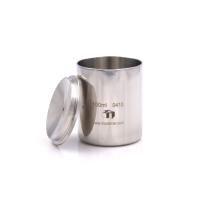
(1) Pycnometer, common pycnometers are 37ml, 50ml and 100ml, generally made of stainless steel or aluminum alloy. The shape of the pycnometer is shown in the figure.
(2) The thermometer scale is 0.1°C, accurate to 0.2°C
(3) If the Water Bath or thermostatic chamber requires high precision, it can be kept within ±0.5°C of the test temperature. For production control, it can be kept within the range of 0.2°C of the test temperature.
(4) The analytical balance requires high precision, which can be accurate to 0.2mg.
3. Measurement method
(1) Calibration of the pycnometer This requires clearing the metal pycnometer with a solvent that does not leave a residue after evaporation, and drying it.
Place the pycnometer at room temperature and weigh. If high precision is required, the pycnometer can be continuously cleared, dried and weighed until the difference between two consecutive weighings does not exceed 0.5 mg. Fill the pycnometer with distilled water at the test temperature of 23±2°C, if the accuracy is higher, at 23±0.5°C, not exceeding 1°C.
Cap the pycnometer so that it has an overflow opening, taking strict care to prevent the formation of air bubbles in the pycnometer.
Place the pycnometer in a constant temperature Water Bath or in a constant temperature room until the temperature contained in the bottle is constant. Wipe up spills with absorbent material, and dry the outside of the pycnometer with absorbent material to ensure no spillage comes out. Immediately weigh the pycnometer filled with distilled water to 0.001% of accurate mass
Notice:
1. When directly operated by hand, the temperature of the pycnometer will increase, which will cause more overflow in the overflow hole and leave fingerprints. Therefore, it is recommended to use pliers and dry absorbent materials to protect hands to operate the pycnometer.
2. It is recommended to quickly weigh the filled pycnometer immediately to minimize the loss of mass.
(2) Calculation of the volume of the pycnometer
according to the formula to calculate the solvent of the pycnometer (expressed in ml)


(3) Determination of product density
A. Repeat procedure
B using the sample instead of distilled water. Analytical gloves should be worn during operation to avoid direct contact with pycnometer
C. When the sample is poured into the pycnometer, air bubbles should be spun to ensure that the spill is wiped clean and the pycnometer is weighed accurately.
4. Result representation
Calculate the density of the product at the test temperature T (23°C or other agreed temperature) according to the following formula, expressed in g/ml