1. Method description:
Measuring paint viscosity with TU-1 viscometer is suitable for measuring paint products whose outflow time is not less than 20s. This method is also applicable to the determination of coating semi-finished products and tower-related products with similar viscosities.
The viscosity measured by Tu-1 viscometer is the conditional viscosity, that is to say, the time for a certain amount of sample to flow out of a hole with a specified diameter at a certain temperature, expressed in seconds.
2. The shape of Tu-1 viscometer
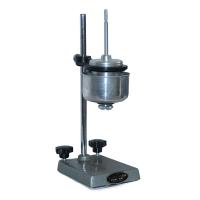
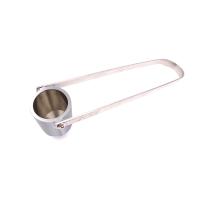
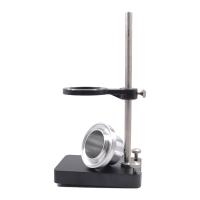
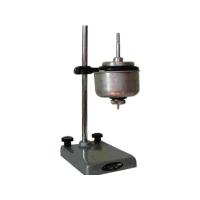
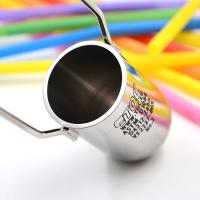
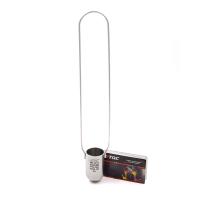
Tu-1 viscometer is a metal container with a cylindrical upper part and a conical lower part. There is a ring-shaped scoring line on the inner wall and a leak hole at the bottom of the cone. There are generally two holes on the lid of the container, one is for the plug rod and the other is for checking the thermometer. The container is fixed in a prototype Water Bath, and the Tu-1 viscometer is placed on a stand with 2 adjustment leveling screws. Of course, with the development of technology, the above shapes are for reference only.

3. Steps to measure the viscosity of paint by using Tu-1 viscometer
Step 1: Wipe the viscometer clean with gauze solvent before and after measurement, and dry it. Check against the light to ensure that key parts such as the nozzle of the Tu-1 viscometer are kept clean.
Step 2: Stir the sample to be tested for viscosity evenly, and adjust the temperature of the sample to 23±1°C or 25±1°C.
Step 3: Put the Tu-1 viscometer in the Water Bath jacket, and insert the stopper rod. Insert the sample into the viscometer, and adjust the level screw to ensure that the liquid level coincides with the engraved line. Close the lid and insert a thermometer, let it rest for a while to let the air bubbles in the style overflow. Place a 50ml measuring cup under the viscometer spout.
Step 4: When the temperature of the sample reaches the standard described in Step 2, quickly lift the stopper and start the stopwatch at the same time. When the sample volume in the cup reaches the 50ml mark, stop the stopwatch immediately. The event required for the sample to flow into the cup for 50ml is the outflow time of the sample (s)
Step 5: Take the average of the two measurements as the measurement result. Remember that the tea set with two measured values cannot be greater than 3% of the average value.
Use the following formula to convert the outflow time of the sample into kinematic viscosity centistokes (mm²/s)
Calibration method of Tu-1 viscometer:
About the calibration of Tu-1 viscometer. There are 2 methods:
One is the kinematic viscosity method. This is based on the national standard GB265 kinematic viscosity measurement method, using a capillary viscometer to measure the kinematic viscosity of various standard oils. Use various standard oils with known kinematic viscosities at a specific temperature, and measure the outflow time of the cup-calibrated viscometer according to the measurement method of the Tu-1 viscometer. Then calculate according to the formula.
There is also a standard viscometer method. Standard Viscosity Cups are used, which are not usually used. Knowledge is used as a measurement standard, and Tu-1 cups are regularly calibrated. The method of calibrating the Tu-1 Viscosity Cup will not be described in detail here.