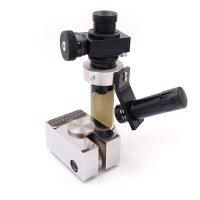
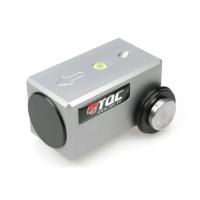
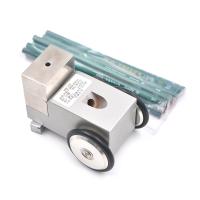
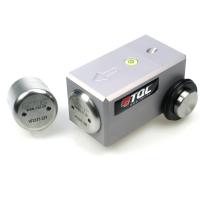
Notch hardness (GB6554-86, GB/T9279), this method is used to measure the hardness of the legal layer.
(1) Equipment
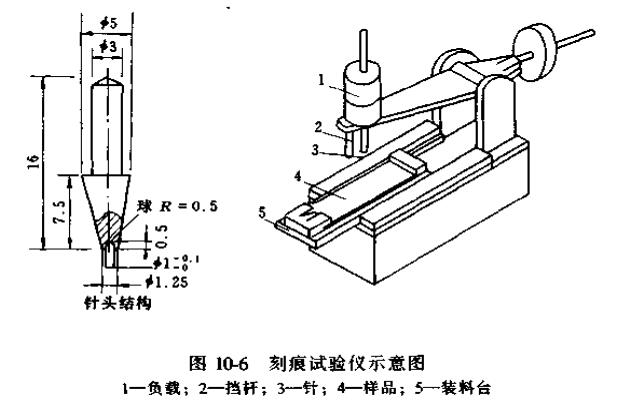
① Notch Hardness Tester: The structure principle of the instrument is shown in Figure 10_6. It is mainly composed of a notch needle and a slide plate. The head of the needle is equipped with a steel ball with a diameter of 1mm. Load can be applied to the needle, and the slide plate can move (motorized or manually). , on which the sample can be fixed.
②10 times magnifying glass
(2) Sample
See Table 10-1.
(3) Test procedure
The sample should be treated for 24 hours under the conditions of 23℃±2℃ and relative humidity of 50%±5%, and measured under these conditions
① Apply a specified load
Take an unused needle and check it under a magnifying glass, the needle should be smooth. Into a hemisphere, no sexual dirt.
Fix the needle on the instrument so that its axis is perpendicular to the coating in the working position. Put the center of the sample on the slide plate, and turn on the power supply of the electric indicator. Apply the specified load to the meter, and place it lightly on the sample, so that the slide plate moves evenly, and the length of the notch shall not be less than 60mm. Observe whether the coating is pierced from the charge indicator or with a magnifying glass.
Each needle is only for one test
② Determine the minimum load for piercing
Follow the procedure of ①. The initial applied load should be smaller than the value of the expected coating to cause puncture. And increase it with an appropriate load increment (such as 0.5N), until the layer is removed and puncture occurs, repeat the test on the sample with the minimum puncture load value verify.
(4) Results
Report whether the coating is pierced under the specified load value, and the minimum load value to pierce the coating.