Those engaged in the research, preparation and application of polymer emulsions must perform performance tests on the emulsions. The starting points are different, and the emphases are different, but as far as a certain testing item is concerned, the methods used are basically similar. There are two standard methods in this regard, one is GB/T11175-2002 "Test method for synthetic resin emulsion", the standard It is equivalent to the Japanese JISK6828:1996 "Test method for synthetic resin emulsion" standard. The second is the national standard "Emulsion for Architectural Coatings" which is still being submitted for approval, which refers to the Japanese JISK6828:1996 standard. Different test methods always have differences, so when comparing data, care should be taken to use the same test method.
1. Appearance
Place the emulsion in a glass tube, such as a colorimetric tube, and visually inspect the color, homogeneity, and transparency of the emulsion.
GB/T11175-2002 and JISK6828:1996 apply the emulsion on a glass plate, and visually check whether there are group particles and foreign matter.
The "Emulsion for Architectural Coatings" application for approval refers to this item as the state in the container. Visually inspect whether there is delamination or precipitation, and apply the emulsion on a glass plate to observe whether there are mechanical impurities.
2. Gel particles or clots
Qualitative analysis by visual inspection or hand touch, and quantitative results can be obtained by filtering, washing, drying and weighing .
3. Solid content
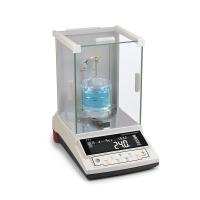
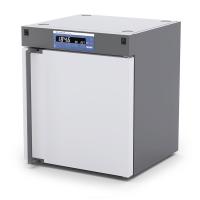
Put about 2g of the polymer emulsion sample into a pin plate with a diameter of 4cm, cover it with an aluminum cover, weigh it, then place it in an oven with a ventilation device, dry it at 115°C for 20min, and weigh it again, namely The solid content of the emulsion can be calculated.
For polymer emulsions that are prone to peeling like polyacrylates, higher ; for polymer emulsions containing plasticizers, lower temperatures (such as 105°C) should be used. ) and longer drying time (such as 2h).
According to GB/T11175-2002 and JISK6828:1996, it should be dried at 105℃±2℃ for 60min±5min.
The national standard "Emulsion for Architectural Coatings" for approval stipulates that it should be dried at 150°C ± 2°C for 15 minutes.
Now there is also a method to dry the pin plate in an infrared dryer of about 250W, and the result will be displayed automatically in a few minutes, which is a rapid determination method.
4.pH
Generally, precision test paper can be used for measurement. Precise measurements can be made with a glass calomel electrode pH meter calibrated with buffer solutions. Surfactants in the emulsion may interfere with the determination results.
According to GB/T11175-2002, it shall be determined according to GB/T8325.
5. Viscosity
Viscosity is an important indicator of polymer emulsion. The size of the viscosity is directly related to the stability and processing performance of the polymer emulsion. In general, the greater the viscosity of the emulsion, the higher the stability. The emulsion is required to be stable during emulsion polymerization and subsequent transportation, storage and application, so the emulsion is required to have sufficient viscosity. For subsequent applications, a moderate viscosity is required, and the viscosity is too high to handle.
Polymer emulsion is a non-Newtonian fluid, which is different from polymer solution such as alkyd resin and other Newtonian fluids, and its stress-strain relationship is not linear and not directly proportional. Therefore, methods suitable for the determination of the viscosity of polymer solutions, such as Viscosity Cup method, bubble viscometer method and other common methods in the coating industry, are not suitable for the determination of the viscosity of polymer emulsions.
Emulsion viscosity is generally measured with a Rotational Viscometer, such as a Br00kfield viscometer. In legal units of measurement, viscosity is expressed in Pa·s (Pa·s) or milliPa·s(mPa·s).
According to the national standard "Emulsion for Architectural Coatings" for approval, it shall be determined according to the rotational viscosity method in GB/T2794-1995 .
6. Density
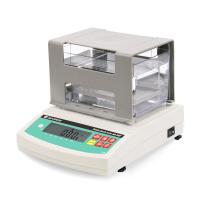
It can be detected with a density meter, which is very convenient. That is, use a syringe to draw a certain amount of sample, and inject the sample into the U-shaped tube of the density meter, and read when the red light is no longer flashing, and then get the result.
The above-mentioned density meter is more expensive, of course, it can also be measured with a standard Webster relative density balance, hydrometer, etc.
7. Mechanical stability
The emulsion will be subjected to shear stress during stirring, pumping, grinding, spraying, and shipment, so the mechanical stability of the emulsion should be determined. The specific method is, before the measurement, first filter the polymer emulsion sample with a 100-mesh sieve, then put it into a special stirring device, stir the sample at a paddle tip line speed of 6096m/min for 10 minutes, and then filter it with a 100-mesh sieve. If there is no gel, the mechanical stability of the emulsion is good. If there is gel, dry the filtered gel piece in an oven at 105°C until the mass is constant, and weigh it. The more the lower condensate, the worse the mechanical stability.
The national standard "Emulsion for Architectural Coatings" for approval stipulates that the diameter of the stirring plate is 40mm, 2500r/min, and stirring for 0.5h. It is required that there is no demulsification and no obvious flocs.
8. Storage stability and thermal stability
If the stability of the emulsion is not good, it will stratify and precipitate during storage, and it will foam too much during transportation.
Storage stability at room temperature: fill the dark bottle with the emulsion (2/3 or half ), cover it tightly, and measure the viscosity regularly. It is better if the viscosity does not change much (or slightly increase).
Thermal stability: The test method is the same as that of storage stability at room temperature, except that the bottle is placed in an oven at a certain temperature (such as 40°C or 50°C), so that the results of storage stability can be obtained in a short period of time.
According to GB/T11175-2002 and JISK6828:1996, it should be placed at 50°C-2°C for 20h.
The national standard "Emulsion for Architectural Coatings" for approval stipulates that it should be placed at 50°C ± 2°C for 2 weeks.
9. Freeze-thaw stability
It is inevitable that the emulsion will be frozen during transportation. In order to prevent the emulsion from being scrapped due to accidental freezing, the emulsion is required to have a certain freeze-thaw stability.
The freeze-thaw stability test method is, 10g polymer emulsion sample is placed in a 15mL plastic bottle. Freeze in a refrigerator at 20°C±1°C for 18 hours, and then thaw at 23°C for 6 hours, which is a cycle. It is generally believed that the freeze-thaw stability is qualified if the demulsification is not broken after 5 cycles.
GB/T11175-2002 and JISK6828:1996 stipulate that at -10.0°C ± 0.5°C, place for 16h, and then under standard conditions for 8h, which is a cycle. 5 cycles should pass.
The national standard "Emulsion for Architectural Coatings" for approval stipulates that it should be placed at -5°C ± 2°C for 18 hours, and then under standard conditions for 6 hours, which is a cycle. 3 loops should pass.
10. Minimum film forming temperature
某一聚合物乳液,在一定低温下进行干燥时,随着水分的挥发,变为干态后,其乳胶粒仍为分散的颗粒,并不能融为一体,即不成膜,或不能形成连续的薄膜而出现粉化、龟裂或白垩状。而在较高温度下,随着聚合物乳液中的水分挥发,乳胶粒互相融合,互相渗透,互相缠绕,聚结为一体而形成连续透明的薄膜,能够成膜的温度下限值叫聚合物乳液的最低成膜温度,通常用MF「表示。MFT为聚合物乳液的一个重要技术指标,对于聚合物乳液的生产和应用均具有很大的指导意义。生产者可According to所要求的MFT来进行配方设计,而用户则可以According to聚合物乳液的MFT来确定其应用的条件和工艺。
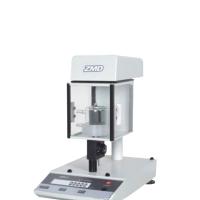
聚合物乳液的MFT值用最低成膜温度测定仪测定。这种仪器的主要部件是一块温度梯度板,温度由冷端到热端均匀地分布,若把待测乳液均ij地涂在梯度板上,乳液慢慢干燥后,将在梯度板上某一位置出现一条清晰的分界线,在高温一側形成透明薄膜,而在低温一侧则出现粉化、白垩或龟裂。这条分界线对应的温度即为该乳液的最低成膜温度。
国家标准«建筑涂料用乳液»报批稿规定,按GB/T9267-1988乳胶漆用乳液最低成膜温度的测定(neqIS01512:1974)进行。
11.挥发性有机物
挥发性有机物(V0C)含量测定可按GB18582-2001«室内装饰装修材料内墙涂料中有害物质限量»附录A、IS〇11980/2«气相色谱法确定涂料V0C»或ASTMD3960«涂料和相关涂料材料V0C测定»等进行。如V0C低于0.1%时,可采用DIN55649«乳胶漆V0C测定法»测定。
国家标准«建筑涂料用乳液»送审稿规定,按GB18582-200l«室内装饰装修材料内墙涂料中有害物质限量»附录A测定,V0C应不大于30g/L乳液。
12.乳胶粒径及粒径分布
Latex particle size and particle size distribution are important technical indicators of polymer emulsions. The properties of the polymer emulsion, the performance of the emulsion polymer and the polymerization rate during the emulsion polymerization are all related to the latex particle size and its particle size distribution. For example, film gloss, to a certain extent, the finer the particles, the better the gloss. Another example is the critical pigment volume concentration (C, PVIC) of latex paint. When other conditions are the same, the finer the emulsion particles, the higher the CPVC. Commercial polymer emulsions are composed of particles of different particle sizes, which are called polydisperse emulsions. An emulsion composed of particles of the same size is called a monodisperse emulsion. As a coating, film density is an extremely important property, and polydispersity is beneficial to the density of film formation. Of course, polydispersity must have a degree, not the more dispersed the better.
There are 6 commonly used methods for the determination of latex particle size, namely, electron microscopy, high heart rate method, hydrodynamic chromatography, light scattering method, extinction method and soap titration method. In addition to measuring the average diameter of latex particles, the first three can also measure the diameter distribution; while the latter three can only measure the average diameter of latex particles.