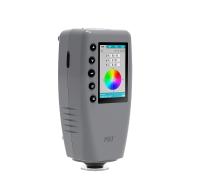
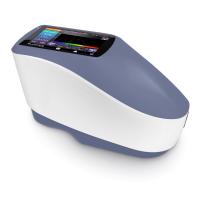
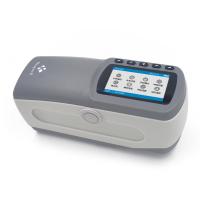
With the continuous development of the domestic ink market, more and more foreign large-scale ink companies have invested and cooperated, and brought new ink product testing technology. The Colorimeter plays an important role in the color matching of ink production.
With the advancement of technology and the improvement of product requirements, most paint factories have introduced imported Colorimeters in the late 1980s to control the color of inks. It has a history of more than 10 years. In the process of use, the color is well controlled, the error caused by the human eye observing the color is eliminated, the user's requirements are met, and good economic and social effects are produced. Recently, a new Colorimeter has been introduced for quality control. Management, in order to improve the performance and grade of the product, so that the color control of the product has reached a new level.
The Basics of Color
Among the various functions of ink, the decorative protection is one of the important functions. Now, many building exterior walls begin to use inks of various colors to show their own characteristics, and residents can also choose to decorate their homes with individual color arrangements when decorating. Colors are also used to distinguish different objects. In factories, people use different colors to distinguish different pipes to prevent accidents caused by unclear distinctions. Because of the color, the world is colorful and full of vitality.
The color seen by the human naked eye is a feeling caused by natural light or artificial light source irradiating the surface of the object, absorbing part of the light on the surface of the object and reflecting part of the light to the eyes and stimulating the eyes.
Three characteristics of color: hue (Hue) represents a characteristic of the perception of an object as red, orange, yellow, green or an intermediate color, and is used to distinguish colors; value (value) is the brightness of the human eye to the object; chroma (Chroma) A characteristic that indicates whether the color is saturated and pure. The stronger the monochromaticity of the light emitted by the object, the higher the chroma value of the object color.
Influencing factors when the human eye observes color
Effect of light source
Color is formed due to the absorption and reflection of light. Different light rays are absorbed and reflected by the same sample, and the colors are different when reflected to the human eye, that is, the same sample will display different colors under different light sources. In the ink industry, because natural light is the common light when ink is used, standard light sources or Colorimeters are required to control color matching at night. The standard light source color comparison light box creates lighting conditions that are not affected by geography and environment, so it can provide conditions for objective evaluation. In many occasions, we still use the naked eye for visual color matching. Although the instrument can be used as an important reference data, it is still necessary to observe the color with the human eye. Especially for the color of aluminum silver powder and pearl powder, it is difficult for the instrument to make a good measurement, and some products cannot be measured by the instrument.
The influence of the surrounding environment
The color of the surrounding environment will have a certain impact on the eye's observation of color, thus resulting in the theory of opposite colors. The theory of opposite colors holds that red, green, and blue vertebrae are recombined during the reflection process transmitted to the brain through the optic nerve, forming yellow-blue codes, red-green codes and black-white codes. When the observer sees a flag composed of three colors of red, black and yellow, after carefully watching the color of the flag for a few minutes, he then looks at a white flag next to him. First, the eyes see the white color, and the eyes are in order to protect the balance of the color. Seeing green and blue colors, and finally the eyes fully recover to see white colors, this is the theory of opposite colors.
observer artifact
The eyes of normal people can distinguish small differences in colors, and different observers have different judgments on colors due to the different eye structures. Even for the same observer, when the mental state is different, the feelings and reactions to the color are not completely the same, so the human factor will have a great impact on the color, while the machine is not affected by this psychological and physiological state.
Basic knowledge of Colorimeter
The geometric structure and characteristics of the instrument
The geometry of a Spectrophotometer determines the configuration of the instrument's light source, sample face, and Detector. There are two general classes of instrument geometries: directional (0°/45° or 45°/0°) and diffuse (integrating sphere) spectrophotometric Colorimeters.
The geometric structure of 0°/45° is that the 0° angle is perpendicular to the sample illumination, and the light is diffusely reflected after hitting the sample, and measured at the 45° angle. When measuring, there are multiple light source receivers at an angle of 45° to achieve a good measurement effect. 45°/0° is the 45° illuminant measured at 0° angle. The results measured with this instrument correspond to visually induced changes in appearance due to changes in color and surface gloss. It works very well for quality control, it is consistent with the way the human eye sees objects, and the results are closer to the human eye.
A typical integrating sphere constructer uses a white-coated sphere to diffusely illuminate the sample and measure at an angle of 8°. This measurement method ignores the influence of surface properties and gloss on color, and the measurement provided is only consistent with color changes such as pigments/dye, so we choose this instrument in the computer color matching system.
Expression method of color
In order to judge the color, the method commonly used in our country is still based on the standard Color Chart or the incoming sample for comparison. This kind of comparison can only be compared on the spot, and it is a perceptual comparison. In order to solve this problem, people have come up with various methods such as digitalization of three-dimensional space coordinates, Munsell color system, and spectral reflectance curves to express colors. my country also formulated the "Chinese Color System Sample Book" in 1994 to calibrate colors.
In the Spectrophotometer we use CIE (International Commission on Illumination) L*, a*, b*, CIE L*, c*, h*, Hunter L, a, b, X, Y, Z, L*, c* , h*, Y, x, z and other methods to represent the chromaticity coordinates of the color. In practical applications, the difference between Hunter L, a, b and CIE L*, a*, b* and L, a, b cannot be confused. I have seen L*, a*, b* as In the case of L, a, and b, the data are very different. It is thought that there is something wrong with the instrument, but the chromaticity coordinates are actually wrong.
Choice of light source
The illuminator of the Colorimeter is a fixed light bulb such as a tungsten lamp or a longer-life xenon lamp. But for the same color sample, the results displayed by the instrument under different light sources are different. This is because the light absorbed and reflected by different lights on the sample is different, which causes the difference between the human eye and the instrument when seeing the color. Generally, the D65 light source is used in the application of architectural coil steel ink, which is equivalent to the average sunlight, because most of the architectural coil steel ink is used outdoors, and outdoor sunlight is considered to be the standard light source.
Choice of light source
The illuminator of the Colorimeter is a fixed bulb without a tungsten lamp or a longer-life xenon lamp. But for the same color sample, the results displayed by the instrument under different light sources are different. This is because the results displayed by the instrument under different light sources are different. This is because the light absorbed and reflected by different lights on the sample is different, which causes the difference between the human eye and the instrument when seeing the color. Generally, the D65 light source is used in the application of architectural coil steel ink, which is equivalent to the average sunlight, because most of the architectural coil steel ink is used outdoors, and outdoor sunlight is considered to be the standard light source. The home appliance coil steel ink is mostly used indoors due to its nature of use. According to the indoor lighting, the A standard light source is used to measure the color of the sample. It is a well-specified tungsten light source. Other light sources, such as fluorescent light sources, can be used in many types. For example, some fabric factories use fluorescent light sources. Therefore, according to the actual usage and user requirements, choose a reasonable light source as the measurement method recognized by both parties. Once both parties agree, it is necessary to measure the color under the same conditions to reduce unnecessary system errors and human errors. Good bonding point.
Application in actual production
Build a color database
Because the color of the pigment is different from the color after the model is made, the factory disperses various colors in the resin system used, and mixes the colors to make a standard model. After the sample is ready, send it to the customer for approval. After the customer approves, it can be adjusted according to the sample data. Input the determined sample color into the computer to build a database of various samples.
color matching
The spectrophotometric Colorimeter can not only be used to adjust the color to meet the user's requirements, but also can be used for computer color matching according to the actual situation of the factory. Computer color matching requires a lot of preparatory work to make standard color samples for the various pigments used, and input the data into the computer for storage. What cannot be ignored is the input of selected black and white monochrome data. The data of various monochromatic pigments becomes the basis of computer color matching. The computer can automatically match color according to the color template, and provide a variety of formulas for us to choose. We can choose an economical and simple good solution, which greatly reduces the Intensity of work.
For the control of color and color difference, plain paint generally requires that △E be controlled within 1, and for users with high requirements, △E can be controlled within 0.5. Furthermore, the values of L, a, and b can be controlled separately. In actual production, we need to adjust the color according to the main color. If the main color is blue and the data read by the computer lacks yellow, iron red or iron yellow can be added to adjust. In the process of adjusting the color, the color should be adjusted with the least amount of monochrome paste, and the closer to the standard color, the better.
Effect of surface features
When mixing paint, gloss and surface smoothness have the greatest influence on color difference. When light hits a surface with different bumps, reflections occur on the surface. scattering and absorption. The rough surface has large scattering, less reflection and absorption, so the reflected gloss of the human eye is low, while the surface of the high-gloss ink is flat, the reflection is large, and the scattering is small, the human eye is particularly sensitive to gloss, and the gloss is high. Considering the economy of actual production, we choose a matting agent with a suitable particle size according to the application, which determines the amount of matting agent. Generally, the more the amount of matting agent is used, the lower the gloss. In actual production, the Colorimeter is extremely sensitive to black and white gloss. Taking high-pigment carbon black as an example, when the gloss drops from 20 to 10, the △E will have a difference of about 1 (measured with 0°/45° similar to the human eye), and when the same blackboard is measured with an integrating sphere instrument, the △E error Within 0.3. When the gloss of other colors changes within ±10 degrees, △E is generally within the allowable error range. Of course, the high temperature resistance of the pigment and the baking time and temperature will also have a great impact on the upper △E during production. This is a problem that should be paid special attention to in actual production.
Instruments for aluminum powder, copper powder and pearl powder
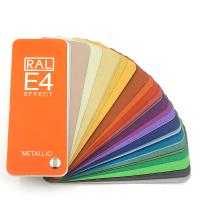
Metallic pigments and pearlescent pigments are widely used in automotive flash paint, aluminum alloy exterior walls, curtain walls and many other places due to their outstanding appearance effects. Its production process is completely different from ordinary organic and inorganic pigments, and its shape is also unique, which is layered. The central distribution of metallic pigments and pearlescent pigments is arranged in the same orientation in the paint film parallel to the film. When the light hits the surface of the paint film, part of the light is almost not absorbed due to the direct reflection of the aluminum powder, and the light is very bright, giving people a very dazzling feeling; part of the light is reflected by the aluminum powder for many times. So the light is dim. Therefore, it gives people different visual effects when viewed from different angles. Pearlescent pigments form various colors due to the interference of titanium dioxide or titanium oxide films coated on mica sheets. Due to the fixed angle of ordinary Colorimeters, it is difficult to comprehensively measure metallic pigments and pearlescent pigments. The data measured by ordinary Colorimeters has a large deviation from the naked eye. Therefore, people invented the three-view Spectrophotometer , which imitates the human eye, solves the existing problems better, and has been widely used in the automotive industry.
Portable Colorimeter
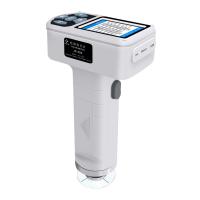
The working principle of the portable color difference meter is similar to the ordinary color difference meter, but it has its unique advantages, such as light weight, easy to carry, can directly measure and read data, and can also be connected to a computer or printer to output data. Especially in the production line or when communicating with customers, you can give full play to the advantages of its portability. According to the actual use of the author, the ordinary Colorimeter is quite stable, and the error and deviation are within the control range. The hand-held Colorimeter is relatively stable when it is first used, but after a period of use, it will produce a certain deviation, and the long-term stability is slightly worse. This may be related to the small structure and poor sensitivity of the portable Colorimeter.
The traditional Colorimeter can be used for quality control and computer color matching, which limits its further development. With the development of Internet technology, the Colorimeter will be connected with the network to form an online color management system. The online management system can speed up the data transfer and fast communication between factories and users, and can be controlled remotely, which can save time and reduce costs. Cost, after all, is a good and effective method.
The above is an introduction to the application of the Colorimeter in ink detection, hoping to provide some references for relevant personnel in the industry.