1. Selection principle of balance
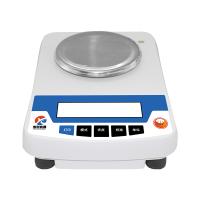
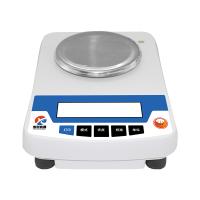
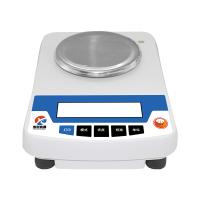
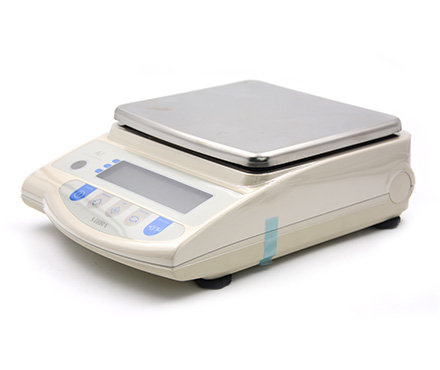
The choice of a balance is mainly to consider whether the weighing and graduation values of the balance meet the requirements of weighing, followed by whether the structure of the balance can adapt to the characteristics of the work.
The choice of balance weighing is relatively simple. The selection principle is that the mass of the object to be weighed can neither exceed the maximum weighing of the balance, nor can it be much smaller than the balance weighing. In this way, it can not only ensure that the balance will not be damaged due to overload, but also ensure that the weighing reaches the necessary relative accuracy.
The selection of the scale division value is based on the accuracy requirements of the weighing results. On the one hand, it is necessary to prevent the use of balances with insufficient precision for weighing, so as to avoid the accuracy not meeting the requirements. On the other hand, it is also necessary to prevent the abuse of high-precision balances. To weigh, so as not to cause waste.
2. Basic requirements of the balance room
The basic requirements for a balance room are: dustproof, shockproof, moistureproof, and protection against excessive temperature fluctuations and excessive airflow. The requirements for this are as follows.
① The balance room should be far away from the source of vibration, dust area, corrosive gas area and high temperature place. The ground should have a moisture-proof layer, especially in the humid areas in the south.
②The balance workbench should be stable, and it is better to cast it in one piece of concrete. The platform foundation should be built from deep under the ground, and necessary shock-absorbing measures should be taken.
③The temperature of the balance room should be stable, the temperature fluctuation should not exceed 0.5~1°C/h, and the relative humidity should be kept below 70%. should.
④ The light in the balance room should be bright, even and soft. Fluorescent lighting should be used. There should be no obvious airflow in the room, and the intrusion of harmful gases should be prevented. The balance room should be clean and dust-proof. The doors and windows are tight, preferably double windows. There should be curtains to prevent direct sunlight.
3. Rules for the use of mechanical balances
① Before officially using the balance, a series of preparatory work should be done: check whether the balance is level; Remove dust from the weighing pan and base plate. Turn on the balance and observe whether the pointer swings normally; adjust the zero point of the empty scale of the balance, and then brake the balance. Open the side doors on both sides for 5-10 minutes. After the temperature inside and outside the balance tends to be consistent, the balance can be officially used.
②When opening and closing the balance, the action must be gentle and steady. It is never allowed to switch on and off suddenly, and special attention should be paid to protecting the knife edge of the balance from damage. After the balance is turned on, it is absolutely not allowed to take and place objects or weights on the weighing pan, nor can it turn the mechanical weighted index plate, move the riding weight, and open and close the balance door. Closing the swing balance should be done when the pointer passes the center of the sign. The balance is not allowed to be overloaded.
③ When weighing, the items to be weighed generally cannot be placed directly on the balance pan, but clean utensils (tableware, porcelain dishes, glasses, crucibles, paper, etc.) should be used. After filling the weighing items, put them on the balance pan for weighing. Hygroscopic substances, volatile substances, and gas-releasing substances should be weighed in containers with lids. It is not possible to directly weigh supercooled or superheated objects with a balance, and the object should be weighed after the temperature of the balance is consistent with that of the object.
④ When weighing an object, it is necessary to select weights in the order of "from large to small", that is, start with a weight approximately equal to the mass of the object to be weighed, and gradually increase or decrease the weight from large to small until the balance is balanced. Take readings from the signage. Before the balance reaches the equilibrium state, the switch should not be fully turned on, that is, the balance should be turned off to increase or decrease the weight.
⑤ When weighing, it is advisable to use tweezers to pick and place the weight and the object to be weighed. The weight and the object to be weighed should be placed in the center of the weighing pan. The side door of the balance should be used as much as possible instead of the front door to reduce the influence of human body temperature.
⑥ After opening the balance, the weighing pan should not have continuous swaying phenomenon, otherwise, the balance should be lightly braked several times to let the pan support eliminate the shaking phenomenon of the weighing pan, and then fully open the balance.
⑦After the weighing is completed, turn off the balance, take out the object to be weighed, put the weight back into the corresponding slot in the weight box, and check whether the number of weights is complete. The mechanical plus index dial should all be turned to the zero position, and the riding code should also be moved to the zero position engraved groove. Close the balance door, remove the switch knob, cut off the power supply, put on the dust cover, and clean the platform.
⑧ The same balance and weight should be used for the same experiment.
⑨ If the humidity is too high in wet weather, put a silica gel desiccant in the balance, pack the desiccant in a cloth bag or put it in a small beaker, and replace it in time.
⑩When moving the balance, the weighing pan, lifting lugs, beams and other components should be removed, and the performance of the balance should be checked after moving.
⑪Balances and weights are measuring instruments that are subject to compulsory verification by the state, and they should meet the relevant national standards when they leave the factory. The balances and weights used in the laboratory should be regularly (annual) asked the metrology department to verify whether the performance is qualified. The institution that implements compulsory verification shall issue a verification certificate uniformly stipulated by the state to the measuring instruments (such as balances and weights) that have passed the verification, or affix a verification seal on the measuring instruments.
4. Rules for the use of electronic balances
① A room that is dust-proof, shock-proof, moisture-proof, and prevents excessive temperature fluctuations and excessive airflow should be selected as the balance room. Before starting to use the electronic balance, it is required to start up in advance, that is, there must be a warm-up time of about 1/2h to 1h. If the balance is to be used several times a day, it is best to leave the balance on all day. In this way, there can be a constant operating temperature inside the electronic balance, which is conducive to the accuracy of weighing.
②The electronic balance should be calibrated regularly from the first use. If the balance is used continuously, calibration should be performed roughly once a week. Calibration requires standard weights. Before calibration, the electronic balance needs to be turned on and warmed up for more than 1 hour, and the level should be checked.
③ During weighing operation, each control key and function key should be used correctly, and a good integration time selector and stability Detector should be selected for adjustment; the reading or printing time should be grasped correctly to obtain good weighing results. When the tare key is enabled for continuous weighing, avoid overloading the balance. The balance door should be closed during the weighing process.
④Electronic Balance has high precision and compact structure, so it needs to be carefully maintained and maintained.
Electronic Balances should be kept and maintained by special personnel. Each balance should set up a technical file bag to store product qualification certificates, instruction manuals, verification certificates, test records, records of regular maintenance, and records of overhauls, etc.
Regularly check the measurement performance of the balance. If the balance is found to be unqualified, stop using it immediately and send it to a professional for repair. Non-professionals are not allowed to open the machine case without authorization, and move mechanical parts and electrical components. The balance can only be used after it has been repaired and passed the inspection.
The electronic balance itself needs to be kept clean and dry. The weighing pan, case and frame sheet should be cleaned frequently, usually with a clean silk cloth dipped in a little absolute ethanol and lightly wiped, and strong solvents must not be used. After the balance is cleaned, a non-corrosive desiccant, such as color-changing silica gel, should be placed in the frame cover.
After the electronic balance is turned on, if any abnormal phenomenon is found, the balance should be turned off immediately and a corresponding inspection should be carried out. Check whether the power supply, wiring, fuse, switch, and switch door are closed properly, and whether the switch is overloaded. If the above problems are not checked, please ask a professional to overhaul.
5. Balance management
① The balance should be managed by a fixed person who is responsible for regular inspection, adjustment and maintenance of the balance.
②Establish balance technical files. For each balance, in addition to properly keeping the product manual and previous verification certificates, detailed records should be made of technical problems in minor repairs, intermediate repairs, and major repairs, such as repair date, reason, failure, repair situation, adjustment records, etc.
For more effective management, each balance can also be used to create a registration card or use a notepad to record each use such as the date of use, start and end time, what to weigh, how many parts to weigh, problems encountered in weighing, desiccant, etc. The replacement date, user name, etc. are registered on a notepad or card.
③ After moving the position of the balance, a comprehensive inspection of the measurement performance of the balance should be made. After the balance has been used for half a year, it needs to be fully sorted out, and it needs to be sent to the measurement department for verification after one year of use.
④ When instructing students to carry out balance weighing exercises, the tutor should carefully explain, demonstrate and strengthen the tour guidance, so as to find problems in time and avoid the occurrence of balance damage accidents due to improper operation.