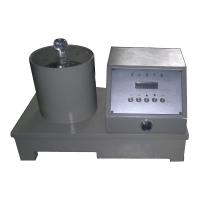
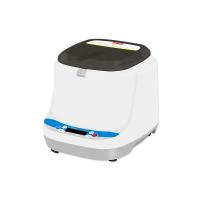
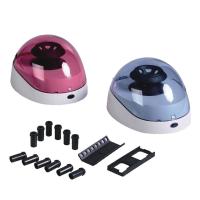
Centrifuges are commonly used equipment in scientific production and medical and health systems. At present, the electric centrifuges commonly used in laboratories include low-speed, high-speed centrifuges, low-speed, high-speed refrigerated centrifuges, and ultra-speed analysis and preparation dual-purpose refrigerated centrifuges. By discussing the use and maintenance of laboratory centrifuge equipment and some maintenance common sense, and analyzing common fault maintenance cases, it provides some common and quick maintenance methods for laboratory maintenance personnel to ensure the normal operation of laboratory instruments.
The centrifuge rotates the material to generate a large centrifugal force, and relies on this centrifugal force to complete the separation, concentration and purification of the material. Centrifuges are common equipment in scientific production and medical and health systems. With the development of science and technology, molecular biology, genetic engineering research and clinical medicine, higher requirements are placed on centrifuges. According to the rotating speed, the centrifuge is divided into three types: low speed, high speed and ultra high speed. The main characteristics of low-speed centrifuges are small body size, light weight, and speed below 4000R/min; high-speed centrifuges have a refrigeration system, a high degree of automation of the circuit control system, and an alarm display function. 4,000-20,000 R/min; ultracentrifuges and high-speed centrifuges are more complicated in structure, adding a vacuum system, and the automatic control and display system is more professional and precise, with a speed of 4,000-120,000 R/min.
1 Use, maintenance and repair of laboratory centrifuges
Guarantees a tight connection. Check the temperature of the heating humidifier and the Water Tank, and replenish distilled water in time; check the water storage tank in the breathing pipeline, remove the accumulated water in time, and clean the dust filter at the air inlet of the Air Compressor. Check the water filter bottle at the high-pressure air inlet of the main engine to remove accumulated water.
Regularly perform self-test and calibration on the ventilator. Regularly power on and comprehensively check the function of the ventilator to eliminate hidden dangers that may cause failure. Regularly replace the oxygen battery, skin bag, and bacterial filter. Regularly check and replace the accumulation bottle filter and air-oxygen mixer filter. Regularly remove dust , and check the internal pipes and filters that are prone to aging.
1.1 Use and maintenance
(1) The centrifuge needs to be placed on a stable and solid table before use, and the case should be grounded.
(2) The load needs to be balanced during use, and the centrifuge tubes must be placed symmetrically when placed. Only in this way can it turn up and ensure that it is not biased.
(3) When opening the centrifuge, be sure to cover the centrifuge cover.
(4) When the centrifuge is turned on and off, the speed must increase or decrease slowly, and the speed cannot be changed quickly.
(5) After use, the speed control knob should be turned back to "0" step by step, and then let it stop by itself. It is strictly forbidden to open the machine cover in the state of not stopping or turning on the machine.
(6) If the sound is found to be abnormal during use, it should be shut down immediately and inspected and repaired.
(7) Regularly (about half a year) check the wear of the commutator and brushes, and replace them immediately if there is excessive wear.
(8) The bearings of the motor should be filled with grease regularly.
1.2 Troubleshooting
(1) Severe vibration and loud noise
Check whether there is any unbalanced problem, the nut that fixes the machine is loose, and if so, tighten it; check whether the bearing is damaged or bent, and replace the bearing if there is any; Make adjustments.
(2) The motor does not rotate after power on
First check the power cord, plug, and socket, and replace them if they are damaged; if there is no problem, check whether the band switch or rheostat is damaged or the connection is disconnected. If it is damaged or disconnected, replace the damaged component and re-weld the connection; If there is a problem, check whether the motor coil is broken or disconnected (internal). If the coil is broken, it can be re-soldered. If the internal circuit of the coil is broken, the coil can only be rewound.
(3) The motor speed does not reach the rated speed
First check the bearing, if the bearing is damaged, replace the bearing, if there is a lack of oil or too much dirt inside the bearing, clean the bearing and add grease. Check whether there is any abnormality on the surface of the commutator or whether the matching between the brush and the surface of the commutator is consistent. If there is an abnormality on the surface of the commutator, if there is a layer of oxide, use fine sandpaper to polish it; If it matches, it should be adjusted to a good contact state; if there is no above problem, check whether there is a short circuit in the rotor coil, and if so, rewind the coil; check whether the speed regulating resistor W is adjustable, if there is no damage, measure the SCR Whether the conduction voltage Ug of SCR and SCR2 is normal. If the conduction of SCR1 and SCR2 is measured normally, it is forward conduction and reverse cut-off in normal conditions. Otherwise, replace the thyristor.
(4) There is a large spark between the commutator and the brush
Check whether the surface of the commutator is smooth. If the surface is uneven, use sandpaper to polish it. If the contact between the brush and the commutator is poor, use fine sandpaper to polish its part, and readjust the cooperation between the brush and the commutator; if the brush is faulty , you can only replace the brush; if there is no problem with the above, check whether there is a partial short circuit in the field coil or the coil to the ground, or a partial short circuit or open circuit in the rotor coil. No matter which one of the field coil and the rotor coil is damaged, the field coil or the rotor coil must be rewound.
(5) No cooling in the centrifuge chamber
Centrifuge refrigeration adopts compression type single-stage evaporative cycle refrigeration, and the refrigeration process needs to be composed of two systems. One is the control system and the other is the refrigeration system. It can be seen that if the centrifuge chamber does not cool down (that is, does not refrigerate), it may be that the control system and the refrigeration system are faulty. First check to confirm whether the control system or the refrigeration system is faulty. If the refrigeration compressor is running but the temperature in the centrifugal chamber does not cool down, it may be that the refrigeration system is leaking fluorine or blocked, and the refrigeration system should be checked for leaks and refilled with fluorine; if the refrigeration compressor is not running, it means that the control system is faulty. Check the temperature of the centrifugal chamber first Check whether the setting value and display changes are normal. If normal, check the temperature sensor of the centrifugal chamber and the plugs and wiring of the plug board to see if they are in good contact, whether the compressor starter (PTC) is damaged, or the compressor coil is disconnected. Check and solve them one by one.