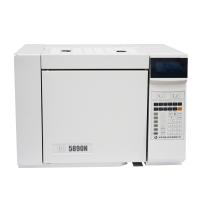
In recent years, with the development of modern instrumental analysis technology, more and more new technologies and methods have been applied to the research and development, production and component testing of coatings, which has promoted the healthy development of the coatings industry. The application of modern chromatographic instrument analysis techniques such as gas chromatography and liquid chromatography in paint testing is outlined.
0 Preface
Coatings are widely used. In order to be suitable for some special purposes or improve performance, the technical content of coatings is getting higher and higher, and the composition is becoming more and more complex. In order to learn from professional technology and develop or use high-performance coatings, coating composition testing has become an important means and shortcut to acquire professional technology, especially the digestion, absorption and even innovation of foreign high-tech are inseparable from the understanding of coating composition. How to obtain the information of paint composition is the key to the whole paint testing. Paint analysis is to purify the complex mixture to the purity required by various analytical instruments through certain separation-analysis processes and steps, so as to obtain information about the composition of the paint and the content of each component in the paint. In order to prevent the loss of analysis components, different coating systems should adopt different analysis procedures and steps. Always monitor the flow of substances during the initial process, because some minor components are often the key to determine the performance of the coating. Therefore, in the process of paint detection program design, the rationality of the design must be fully considered, and the loss of analysis objects that may be caused by each step must be predicted. With the rapid development of science and technology, various modern chromatographic analysis techniques emerge in endlessly. The main feature of chromatography is its superb separation ability. Its separation efficiency is much higher than that of distillation, extraction, centrifugation and other separation techniques. It has a wide range of applications. Chromatography science plays an irreplaceable important role in many frontier scientific fields. , there have been many studies on the application of professional chromatographic analysis technology to the detection of paint components, and this article will summarize it.
1 Gas Chromatography
Gas chromatography is a qualitative and quantitative separation and analysis technique. It is widely used in the analysis of pollutants in environmental samples, drug quality inspection, and natural product components due to its advantages such as high separation efficiency, fast analysis speed, and good selectivity. Analysis, determination of pesticide residues in food, quality control of industrial products and other fields. With the development of science and technology, the enhancement of people's awareness of environmental protection and the rapid development of the coating industry, gas chromatography has become a widely used and indispensable analytical method for large-scale precision instruments in the analysis of coatings. It is mainly used in residual monomers in polymer emulsions. , free monomer in paint, solvent in paint, VOC (volatile organic compound) in water-based paint, cracking analysis of paint resin, etc. [1-4]. Du Xiaogang et al[5] used capillary chromatography to simultaneously determine the triphenyl content in solvent-based wood coatings. The triphenyl content in the sample can be measured within 18.5 minutes after one injection, and the standard addition recovery of the method is 98.1%~ 101.0%, 97.9%~99.5%, 98.0%~100.2%, which provide effective means for controlling product quality in industrial production and testing products for environmental protection departments.
1.1 Pyrolysis Gas Chromatography-Fourier Transform Infrared Spectroscopy (PGC/FTIR)
Pyrolysis gas chromatography (PGC) is mainly used for component analysis of resin samples and is an important extension of infrared spectroscopy for resin analysis. The accuracy of acrylic resin analysis is higher than that of infrared spectroscopy. Pyrolysis gas chromatography combined with Fourier transform infrared spectroscopy (PGC/FTIR) technology combines the advantages of pyrolysis chromatography to analyze the qualitative structure of polymers and infrared spectroscopy, and can be widely used in the qualitative and quantitative analysis of polymer compounds. There are few research reports on this technology [6-7]. Zhong Shan et al. used PGC/FTIR technology and a large-diameter capillary column to analyze an unknown imported paint, qualitatively identify its main cracking fragment peak, and then deduce the composition of the paint from the generation of characteristic fragments. And compared with the conventional infrared spectrum subtraction method, the results show that: PGC/FTIR technology has the advantages of simplicity, rapidity, comprehensiveness and no need for standard samples, etc., and has a wide range of application values.
The advantage of PGC/FTIR combined technology is that the analysis of polymers does not require standard samples, and the composition and structure of polymers can be deduced directly based on the qualitative results of the cracked fragments generated; it can be conveniently and accurately qualified for low boiling point solvents in complex samples, especially For samples using multi-component low-boiling point mixed solvents, it shows its superiority; for some trace additives in samples, this technology can directly obtain their information without sample pretreatment, and can determine their structures. However, compared with other conventional polymer analysis methods, PGC/FTIR also has shortcomings, such as the inability to analyze inorganic fillers in samples.
1.2 Pyrolysis Gas Chromatography-Mass Spectrometry (PGC-MS)
The resin used as the base material in the coating is a high-molecular organic substance, which is difficult to volatilize. Some coatings are cross-linked and hard to dissolve and melt after curing, and separation is difficult. However, pyrolysis gas chromatography-mass spectrometry (PGC-
MS) analysis gave satisfactory results. Pyrolysis gas chromatography-mass spectrometry has the characteristics of fast, sensitive, and strong characterization. It can directly reflect the detection of a small amount of components in polymer materials and the subtle changes in the molecular chain structure. It is useful for the qualitative and structural research of polymers. etc. are very useful [8]. The energy required to cause polymer chain scission is obtained from heating it, so the cracking products of polymers and their distribution are directly related to the cracking temperature. When the pyrolysis temperature is too low, the pyrolysis is incomplete, and the pyrolysis products are mostly high-boiling compounds, which makes chromatographic separation difficult.
Pyrolysis chromatography is a pyrolysis analysis method for polymer materials. Under the action of instantaneous high temperature, polymers are cracked into many small molecular fragments according to free radical reactions, and these fragments contain information about the polymer chain structure. Separation of these fragments by gas chromatography yields a pyrolysis chromatographic fingerprint with structural characteristics of the polymer, which is the basis for qualitative and quantitative analysis of the polymer. PGC-MS uses an effective capillary column to separate complex cleavage products, and the mass spectrum signal gives the fingerprint mass spectrum of each cleavage product, that is, the characteristic cleavage product spectrum of total ion detection or selective ion detection. The "fingerprint" of different characteristic peaks can be used as the basis for qualitative detection of paint base materials, solvents, etc. Cao Jingyi et al [9] used PGC-MS technology to quickly analyze the film-forming substances in various coating samples, and through effective capillary gas chromatography separation and mass spectrometry identification, the specific species of coating base materials can be determined. This method is suitable for all kinds of paint samples, avoiding the complicated and lengthy separation steps such as infrared and NMR that need to be determined by chemical separation and purification. Short and other characteristics, not only can determine the general category of paint base materials, but also analyze and detect the specific varieties of resins.
2 effective liquid chromatography
Effective liquid chromatography (HPLC) is a new separation and analysis technique developed on the basis of classical liquid chromatography and gas chromatography in the late 1960s. The significant difference between HPLC and gas chromatography is that the mobile phase is liquid. It can analyze organic compounds with high boiling point, medium relative molecular mass, thermally decomposed, strongly polar compounds, ionic inorganic compounds, and biologically active biomolecules. It is generally believed that organic compounds with a relative molecular mass below 2000 can be analyzed by liquid chromatography. It is estimated that gas chromatography can only analyze about 20% of organic matter, while about 80% of organic matter can be analyzed by HPLC. Compared with structural analysis methods such as infrared spectroscopy, it is a separation analysis method and has the function of preparing samples. It is very suitable for the separation and analysis of mixtures and plays an important role in the determination of certain components in coatings. For example, using effective liquid chromatography Determination of plasticizer phthalate compounds in nitro coatings, phenolic fungicides in water-based coatings, polycyclic aromatic hydrocarbons in silicone coatings, formaldehyde content in coatings, etc.
Effective liquid chromatography is widely used in the detection of antifouling agents in marine coatings. Due to the needs of environmental protection, in recent years, it has been used in the determination of the release and metabolite content of antifouling agents in low-toxic antifouling coatings and the development of new non-toxic antifouling agents. It also has a very wide range of applications in separation and detection. The HPLC analysis of organotin, an antifouling agent for toxic paints, has played a very effective role in the inhibition of marine biofouling in ship antifouling paint. With the development of marine monitoring technology, the toxicity of organotin and the harm to the ecosystem are increasing. recognized by humans. The concentration of organotin in the marine environment is very low (10-12~10-9), and there are many kinds, so it is difficult to meet the analysis requirements of high sensitivity and high selectivity with traditional instruments. One of the more mature methods is GC (gel chromatography) as the means of separation, coupled with a Detector suitable for metal ion analysis [10]. HPLC can analyze organotin that is not suitable for GC, and is suitable for the direct separation of most polar and non-polar organotin compounds. Compared with GC, HPLC has the following characteristics: firstly, without extraction and derivatization, different forms of tin in the sample can be directly separated at normal temperature, which not only shortens the analysis time, but also reduces possible losses in the analysis process; secondly, Good separation can be obtained by changing the stationary phase and mobile phase; third, it is especially suitable for the separation and speciation analysis of biologically active compounds [11].
Gel chromatography is a kind of liquid chromatography. Its separation principle is different from other chromatography methods. It is separated according to the size of molecular volume, so it is also called size exclusion chromatography. Effective gel permeation chromatography is a liquid chromatography method developed in the 1960s. Its main purpose is to determine the relative molecular mass and distribution of polymers.
3 Epilogue
At present, the rapid and sensitive instrumental analysis method has largely replaced the tedious and time-consuming chemical analysis method, greatly improving the efficiency, accuracy and reliability of the analysis work, and professional chromatography technology has become indispensable for the detection of paint components. important means. The choice of which chromatographic method to analyze and study the sample mainly depends on the relative molecular mass of the analyzed sample and the purpose of analysis. If it is a volatile compound with a boiling point ≤ 350 ℃, and its composition and content must be analyzed, gas chromatography is generally used; if it is a compound that is not volatile, has poor thermal stability, and a relative molecular mass < 2000, liquid phase is used. Chromatography is used to analyze its composition and content; for polymers with a relative molecular mass > 1000, especially for the purpose of analyzing and researching the relative molecular mass and its distribution, the best choice is gel chromatography.