In the usual sample measurement, there are many factors that affect the accuracy of the Lovibond Colorimeter measurement results. If it is used improperly, even if the instrument is qualified, it will produce a large error and bring unnecessary troubles to the enterprise. Therefore, when using Lovibond When measuring color with a Colorimeter, the following issues should be paid attention to:
1. The influence of different observers
The color of an object depends not only on external physical stimuli, but also on the visual characteristics of the human eye. Since the instrument is a visual instrument, different observers use the same instrument to measure the same sample, and different measured values will be obtained, sometimes greatly different. This is because there are certain differences in the visual characteristics of different observers, which is caused by the different resolution of colors by different observers. How to reduce the artificial measurement error? The correct measurement method is: Find 3 people with normal color vision, use the same instrument in the same environment, measure the same sample back to back, and take the average of the 3 measurements as the measurement result.
2. The influence of uneven background color
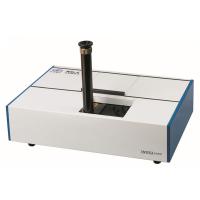
Lovibond Colorimeter consists of a pair of light sources, eyepieces, standard filters, standard white boards and cuvettes. Before use, first move the standard filter out of the field of view to observe whether its background color is uniform. If the background color is uneven, it will cause errors and directly affect the observation results. Uneven background color can be checked: whether a pair of standard whiteboards are consistent, whether the frosted glass in front of the light source is polluted, whether the eyepiece and the light source are polluted, etc.
3. Effects caused by standard color filters
The standard filter of Lovibond Colorimeter is composed of four sets of color filters: red (R), yellow (Y), blue (B) and gray (N). There are certain differences in the standard filters of different instruments. The surplus of the standard color filter should meet the requirements of JJG758-1991 "Lovibond Colorimeter" verification regulations, which requires metrological verification of the Lovibond Colorimeter, and only qualified instruments can be used to measure the color of the sample.
4. Improper use of the instrument causes chromatic aberration
Since the standard optical filter is made of colored glass, improper use will make it polluted, such as: when measuring edible oil, sprinkle edible oil on the standard optical filter, and place the instrument in a room with high humidity and dust If it is inside, it will cause the standard color filter to be polluted and cause errors. If the standard color filter is polluted, its resolution will be reduced, especially for small color filters. Because the color difference of the small standard color filter is very small, the color difference of the polluted standard color filter is more difficult to distinguish, which requires the standard color filter to be removed and mixed with 70% ether and 30% ethanol Clean, clean, and then measure. But pay attention when cleaning: some standard color filters are very thin and easily broken, so they must be scrubbed gently.
5. Observer's psychological factors cause chromatic aberration
The same sample is measured by two Lovibond Colorimeters that have passed the metrology verification, and the measurement is carried out by two observers, and sometimes a large difference is found. Why does this problem occur? One of the reasons is caused by observer psychology. Because color is a psychological, physiological, and physical quantity, it has a lot to do with a person's psychological factors, especially when measuring small color samples, the performance is more obvious. For example: two observers measure the same sample, and the standard value is Y20R0.3. First of all, when the two observers measure back to back, the error at Y20 is not necessarily large, but a larger error will occur at R0.3. If one of them measures when the other person's measurement result is known, the two measurement results may be the same, which is the result of human psychological factors. In order to eliminate human psychological factors, different observers should try their best to measure the samples back to back. The results measured in this way are averaged, which can be used as the final measurement value, and the error is small.
6. Effects of continuous measurement
For continuous measurement of a certain sample, the initial observation feels that the color of the tested sample and the color of the standard color filter have a certain color difference, but the observation time is long (for example, after 1 minute), and the difference between the tested sample and the standard color filter is felt again. The color is consistent, which is caused by visual physiology. Because the observation time is long, the resolution of the human eye is reduced. Therefore, when measuring, stare at a certain color for a while (for example, after about 10 seconds), quickly turn your sight away, stare at the distance for a while, and then perform the next measurement.
7. The influence caused by the inconsistency of the two light sources
Due to long-term use of the Lovibond Colorimeter, the bulb will be damaged naturally. If the user replaces them at will, the luminous flux of the two bulbs may not be the same, making the background color in the field of view uneven, resulting in parallax. If the bulb is damaged, the two bulbs should be replaced at the same time. When replacing, the working current of the two bulbs should be measured, and the difference should not be greater than 5mA. When the enterprise has doubts or disputes about the measurement results in actual work, the Lovibond Colorimeter can be sent to a competent metrology department for arbitration verification. Use a Spectrophotometer with an accuracy better than 0.5% to measure its standard color filter piece by piece under a 2° field of view and CIE standard illuminant A. The chromaticity coordinates x, y and stimulus of the standard color filter The value Y needs to meet the requirements of JJG758-1991, and verify other corresponding indicators.
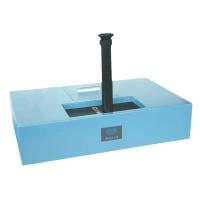
Lovibond Colorimeter
Lovibond Colorimeter, also known as comparative Colorimeter or Lovibond Colorimeter, is a color measuring instrument. It can be used to measure the color of plastics, textiles, food, jam, grain oil, grease, rosin, spices, rubber and other substances. The unit used by the Lovibond Colorimeter is a special unit: the Lovibond unit. The Lovibond unit is a non-standard SI unit, but it has been accepted internationally after long-term application. It provides a unified standard for users, and Has been used internationally.
The Lovibond Colorimeter is a visual Colorimeter designed using the principle of subtractive color method. It uses a series of color filters (red, yellow, blue, gray) to absorb white light, and uses human vision to adjust the color in a field of view. The color and brightness are achieved to match the instrument. One half of the field of view presents the light of the color to be measured, and the other half of the field of view presents the light of the comparative color produced by the combination of known standard color filters.
The observer can change the combination of standard color filters through visual observation, and can match the same color as the sample to be tested, and can express it with the color number. When measuring, change the color of the comparison light by adjusting the three primary color filters, and adjust the neutral filter (gray film) to change the brightness of the light color until it matches the color to be measured. At this time, the Lovibond chromaticity value of the color filter used is the Lovibond chromaticity value of the tested sample.
The accuracy of the Lovibond Colorimeter mainly depends on its Lovibond color filter. The three subtractive primary colors used in it: cyan, magenta, and yellow are the corresponding complementary colors of the three additive primary colors red, green, and blue. Lovibond color filters are made of glass with colors that gradually change from light to dark, among which the red and yellow filters have R0.1~70 and Y0.1~70 respectively, each with 25 grades, and the blue filter has B0.1 ~40, a total of 22 levels. Red, yellow, and blue color filters of the same grade are combined to obtain approximately neutral colors. In addition, the Lovibond Colorimeter is also equipped with a neutral filter (gray film) N0.1~2, a total of 12 levels, used to change the brightness factor Y.