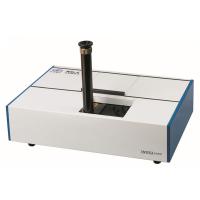
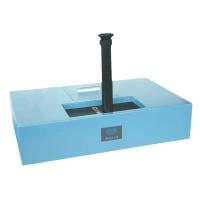
在我国的科学技术辞典中,译作拉维邦德色辉计。这种比色计用途广泛,凡是涉及到有颜色的产品的生产与商业中都能使用,作为色泽检视的可靠仪器,如:颜料、徐料、布、纸张、酒、烟、糖果、果酱、药品和油脂 etc.。除此之外,对许多能产生具有颜色反应的一些物质,也能用该仪器作定性的与定量的分析,如试剂分析、水质分析等,罗维朋公司有几本这方面的专著和手册。美国油脂化学家协会廿多年前就颁布了按罗维朋色泽分析与分级标准的油脂色泽的测定方法。罗维朋体系早已为国际上普遍接受,近年来,我国油脂生产与贸易中,也采用了这一体系,并制定了相应的色泽指标。因此,罗维朋比色法较快地在我国普及开来。
罗维朋比色计虽操作程序简单,易于掌握,但在使用中仍存在不少问题。应贵刊编辑部之约,将笔者所了解的普遍存在的一些问题作一解答。限于水平和情况掌握的局限,所谈难免谬误颇多,仅供同行们讨论、指正。
一、如果用1时比色池测得甲油红色5.6、黄色2.0,而士时比色池测得乙油红色3.2,黄色15.能否将乙油折算成红色6.4,黄色03.0,因此得出乙油比甲油色泽深的结论?
结论不正确。罗维朋比色计使用的光源是白光,即是包括全部可见光的波长的光。这与通常的分光光度计所用的光是不同的。比尔一朗伯定律讲光密度和溶液的浓度成正比例’一个重要的前提是一种给定波长的光,也就是单色光,而且这个定律也只有在低浓度的溶液中才能成立。当然,可能某些液体的色泽浓度与液体的厚度,在白光下呈正比,但是简单地用色度读数按液体厚度的比例进行计算也不可靠,因为这里的成正比’实际上是有条件的,此外,它的不可靠还与罗维朋色度单位的划分与人的辨色能力等因素有关。如当色度值在01以上时,眼睛对于微小的色差就难以辨别了。因此,使用本仪器的时候,需要按规定使用比色池;在没有明确规定的,需要注明比色池的规格;只有在相同的比色池的前提下,才能进行样品间的色泽比较。
二、如果某油测得匹配值为红色6.5,黄色520,兰色1.0个罗维朋单位,能说该油含兰色或显兰色吗?
This statement is incorrect. When Lovibond colorimetrically measures the color of oil, it uses the matching of three basic color chips of red, yellow and blue (sometimes a neutral color chip is added in front of the sample) to obtain a composite color similar to the sample. The color values of the three color chips are uniformly divided into 99.9 Lovibond units. In order to facilitate understanding, it is advisable to do a simple experiment of matching three color chips first: when one color chip is pulled separately, red, yellow, or blue can be observed respectively; When the chromaticity value is the same, it can be seen respectively: orange compounded by red and yellow chips, green compounded by yellow and blue chips, purple compounded by red and blue chips; pull the three color chips at the same time, and take the same color When the brightness value is high, only black with different brightness can be observed in the lens barrel, if the three colors take the maximum value, only black. This shows that the result of compounding the three equivalent color chips does not show any color, but only blurs the vision. That is to say, when red, yellow and blue color chips are all used, the lowest scale value of the three color chips should be deducted from the apparent color value of the sample (1.0 is deducted in the above example). This value is called 'darkness' in Lovibond terminology. The apparent color of the oil in the above example is a compound color of yellow (42) and red (5.5), expressed as darkness 1 yellow 81.5/orange 5.5 according to the Lovibond system, that is, a very dark yellow-orange color, which does not exist at all blue color. The darkness reflects the degree to which the sample transmits white light, and a high darkness indicates that the oil color is dark and not clear. In actual production, if the rapeseed is harvested earlier, when the oil is pressed, the chlorophyll contained in some immature seeds will also be dissolved in the oil. Since green is a compound color of yellow and blue, this will also increase the matching blue value and increase the darkness of the oil. In addition, the factors that increase the darkness include other impurities, etc. Therefore, further analysis is needed on the reasons for the increase of darkness.
3. In the above example, since oil does not contain blue color, why do some standards have blue color standard in addition to yellow and red standards?
The apparent color of grease and matching standard value are two different terms. In the measurement, the scale numbers of the three color chips are toggled, and the Lovibond system is called the matching standard value', which also includes brightness, that is, the value of the neutral color chip added in front of the sample. In the current oil trade, the so-called Lovibond colorimetric value refers to the actual measured value, that is, the matching standard value, rather than the apparent color of the oil. In some oil commercial standards, the blue color value is limited, as can be seen from the answer to (2), which actually limits the content of some impurities that affect the color and clarity of the oil. This is because when the oil contains impurities such as chlorophyll, the cost or technical difficulty of decolorization will be increased in the refining process, and as a production unit, there should be requirements for the quality of raw materials.
4. What does the brightness in the Lovibond system refer to?
In the matching color film box of the Lovibond Colorimeter purchased in recent years, there are two levels of neutral color film. This is used when the color is brighter than the composite color of the matching color chip. It is added in front of the sample to increase the blurring of the color of the sample, that is to say, to make it a little darker. The neutral color chip is equivalent to the composite color when the three color chips of red, yellow and blue are equivalent. When we measure very clear refined oil, we often use the Lovibon terminology to call the value of the neutral color chip used as brightness. Combined with the previous concept of darkness, it is difficult to understand that only when a single or two color chips are used for matching color chips, it is possible to use neutral color chips; if all three color chips are used, it is also possible to dial up If the neutral color film is used, the observation must be inaccurate, and the color film should be readjusted. The values for darkness and lightness have nothing to do with color. For oils, it reflects the degree of clarity (light transmission), which can be used to measure the commercial quality of oils.
According to the principle of darkness and brightness, I think that the darkness (three color chips of equal value) and brightness (neutral color chip) can be used to check whether the dual light sources of the instrument are consistent. That is, when no sample is added, turn on the light source, then dial a certain brightness value, and then dial the three-color chip to match it. If the matched darkness value is inconsistent with the brightness value, or there is a certain color value, it means There is a difference in the quality of light emitted by the two bulbs. This may lead to errors in the measurement.
5. What does the apparent color refer to? What are the regulations?
被测物体的外观色泽称为表观色泽。按罗维朋体系,千颜万色归结起来只有:红、橙、黄、绿、兰和紫六种颜色。对其间的较小的区别又有红橙、黄橙、黄绿、兰绿、红紫和兰紫几种称呼。红、黄、兰三种颜色由单种色片决定,橙、绿、紫分别由红一黄、黄一兰、红一兰二种色片决定,上述的红橙、黄橙 etc.,是看两种颜色中何种占的比例大,如匹配值为红6.。,黄2.0,兰为。,则该物表观颜色为黄橙,若定量的表述为:黄(14.0)橙(6.0),即把二者中所占此重大的冠在前,此外,在六种颜色前还可以加上暗,和亮,度的数值,以作色泽鲜明上的进一步区分。例:某样匹配值:红一6.2,黄一2.0,兰一2.2,该样表观色泽是暗度2.2黄(15.5)橙(4.0);又如:某油样匹配值:红23,黄15.0,兰。,亮度2.1;该油的表观色泽为亮度1.1黄(12.7)橙(2。3》罗维朋体系采用这种简单的几种术语,对几乎所有色泽做出定量的统一的表述。有仪器的同志可仔细看看仪器使用说明书上附的一张罗维朋体系示范读数,表,上面举的议个实例看懂了,对表观色泽的问题就基本上把握了。还应明确一点,日常生活中和商业上对颜色的称呼,如玫瑰红、鸭黄、血清或孔雀兰 etc.,与罗维朋体系的表达是截然不同的。
六、罗维朋比色计使用中应注意的几个问题
The Lovibond Colorimeter is determined by naked eyes, so attention should be paid to protecting the color discrimination ability of the eyes during operation. People's ability to distinguish is inversely proportional to the degree of eye fatigue with the extension of gaze time, and is also closely related to the observer's age, vision, and color discrimination. General observation procedure: firstly, you can roughly toggle a certain value on the appearance color of the sample, adjust the color chip as quickly as possible during the measurement, and when you think it is OK, leave the eyepiece, look into the distance, and check again; Let several comrades verify it. In short, do not stare at the eyepiece for too long, and pay attention to proper interval rest. Related to this is that the inappropriate seat height of the Tester will also increase the visual burden; the position of the instrument should also be careful not to have external light directly shining or reflecting to the observer's eyes. In terms of color measurement, of course there are differences in color discrimination among people, but as long as human factors are excluded, it is not difficult to unify within the specified allowable error.
Another point is the light source. According to the regulations of Luo Weibo, the validity period of the light bulb is 10 hours. To replace the light bulb, you need to use the special light bulb of the instrument, and you need to change two at the same time. Due to the age of the bulb, the heating degree of the filament and the light quality will be inconsistent. Then pay attention to whether the power supply voltage is consistent. Since the instrument does not have a voltage regulating and stabilizing device, in places where the power supply quality is poor (such as: the working voltage exceeds ±5% of normal), in order to ensure the normal light source, it must be equipped with a stabilized power supply. The light source is directly related to the measurement results, do not ignore this.
When the Lovibond Colorimeter measures transparent liquids, another important aspect is the selection of the optical path (i.e., the colorimetric pool); because in the analysis of the color of oil colorimetric pools have regulations. Not much to say here. As for the relationship between the color and light of an object, I suggest that readers who are not very clear about this, read the relevant chapters in physics textbooks, which will be beneficial to help understand the combination of color and luster, darkness, etc. in the Lovibon system.