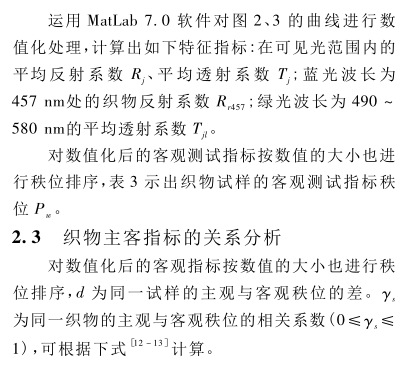
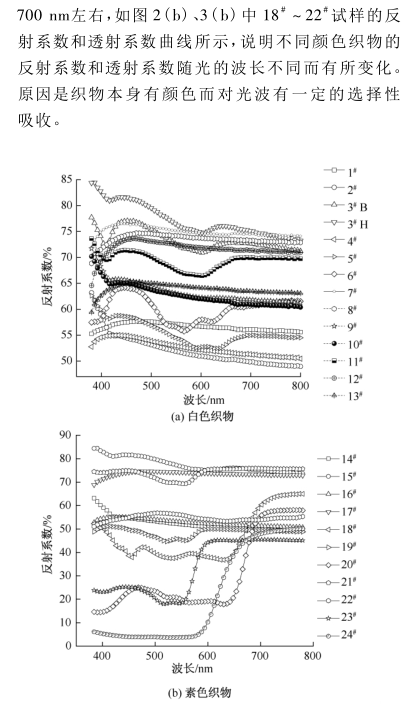
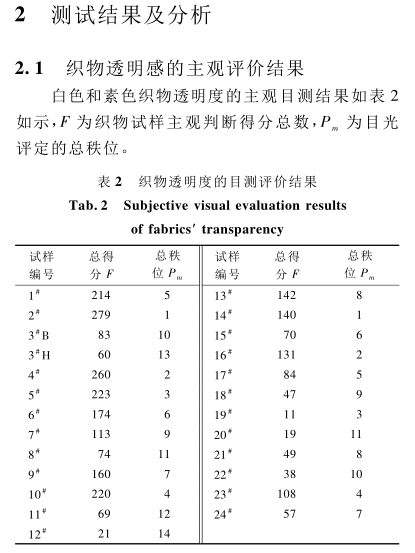
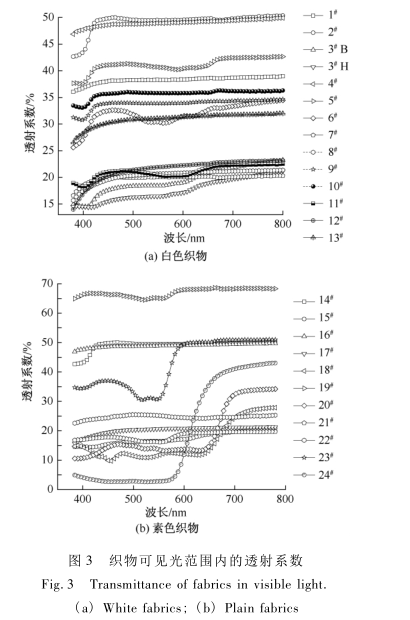
Combined with the subjective visual evaluation method, the feasibility and applicability of the Whiteness Meter and UV-visible Spectrophotometer test indicators in characterizing the shading properties of fabrics are studied. The results show that: the transparency measured by the Whiteness Meter can reflect the visual transparency of the fabric to a certain extent, but its numerical value is more significantly affected by the fabric color; the correlation between the transparency value of the colored fabric and the visual transparency is lower than that of the white fabric fabric. The average transmission coefficient of each monochromatic light in the visible light range measured by a UV-visible Spectrophotometer is more suitable for characterizing and evaluating the shading performance of fabrics, especially for fabrics of different colors. Values are more closely related to visual transparency. The smaller the average transmittance value, the better the light-shielding property of the fabric. The fabric with a value greater than 40% has a clear sense of transparency, and the fabric with a value less than 20% is opaque.