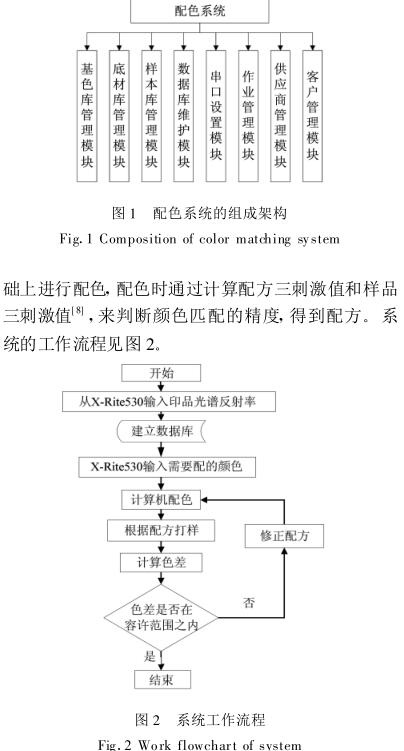
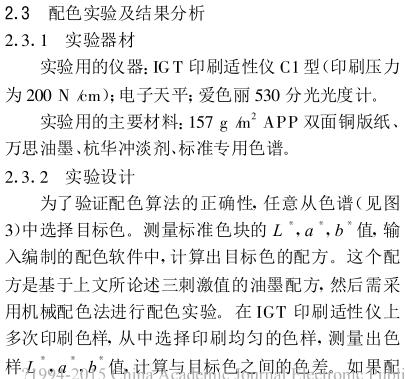
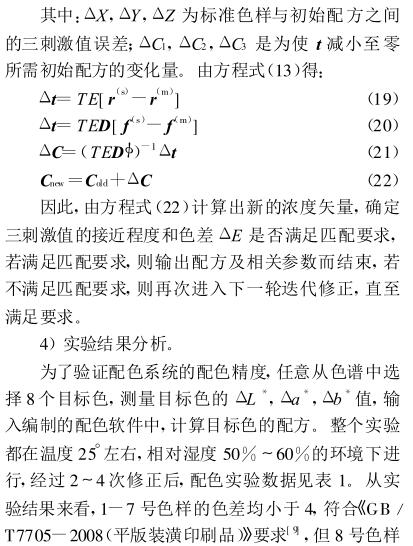
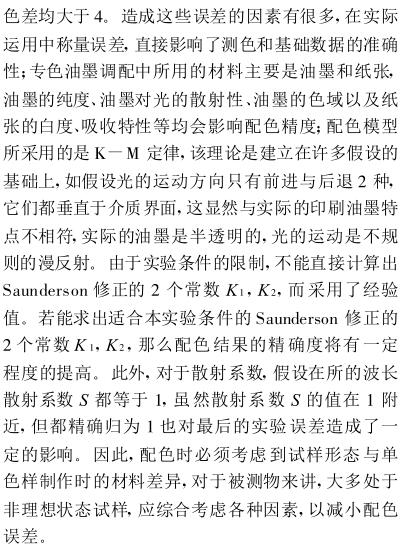
In offset printing, other color inks other than yellow, magenta, cyan, and black inks are often used to reproduce the color of the original, that is, spot color inks. For the use of spot color inks, color matching is often required. Color matching is the process of blending several simple colors, such as yellow, magenta, cyan primary color inks and black inks, into sample colors in different proportions . In printing enterprises, the traditional manual color matching is a color matching method that has been used for a long time. This color matching method is often affected by the physiological and psychological factors of the color matchers and other objective conditions. It is difficult to maintain stable product quality. Accurately lead to chromatic aberration in , resulting in a large number of waste products. Therefore, the development of color matching software is more conducive to solving the problem of color difference in the color matching of spot color inks, saving the time and cost of color matching of spot color inks, and improving the speed and efficiency of color matching.
1 Theoretical analysis of color matching
1.1 Kubelka-Munk theory
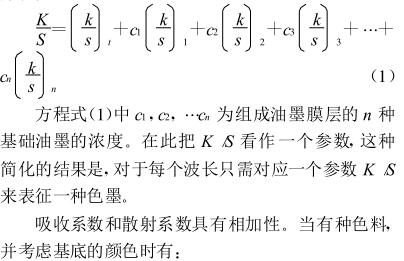
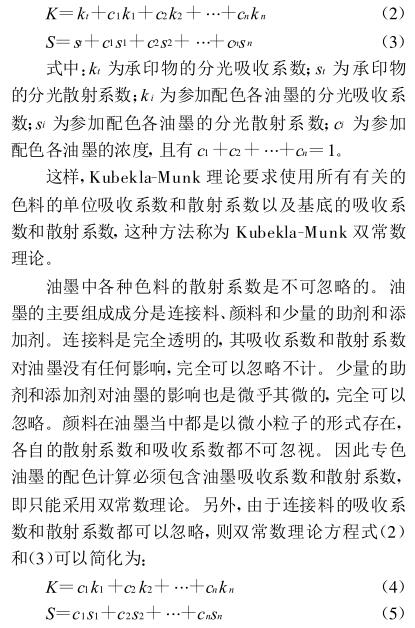
The KM theory starts from the nature of the absorption and scattering of light by color substances, and studies the relationship between the mixed color formula of different colors and the reflectance . Since the reflectance spectrum of the color truly reflects the essence of the color, the deviation of color matching caused by the inability to truly express the color of the spot color standard sample is avoided . According to the KM theory, the absorption and scattering coefficients are applicable to the principle of summation, and the KM single constant equation can be obtained