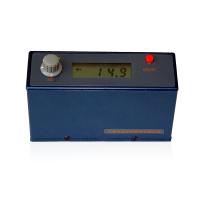
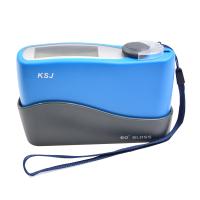
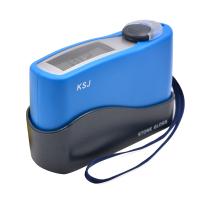
1 Wool Gloss
The luster of the fiber refers to the ability of the fiber to reflect light . The luster of wool is related to the state of the scales on the surface of the fiber. Due to the difference in the shape, size and arrangement of the scales, the strength of the reflected light at each part of the wool surface will be different. According to this, it can be Wool is divided into four categories: full-gloss wool, silver-gloss wool, semi-gloss wool and dull wool.
2 Testing standards for wool luster
The objective inspection method of the washed wool color of the New Zealand Wool Research Institute (WRONZ) has become the New Zealand national standard (NZS87071984), and this standard has become a test method (WTO-E- 14)
This method is based on the CIE color measurement system of the International Commission on Illumination and is used for the measurement of wool color. Reflected light can be divided into three primary colors of red, green and blue (for convenience, X represents red, Y represents green, and Z represents blue), which is called the stimulus value.
Strictly speaking, all three stimulus values are needed to fully describe the color of wool, however, it is not possible to combine the three into a single index. Shiny wool will reflect a larger part of the light that hits it back. All three bands give high values. For New Zealand wool, there is a high degree of consistency between the X and Y values, so it is sufficient to use the Y value as an indicator of wool brightness; the difference between green (Y) and blue (Z) represents the strength of yellow, and YZ Values express yellowness/whiteness. Good shades of wool are brighter (higher Y value) and have a lighter yellow color and lower YZ value. The irritation value index of New Zealand wool luster is shown in Table 1. Table 2 shows the specification requirements for wool luster of different dyed products.

3 Detection method of wool luster
Use two wool samples weighing about 12g to remove weeds by mechanical treatment, and then impregnate with polyethylene glycol to remove other impurities. During this process, the wool is opened, mixed randomly, and the color distribution within the sample is uniform. Next, the two wool samples are scoured according to the laboratory regulations (regardless of whether the tested sample is raw wool or scoured wool), and then dried at a temperature below 60°C to avoid yellowing of the wool. After drying and combing, Humidity adjustment was carried out under the standard atmosphere of 20C and 65% relative humidity.
Randomly select two sub-samples from the above-mentioned wool sample, and manually remove the residue visible to the naked eye as a sample. Each sample is loaded into a sample cylinder according to the specified density, and measured with a Colorimeter (or Spectrophotometer ). The sample is irradiated by the known illuminance characteristics ([International Commission on Illumination] standard light source C) light source reflects from the sample and flows through the color filter lens, presenting the spectral curves of red, green and blue bands, and the respective intensities are measured electronically , respectively give XY and Z three stimulus values.
Measure two faces for each sample and identify the difference between the readings. If the difference exceeds 1.5 units, measure two more faces for each sample (making the total number of measurements reach 8 faces). If the difference still exceeds, Add two samples for measurement. Calculate the average value with all the readings obtained, and record it on the inspection certificate. If it is found that there are more than 5 black hairs per gram of weight in any sample, the content of black hairs must be recorded on the certificate.
Under the 95% confidence level, the accuracy of XY and Z values of this detection method is 2.2 units, 2.3 units and 3.0 units respectively, and YZ is 1.5 units. This is for raw wool, and it has taken into account the internal and external laboratories variation between.
4 Practical significance of wool gloss detection
Any kind of wool has its inherent luster, which has a direct impact on the appearance of woolen fabrics. Strong luster can make the fabric bright, otherwise, the fabric will look dull
The significance of gloss detection lies in: ① Determine the background color of raw materials, and provide a basis for the dosage coordination of wool processing and dyeing. ②Under the approval of both parties to the transaction, the wool color test data can be used as a specification description of raw wool delivery and used in trade contracts. ③ As one of the wool quality traits of fine-wool sheep, it participates in the weighting of comprehensive selection index of breeding in breed breeding ④
Remind producers to strengthen wool quality and technical management in the process of wool production and circulation, so as to ensure that wool will not be polluted in this process and affect its luster.
It is worth pointing out that there will be some differences between the wool color index obtained by this test method and the color of commercial scoured wool, because the former wool sample does not contain any pollutants, while commercial scoured wool often has some pollutants attached.