Including Schwan-Stabilo cosmetics company, Wal-Mart, Target, General Motors, more and more world-scale large companies have put forward stricter standards for suppliers to ensure that their employees responsible for color quality control Has the ability to distinguish between different shades. Echoing the increasing requirements of these large companies in improving customer satisfaction, reducing scrap rate, and shortening time to market, suppliers in various industries including cosmetics, textile printing and dyeing, injection molding and printing are constantly striving to improve themselves. standard.

In the past, vendors have primarily improved color communication systems with hardware focused on color communication standards, such as Spectrophotometer s to measure how well colors match standards and light boxes to provide standard lighting. However, to meet the requirements of the new standard, suppliers now need to focus on human perception of color. Companies need to determine whether employees such as quality controllers, printing equipment operators, chemical inspectors, soft goods buyers, etc. have sufficient color discrimination to perform their duties properly.
Color vision problems are much more common than most people think: about 1 in 12 men have some kind of color vision deficiency. In addition, a range of factors can impair people's ability to distinguish colors and shades, such as:
• Clouding of the lens and cornea due to aging
• Increased blood pressure due to stress
• certain medicines
•disease
• Excessive exposure to UV rays in the sun
In many cases, people don't even know they have deficiencies in their ability to distinguish colors and shades until costly mistakes are made on the production line, in the finished product warehouse, or when placing large orders based on samples.
Poor color vision can lead to delayed shipments, returns, products not meeting specifications, and customer complaints. Poor color resolution can be costly in certain industries, including:
•Fashion design, graphic interior and its products
• Printing and packaging
• Plastic production – color density and molding
•Paints, paints and inks
•Architectural Coatings
• Textile printing and processing
•cosmetic
Fortunately, there are quick, inexpensive, and effective tests available for companies to accurately determine whether someone is suitable for a job that requires precise color discrimination. X-Rite is the world's largest manufacturer and designer of color measurement equipment and software solutions. It provides the Farnsworth-Munsell 100-Hue Test color vision test system that has been tested for more than 60 years to determine whether an individual's color discrimination ability is poor, normal or very good. The FM 100 Hue Test is one of the most widely used tests in the industry where the importance of color control cannot be overstated, and is also used to detect medical conditions such as eye disease, diabetes and Parkinson's.
"Sales of the FM 100 Hue Test color vision test kit have doubled over the past five years as the company has responded to market demand for better color communication," said Art Schmehling, product manager at X-Rite. The test system is a cost-effective solution that can help them meet the increasingly stringent requirements of ISO and QS standards." Since the price of each test system does not exceed US$800, major companies are scrambling to buy it. With advantages such as relatively low price, ease of use and accuracy, the test system has become the standard for color vision evaluation in many industries.
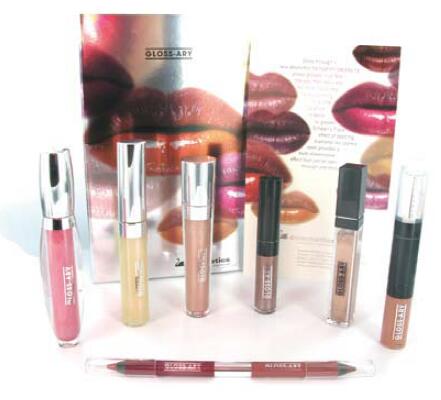
Schwan-STABILO Cosmetics GMBH & Co. is one of the customers who adopt the FM 100 Hue Test color vision test system. The company is a professional manufacturer of cosmetic pencils in the world. "In Schwan's COLOR COSMET-ICS product line, we offer more than 10,000 colors and more than 200 texture structures, covering a variety of applications in the cosmetics field." Heidrun Crim, who works at Schwan's cosmetic pencil research and development department in Heroldsberg, Germany Said, "To produce such a huge variety of products, we adopt strict technological processes in color production to maintain high quality standards and ensure color accuracy and consistency." FM 100 Hue Test is one of the methods adopted by Schwan. To ensure that the color of the eye shadow can be well matched with the lipsticks already available in each fashion season.
In addition to being widely used in various professional businesses, the FM 100 Color Vision Test is a prescribed test for a range of standards, including:
• ASTM 1499-97, Guidelines for the Selection, Evaluation, and Training of Observers.
• ASTM 1729-96, Standard Practice for Visual Evaluation of Color and Color Difference of Opaque Materials.
• AATCC EP9-2002, visual evaluation of textile color difference
• SPI PB-1, Visual evaluation of reflective color
• SAE J361, Procedure for Visual Evaluation of Interior and Exterior Automotive Trim
• Visual grading and color matching on TAPPI T515 paper

Personnel performing color vision assessments can typically complete the FM 100 Color Vision Test within 20 minutes, and training on how to administer the test takes only 5-10 minutes. Because the test is quick and effective, companies often conduct annual tests of their employees to assess whether their color perception has changed over time.
Simplicity is one of the hallmarks of the FM 100 Hue test. The test managers only need to randomly distribute four color palettes to the participants, with a total of 85 color chess pieces. These chess pieces have different hues, but the same luminance and chroma values. The test requires participants to arrange the color chess pieces in the correct order according to the hue. Color pieces that are wrongly arranged will be scored, and the lower the score, the stronger the ability to distinguish color differences.
The results of the test can provide the company with two important pieces of information: whether the test participants have normal vision and what color discrimination problems different individuals have. For participants with color perception deficits, this test can identify specific color-discrimination difficulties, such as difficulty distinguishing between red and green.
Although the basic test has not changed much from the beginning, X-Rite uses software compatible with multiple operating systems to make test management and result data collection easier to use. Available in multiple languages, the software offers great flexibility in data storage, retrieval and output. Each FM 100 Color Vision Test will receive a certification label confirming that the test has been tested and approved according to X-Rite quality procedures.
"With just a little more effort, companies that value color communication can outperform those that are lax about the appearance of their products on the market," Schmehling said. A tool like the Munsell FM100 color vision test will always help a company maintain its competitive advantage.”