case study
X-Rite and Spectromatch color-matching technology effectively transforms facial prosthetics
about
The Royal Preston Hospital is part of the Lancashire teaching hospital network and provides a full range of regional general hospital services including emergency department, intensive care, general practice (including geriatric care, general surgery, oral and maxillofacial surgery, ear, nose and throat) surgery, anesthesia, children's services, women's health and maternity) and some local specialist services including cancer, neurosurgery and neurology, nephrology, orthopedics and burns, rehabilitation, etc., is a major trauma in Lancashire and south Cumbria center. The hospital has 700 beds, operating theater complex, outpatient department and educational facilities. Its maxillofacial laboratory already employs some of the UK's expertise for the accurate fabrication of maxillofacial prostheses.
challenge
Being able to wear a facial prosthesis can be life-changing for patients after their face has been severely damaged by cancer or traumatic injury. However, the process of producing a maxillofacial prosthesis that perfectly matches the patient's skin can require considerable effort and time. Brendan McPhillips, a maxillofacial consultant and technician at the hospital, had hoped for a better way to match skin tones when making prosthetics.
"If the prosthesis doesn't match the patient's skin tone, the patient is less likely to use it," he explained. "And matching skin tone also often means that the edges of the prosthesis need to have slightly different shades where it touches the skin in different parts of the face in order to look as natural as possible."
solution
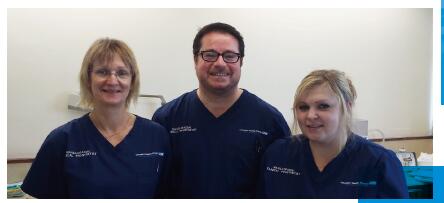 "One of our key suppliers is Spectromatch, an X-Rite partner," McPhillips said. "We had been using Spectromatch's technology for quite some time before they contacted us about a new solution coming to market that would allow us to quickly and accurately match skin tones based on the X-Rite CAPSURETM™ Spectrophotometer .thereby speeding up the color accuracy of making facial prostheses. I told them right away that I was interested and that I would buy such a solution as soon as it became available.” Spectro-match’s e-skin uses X-Rite’s A digital color library of more than 20,000 skin tones is used to match the skin color of patients in maxillofacial restoration applications. Each entry in the color library has a corresponding colorant recipe. The specially designed electronic skin Spectrophotometer measures the skin tone, instantly retrieves and displays the corresponding colorant formula on the screen. Clinicians can then quickly and accurately weigh out the required formulation.
result
“电子皮肤采用爱色丽的技术,已经有效改变了面部假体制作业务,”McPhillips 激动地说道。“我们使用这一设备已经差不多六个月了,在整个英国我们是第一个使用此设备的客户。它完全改变了我们的工作方式。”
诊所之所以有能力购置该设备是因为得到了 Rosemere 癌症慈善机构的捐赠。例如,McPhillips 解释说,他现在能穿上手术衣,在手术过程中直接进入手术室,测定患者恰当部位的皮肤,然后立即开始按建议制作假体。“以前我们没有能力这样做。我们根本不能将所有必要设备带进手术室。”
据 McPhillips 所说,诊所已经预约的患者人数很多,而且还在增长。“一旦你用上假体,就会长期使用,”他说。
“有时候,肤色的改变需要重新制作假体,或者使用外表着色使其恢复到自然的肤色。许多情况下,患者有不止一个假体,可以According to一年中的时节或其他可能导致肤色调整的状况而轮换使用。”
McPhillips 的患者往往来自于远至 100 英里外,因此另一个有利因素是患者不必亲自现身就能重新做假体。“如果我们已经有存档的颜色配方,而且没有出现显著的变化,我们只是做一个新的,发过去就行了,”他解释说。
据 McPhillips 所说,制作假体中最艰难的事情是颜色匹配。他说,“对我们技术人员来说,雕刻是比较容易的部分;最难的是要确保肤色正确。以前,我们不得不靠眼睛来配色,我们需要有两个人来查看,因为没有两个人看到的颜色会完全一致。我们可能花几个小时得到正确的形状,又挺合身,但如果颜色错误,患者就不会使用,那就只是件废物。”
他还指出,取决于光线和一天中的不同时间,靠眼睛配色可能产生不同的结果。“现在,我们借助数字进行测量,”他说。
“就不存在犯错误的机会。”
McPhillips 和他的团队通常需要进行多次测量,以便皮肤色调可以在假体与患者皮肤接触的不同部位进行调节。“如果能让假体边沿尽量接近肤色,就能融为一体,” 他说。“如果能做到这一点,你立刻就成功了。”
"Partnering with X-Rite is exciting," said Charlie Carroll of Spectromatch. "I can't explain the difference this color matching technology is making for our clients and their patients. It's heartwarming to hear their stories; to realize that their company's products are driving such a significant change in the business of making prostheses , equally exciting."
