 2.4 hiding power
 2.4 hiding power
It refers to the ability of the color paint to be evenly applied on the surface of the object so that the base color is no longer present. The hiding ability of the paint film on the substrate mainly depends on the degree of light scattering and absorption of the pigment in the paint film, and also depends on the difference in refractive index between the pigment and the paint. Coating products with the same weight and high hiding power can coat more areas than products with low hiding power under the same construction conditions.
At present, the following methods are used to measure the hiding power at home and abroad.
2.4.1 Mass per unit area method
Use a black-and-white gridded glass plate or standard black-and-white grid test paper to determine the minimum amount of paint required to cover a unit area, expressed in g/m2. The national standard GB/Tl726-79 (89) stipulates the use of black and white grid panels, there are two methods of brushing and spraying. Most foreign countries use black and white grid test paper with various patterns, which is convenient for one-time use.
2.4.2 Minimum paint film thickness method
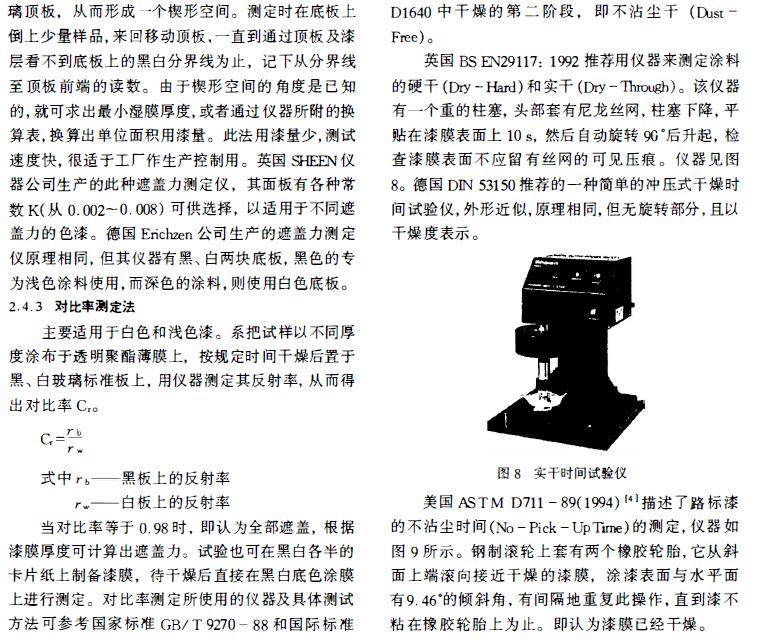
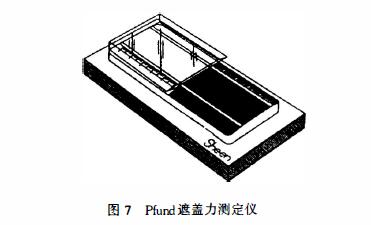
Use the minimum film thickness required to cover the bottom surface to measure the hiding power of the paint, and the result is expressed in /Jm. The instrument is a Pfund hiding power Tester, as shown in Figure 7. 3 Its bottom plate is a black and white optical glass plate with a millimeter scale marked on its side; there is a certain height (generally only 0.2 or 0.5mm) transparent