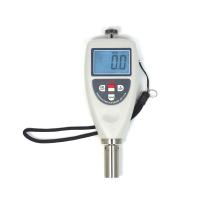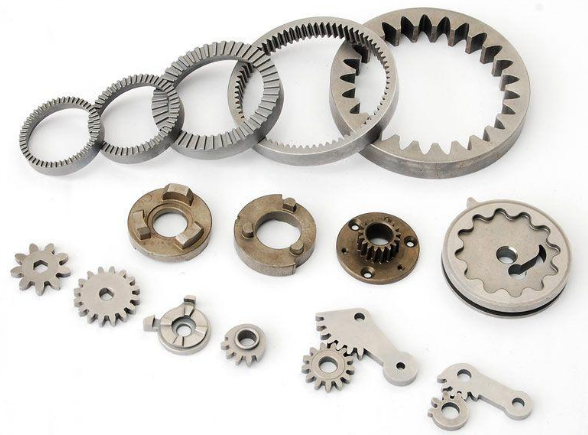
The shape of the part is generally determined by the designer according to the engineering requirements, but the surface of the part often needs to be measured with a roughness instrument to determine its influence on electropolishing or chemical polishing.
When the designer of the part determines the index of the surface roughness of the part, he or she mostly considers factors such as the performance of the product and assembly performance, and often ignores the influence of the surface roughness of the part on the plating quality.
For example, when a part is electropolished or chemically polished, the surface roughness of the part before treatment obviously affects the degree of reduction of the surface roughness after polishing. The lower the surface roughness of the part before polishing, the lower the surface roughness after polishing. The greater the magnitude. For the coating layer with porosity quality index requirements, the lower the surface roughness of the part before plating, the easier it is to obtain a non-porous coating layer. On the contrary, even if the thickness of the coating layer is increased, sometimes it is still difficult to obtain a non-porous coating layer. plating layer. In addition, the greater the surface roughness of the part, the greater the deviation between the real area of the plated surface and the calculated area. When the parts with small surface roughness and parts with large roughness are electroplated at the same current, the plating The time required for the layer to reach the same average thickness, the former will be significantly less than the latter. When plating parts with internal holes and internal threads, if the surface roughness is large, it will not only reduce the plating speed, but also significantly affect the depth of plating in deep concave parts and the uniformity of the plating. After the surface roughness of the parts before plating is large, the appearance and corrosion resistance of the plating layer will also be reduced.
Unless the large surface roughness of the part has a special effect on the performance of the product, the surface roughness of the part before plating should be reduced as much as possible, at least final surface roughness value of the part specified on the drawing. Practice has proved that measures to improve the surface quality of parts before plating, such as using profiles with good surface quality, precision molding technology to manufacture parts blanks, and reducing the roughness of the cutting surface, can improve the quality of the coating layer on the surface of parts and reduce unqualified products. Reducing the total manufacturing cost of parts has a significant effect, and has gradually become the consensus of designers and manufacturing technicians.