*The fineness of the paint indicates the degree of dispersion of the pigment contained in the paint in the paint, and it also detects whether the paint contains impurities that affect the smoothness of the appearance of the paint film.
* The fineness is small, which can make the coating smooth and even, which not only plays a certain role in the gloss, appearance, hiding performance and decoration of the coating, but also is beneficial to prolonging the protection life. *The fineness is too fine, which not only prolongs the grinding time, occupies the grinding equipment, but also affects the adhesion of the paint film.
* In my country, the fineness of primers is currently required to be no greater than 50 μm or 60 μm, and the fineness of alkyd, amino and other decorative topcoats is not greater than 20 μm, and some varieties require less than 15 μm.
*The roughest part of the coating is destroyed preferentially, so that the entire coating is gradually aged and destroyed, so the fineness of the primer is lower, while the fineness of the topcoat is higher.
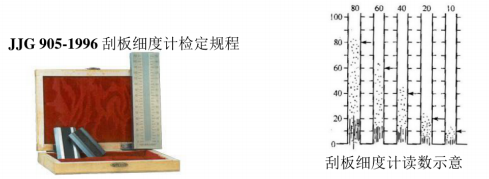
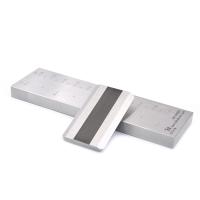
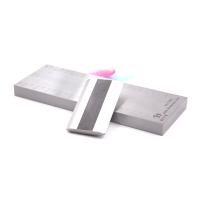
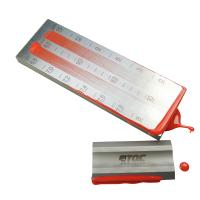
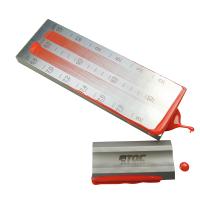
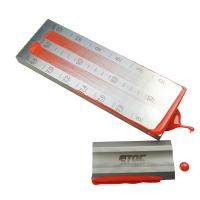
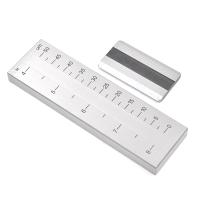
*The detection of fineness is to spread the paint into films with different thicknesses, and observe at what thickness the pigment particles appear, which is called the fineness of the paint.
*The actual measured value is the size of the largest solid particle in the paint, indicating the degree of coarse particles. *Coarse particles are not the size of individual pigments or extender pigment particles, but the size of agglomerates that exist after the pigments are ground and dispersed during the production process of the color paint. Scraper Fineness Meter reading indication