1. General situation of basement outdoor waterproofing
The pool on the negative second floor of XXXX is -9.1 meters relative to plus or minus zero. Due to the abundant groundwater, the underground level is relatively high all the year round, and the waterproofing of the basement on the second negative floor has become a difficult and key point in construction. Requirements and now facing various unfavorable factors such as more rain in spring, bring great difficulty to waterproof construction. In order to be able to construct on the wet base and ensure the waterproof effect, "Dayu brand" JS cement-based composite waterproof coating will be selected for this project. This waterproof coating can be directly constructed on the damp base, and has the advantages of convenient construction and good waterproof effect.
2. Product Description and Features
1) Description
The waterproof coating of this project adopts German professional technology, mainly made of acrylic latex, together with additives, fillers and other good materials, a waterproof coating that does not contain organic solvents. After coating, a waterproof coating film with high elasticity, toughness, no seams, aging resistance and excellent weather resistance can be formed.
2) Product Features
1. JS waterproof coating has strong bonding performance on the cement-based layer, and will not peel off the base layer due to long-term water immersion.
2. The waterproof coating has the ability to directly compensate for the quality defects and capillary pores of the concrete surface.
3. The waterproofing of the coating film has the characteristics that the damaged point corresponds to the leaking point, and the waterproof layer will not fail in a large area due to a single damage. Once a leak is found somewhere in the wall panel structure, it is easy to carry out remedial treatment.
4. The coating has a certain degree of air permeability, and the waterproof layer will not bulge even if the base layer is wet.
5. Excellent weather resistance, strong ability to resist ultraviolet radiation, and excellent aging resistance of the coating film.
6. Environmental protection: use water as diluent, cold construction, harmless, tasteless, non-polluting, friendly to the environment and human health.
7. Extensive compatibility: When used in combination with other waterproof materials, it has good compatibility with other materials and does not chemically react with other waterproof materials.
3. Construction process
1. Operation process:
Cleaning the base layer - painting the first time - additional reinforcement layer treatment - painting the second time - painting the third time - inspection and repair, acceptance - protective layer construction - quality acceptance
2. Operation points:
①Clean the base: remove impurities such as floating ash, oil stains or loose objects on the base. The base surface needs to be firm and flat. For the uneven or cracked base surface, use 107 glue mixed with cement to level it before construction. The base surface needs to be cleaned, and there must be no floating dust, sundries, open water, etc.
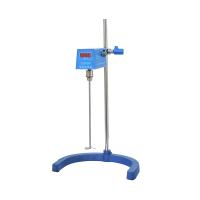
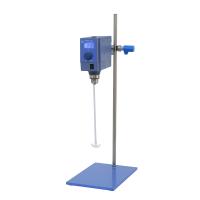
② Ingredients: The ingredients are prepared by a special person responsible for weighing the materials. First, according to the mix ratio provided by the product (adjust the amount of water added according to the dry and wet conditions of the substrate and the water absorption rate of different materials), respectively weigh out the liquid materials, powder materials, Water, first add water to the liquid material, stir with a portable electric mixer, and then add the powder one after another during the stirring process, and stir for at least 5 minutes, until it is evenly stirred, and it can be slurry without lumps. The mixed paint needs to be used up within 3 hours, and each layer of paint should be prepared separately.
3. Three-coat waterproof layer construction:
① The first base layer treatment Brush the first layer of JS waterproof paint, this layer of paint uses a thinner mix ratio (1:1.6:0.5) to treat the base layer.
②Local strengthening layer
For the repair of concrete quality defects, capillary cracks on the wall, construction joints, wall outlets and other parts to strengthen, a fiber cloth can be added to enhance the waterproof ability. The weight ratio of coating paint is liquid material: powder material: water = 1: 1.6: 0.5.
③The second way
The second coating construction is a single JS waterproof coating as a whole, and the ratio is liquid material: powder material: water = 1: 1.6: 0.2.
④The third way
Apply JS waterproof paint to the basement wall of the entire dewatering pool. The weight ratio of the paint is liquid material: powder material: water = 1: 1.6: 0.2.
4. After the construction of JS cement-based waterproof coating is completed, the construction of the protective layer will be carried out after the construction and supervision have passed the acceptance. The protective layer will be protected by a three-plywood, so that the waterproof layer is truly protected. Earthwork backfilling after construction is completed.
4. Construction of coating film waterproof detail structure
The corners of the base course of the exterior wall and the floating floor of the basement should be painted into a circular arc, and the radius should not be less than 50mm, so as to ensure that the thickness of the coating film is uniform, and the waterproof coating can float out of the floor.
5. Technical measures for waterproof construction of exterior wall coating
(1) Grass-roots requirements are strict
The base layer is the basis for the existence of the waterproof layer. Compared with the membrane waterproof layer, the waterproofing of the coating film has stricter requirements on the base layer.
① Flatness
The flatness of the base layer is the key to ensure the waterproof quality of the coating film. If the surface of the base layer is uneven or partially raised, it is easy to have uneven thickness of the coating film and raised parts of the base layer when making the waterproof layer of the coating film, which will reduce the thickness of the coating film and affect the durability. The concave part of the base layer will make the coating film The layer is thickened and the waterproof coating is wasted. Therefore, the new standard stipulates that the flatness of the leveling layer should be checked with a 2m long ruler, and the gap should not exceed 5m.
② Surface quality
If the surface is loose, the strength is too low, and the cracks are too large, it is easy to make the coating film and the base layer bond weakly, and the coating film and the base layer will often be peeled off during use, which becomes one of the main reasons for leakage. The new standard stipulates that the base layer should be compacted and smooth, and there must be no looseness, sanding, or peeling.
(2) Carefully brush the bottom waterproof layer
Prepare the bottom waterproofing agent on the base layer according to the ratio of the first layer, the purpose is to:
①Block the capillary pores of the base layer, so that the JS cement-based waterproof coating can fully penetrate into the capillary cracks to achieve the purpose of waterproofing.
②Increase the adhesion between the base layer and the waterproof layer
③ When painting the bottom waterproof paint, directly dilute the JS cement-based waterproof paint and apply it thinly so that it penetrates into the capillary pores of the bottom layer.
(3) Accurate measurement and full stirring
For JS cement-based waterproof coatings, it should be accurately measured according to the specified mixing ratio during construction, and fully stirred evenly. If the powder filler of JS cement-based waterproof coatings is not stirred uniformly, it will not only be difficult to coat, but will also cause uneven mixing. Particle impurities remain in the coating and become a hidden danger of leakage.
(4) Thin coat multiple times to ensure the thickness The thickness of the waterproof layer of the coating is the most important technical requirement for the waterproof roof of the coating. If it is too thin, it will reduce the overall waterproof effect of the exterior wall and shorten the service life of the waterproof layer. If it is too thick, it will cause waste in a certain sense. For this reason, the thickness of each coating film is preferably 0.40.5mm, and the amount of coating is about 11.2㎏/㎡, and it is not suitable to be too thick in one pass. Strictly control the amount of water added during construction to prevent the paint from flowing, making it difficult for the facade thickness to reach the design thickness, and at the same time causing the internal and external corners to accumulate too thickly and cause cracks.
(5) For the laying of carcass reinforcement materials, there are large honeycombs, pitted surfaces, holes, loose concrete or cracks in the façade walls and other self-waterproof weak parts. Carcass reinforcing material can be added when the primer paint is dry on the surface, or when the second coat is applied, or before the last coat. When choosing a carcass with reinforcing materials, the width of the long side of the carcass should not be less than 50mm, and the width of the short side should not be less than 70mm. If a two-layer carcass reinforcement is used, the upper and lower layers shall not be laid perpendicular to each other, and the overlapping joints shall be staggered, and the distance shall not be less than 1/3 of the width.
(6) The brushing direction and the stubble waterproof coating are densely brushed to ensure the quality. It is required that the painting directions of each coating film should be perpendicular to each other, so that the upper and lower coatings cover each other tightly, avoiding the occurrence of straight pinhole pores, and improving the integrity and uniformity of the waterproof layer. The stubble between the coatings should be retreated by 50mm100mm each time the coating is applied, and the stubble should also exceed 50mm100mm in order to avoid the weak coating at the stubble and leakage.
(7) Closing treatment
At the end of the waterproof layer of the coating film, the waterproof paint should be painted several times, or sealed with sealing materials. The carcass reinforcing material at the end should be cut neatly and bonded firmly without warping, wrinkling, or whitening. Otherwise, it should be treated first before coating and sealing.
(8) Strengthen the protection of finished products
After the construction of the entire waterproof coating, there should be a natural curing time. The minimum curing time of JS cement waterproof coating needs 72h (ie 3 days), and the full curing time needs 7 days. Especially because the thickness of the waterproof layer of the coating film is thin and the puncture resistance is weak, in order to avoid man-made factors from destroying the integrity of the waterproof coating and ensure its waterproof effect, the soil shall not be backfilled before the coating film is cured.
6. Matters needing attention
1. The construction of each waterproof coating must be careful and careful, and the coating should be applied in sequence, and the coating should be uniform without missing coating. The average thickness of the coating is about 1.2mm.
2. After the construction of the waterproof layer is completed and passed the inspection, the construction of the next process can be carried out, and the quality assessment and concealed project records should be made in time, and the technical information of the waterproof project should be completed in a complete manner.
3. Each layer of coating needs to be taken according to the specified amount, and it cannot be too thick or too thin, or the thickness of the final waterproof layer is not enough, and an additional layer can be applied.
4. During the construction interval or at the end of the construction, all tools and work clothes with paint should be cleaned with water as soon as possible. Otherwise, it will be difficult to wash off after the paint dries.
5. The construction temperature should be above 5°C, and it is not suitable for construction in rainy or windy weather.