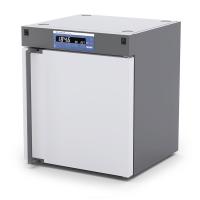
The normal drying step should be to remove the free water on the surface of the workpiece first, that is, pre-drying. Only after pre-drying can it be transferred to the drying step of removing the adsorbed water on the surface of the workpiece. These two processes should be carried out separately, and cannot be combined into one. Otherwise, the cathodic coating will appear rust, and the conversion coating will cause stripping. This is because the free moisture on the surface of the workpiece is difficult to volatilize temporarily when the workpiece is baked in the oven, forming a local high temperature and high humidity condition, which will cause the above-mentioned quality problems.
1. Pre-drying of conversion film
It is better to pre-dry the conversion film in a well-ventilated place. If you use hot air to dry it, you must pay special attention to the following two points.
(1) The cleaning of the workpiece before pre-drying needs to be effective, especially the moisture in the holes, slits, etc. must be sucked first, so as to avoid blowing the sewage containing passivation solution components in these parts to the surface of the workpiece when the hot air is drying, causing Color confusion affects the natural color of the workpiece.
(2) The wind source needs to be filtered through oil and water filters, so as not to scatter oil droplets to the surface of the workpiece and pollute the surface.
2. Pre-drying of silver-plated steel parts
During the pre-drying process of silver-plated iron and steel parts, due to the large potential difference between the silver layer and the substrate, when there are pores in the plating layer, red rust appears faster than copper plating and nickel plating, and sometimes even reaches an uncontrollable situation. To prevent this kind of phenomenon, in addition to accelerating the drying speed in the pretreatment process, the following points need to be paid attention to before silver plating and silver plating.
(1) Pay attention to the selection of materials. It is not available for severely corroded parts. If necessary, it needs to be finely processed. The rougher the surface of the workpiece, the easier it is to rust during the pre-drying process.
(2) The binding of the workpiece should be loose. If the binding is too tight, there will be marks, and the coating at the part of the marks must be too thin, and there will be more chances of red rust.
(3) Increase the intermediate coating. Increasing the intermediate coating can not only reduce the porosity of the coating, but also reduce the potential difference between the silver layer and the substrate, thereby slowing down the speed of red rust. If conditions permit, the effect of pulse plating will be better.
3. Drying of nickel-plated steel parts
Nickel plating is extremely prone to rust spots during pre-drying. When the workpiece is not cleaned and the surface of the workpiece is still in acidic conditions, the speed of rust spots will be faster. To solve this problem, in addition to ensuring that the solution is clean, taking measures such as moving the cathode and increasing the thickness of the coating, the following two remedial measures can also be taken.
(1) Neutralize before pre-drying. After the workpiece comes out of the tank, it is neutralized in dilute lye to make the surface of the workpiece
It is slightly alkaline, which can delay the appearance of rust spots during the pre-drying process.
(2) Passivation treatment before pre-drying. After the workpiece is out of the tank, passivation treatment is carried out in 30~50g/L chromic acid solution. After soaking in this solution for 0.2~0.3, take out the workpiece and clean it. After this treatment, generally no rust spots will appear at that time.
4. Hot water washing, ironing and pre-drying
When hot water is used for washing and ironing, the temperature of hot water depends on the type of plating (coating) layer of the piece to be ironed. The electroplated piece can use higher water temperature until it is boiled. The water temperature should not be too high. When it exceeds 60°C, the film layer will be damaged, the color of the film layer will become lighter, and the protective performance will be reduced.
Washing and scalding the workpiece with hot water is also beneficial to squeeze out the residual solution in the slit of the workpiece, which reduces the pollution of the coating due to the leakage of the residual solution in the slit when the workpiece is baked, and can improve the protective performance and appearance quality of the workpiece.
5. Hot air blowing and drying
Blowing with hot air can replace hot water washing and ironing, and can also be used as a supplementary treatment for small pieces, thin pieces or conversion film pieces after hot water washing and ironing. Because small pieces and thin pieces are cooled quickly, after the workpiece is washed in hot water, the workpiece has cooled before the surface moisture has evaporated, losing the function of continuing to volatilize the free water on the surface, and the purpose of scalding cannot be achieved. For conversion coating treatment parts, because the temperature of hot water should not be too high, it is often difficult to effectively remove free water on the surface of the workpiece.
6. Airing and pre-drying
The drying method using natural wind and sunlight does not consume energy, and is economical and practical. This method is the most common, the effect is no less than other methods, and the work efficiency is high. The specific requirements for drying workpieces of different shapes are briefly described as follows.
Put the small pieces in a towel before drying, wrap them up and shake them a few times to shake off the excess moisture on the surface of the workpiece, and then spread workpieces to prevent the moisture in the joints from volatilizing. Wipe the large piece with a towel before drying, which can speed up the drying process and avoid rust on the surface of the cathodic coating due to the long time of free moisture.
The free water leaking from the holes and slits of the conversion coating treated parts should be absorbed in time with a semi-wet towel, and the small parts can also be wrapped in a towel to shake off the water, but do not wipe with a towel, otherwise the film layer will be damaged . When drying, the sharp end of the workpiece is facing down , and the water-absorbing objects such as bricks and sponges are placed on the pad, which is beneficial to remove the accumulated water.
7. Sawdust suction and drying
The sawdust drying method is suitable for drying smaller complex shapes or flakes. It will be better to wash and scald .
When operating, put the workpiece in a plastic basket, sprinkle wood chips and stir gently to make the wood chips scatter on the entire surface After the free water on the surface of the workpiece is absorbed by the wood chips, it will be dried in the air, and the wood chips will fall from the workpiece. Come, the workpiece can be separated from the sawdust with a light sieve.
The sawdust drying method is not suitable for conversion film treatment parts, otherwise the film layer will be damaged, because the newly formed conversion film has poor bonding force before it is dried and aged.
8. Baking of electroplated parts
The electroplated parts can be aged and baked after pre-drying. When the workpiece enters the oven, the blower should be turned on and the exhaust hole on the top should be opened at the same time, so as to facilitate the air circulation in the box and discharge the humid gas out of the box. The temperature and baking time in the box vary type of coating (coating) layer. .
The temperature of electroplated parts can be higher when baking, but it should not be too high, otherwise, if there are unwashed salt marks on the surface of the coating, scorched paste and discoloration that difficult to wipe will appear on the surface. Bake for about 10 minutes.
9. Baking of conversion coating treated parts
The aging temperature of conversion coating treatment parts is generally around -% & .%(, time $%)*+. If the temperature is too high or the time is too long, the coating will be oxidized, discolored, brittle, cracked, and the protective performance will be reduced. The parts treated with conversion coating exposed to the hot sun in summer do not need to be baked again.
10. Baking of parts coated with organic protective film
The baking temperature of the organic protective film needs to be carried out according to the process requirements of different coatings. Generally, it is controlled at 110~120°C, and there are also higher temperature requirements. It needs to be controlled according to the requirements of the product description, and the following two safety items .
(1) Do not bake the workpiece in the oven immediately after dipping, in case excess paint drips into the oven and causes burning (general paints are flammable).
(2) It is necessary to open the exhaust hole on the top of the oven, and the outer door of the oven is not allowed to be buckled, so as to prevent the expansion of the gas evaporated during baking and cause an explosion.