I. Overview
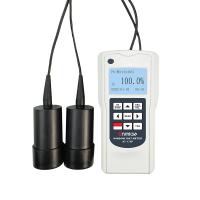
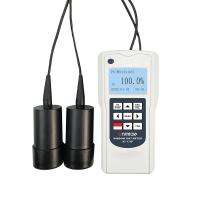
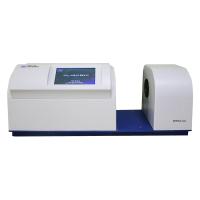
Light transmittance is an important technical index of many optical products, such as glass, solar film, organic materials, etc. The testing principle of the LS116 light transmittance meter is to use a visible light source to irradiate the measured substance, and the sensor detects the incident light intensity of the light source and the light intensity after passing through the measured substance, and the ratio of the transmitted light intensity to the incident light intensity is the transmittance. Overrate, expressed as a percentage.
Two: LS116 parameters
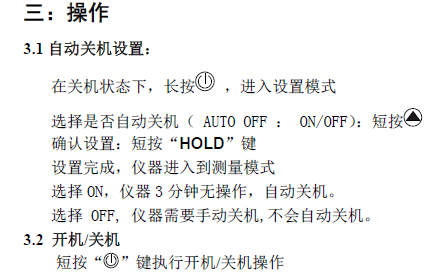
1. Instrument dimensions: length 130mm × width 70mm × height 28mm;
2. Instrument weight: about 500 grams (excluding batteries);
3. Sample measurement diameter: >10mm;
4. Resolution: 0.1%;
5. Measurement accuracy: better than ±2% (colorless uniform light-transmitting substance);
6. Light source: 380nm-760nm full wavelength;
7. Power supply: 4*AAA alkaline dry batteries.
Four: Measure
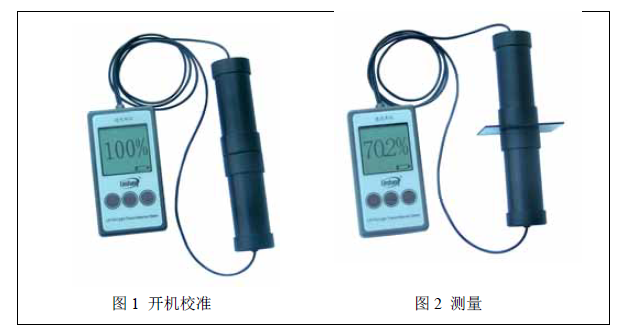
There are two different ways to use the instrument, the on-site measurement method and the measurement method of the fixed seat:
In the on-site measurement method, the measured object has been installed, such as the front glass of the car, the door and window glass of the building, etc.
The two test probes are connected, and the power is turned on, and the light transmittance data is displayed as 100%.
To test the object under test, just align the two probes, and the displayed data is the light transmittance value of the object under test.
Fixing seat test method
Put the probe into the fixed seat, turn it on, and the light transmittance data is displayed as 100%; put the object under test into the test slot for testing.
Five: Instrument Features
1. The parallel optical path of the light source and the concentrating design of the receiver are adopted, so that it can measure large thickness materials.
2. Equipped with a fixed seat, it has two measurement methods at the same time; it is suitable for on-site measurement such as the front windshield of a car, and it is also suitable for fixed-point measurement such as a fixed station in a factory.
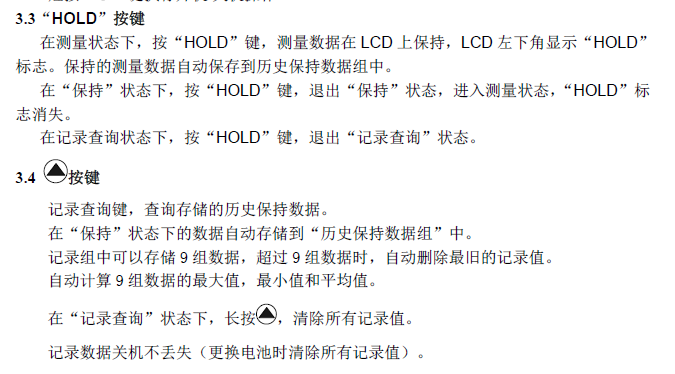
3. Recording function of historical measurement data, maximum value, minimum value and average value.
4. It is suitable for the light transmittance test of glass products, solar film, film glass, coating materials, organic material panels, etc.; 5. It is suitable for various occasions such as exhibitions, production, quality inspection, and inspection.
Six: Precautions
1. The instrument has real-time dynamic self-calibration function, and it will automatically calibrate to 100% transmittance after starting up;
2. Avoid contact with corrosive items and keep away from high temperature and high humidity environment.
3. Occasionally, when there is no test object, the displayed data cannot return to 100, just restart the instrument immediately after shutting down. 4. If it is not used for a long time (such as several months), please take out the battery;
5. When the battery symbol is empty and flashing, please replace the battery;