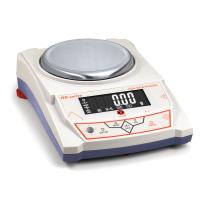
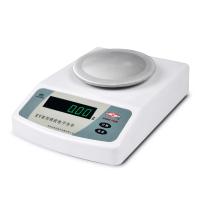
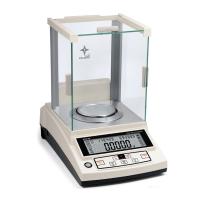
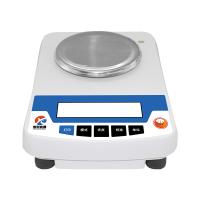
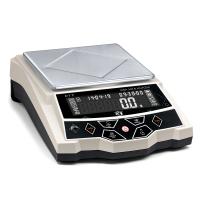
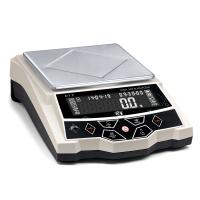
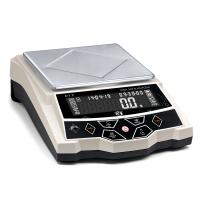
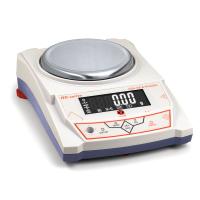
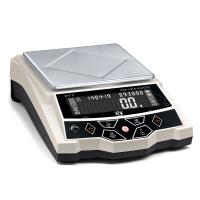
An electronic balance is an electronic instrument for precise weight measurement. It usually uses a load cell and a load cell to measure the weight of an object and display the result on a digital display. They are generally more accurate, faster, and easier to use than mechanical balances. They usually have a larger weighing range and higher accuracy, and can quickly measure the weight of an object. In addition, electronic balances can also provide some additional functions, such as weighing unit conversion, counting and data output, etc.

Instructions
Place the electronic balance on a level, stable surface free from external disturbances such as wind or vibrations.
Switch on the balance and wait a few seconds until "0.0" or other initial value appears on the display.
Place the item to be weighed in the center of the balance's weighing pan and wait a few seconds until the balance reads stable. When adding or removing weights, wait for a period of time to ensure that the balance reading has stabilized.
If you need to weigh liquids or other items that may damage the balance, use a container and zero the container weight before placing the item in the container for weighing.
After weighing, clean the balance to maintain accuracy and reliability.
If you need to calibrate the electronic balance, please check the guide in the manual and follow the guide to calibrate.
If you need to use the additional functions of the electronic balance (such as counting, calibration and data output, etc.), please refer to the instruction manual and follow the guide.
Follow the balance's capacity and accuracy requirements, and avoid weighing items on the balance that exceed its capacity to avoid damaging the balance or causing inaccurate readings.
Avoid weighing liquids or other items that may damage the balance on the balance. If you need to weigh a liquid, use a liquid container and zero the container weight before placing the liquid in the container for weighing.
Avoid touching any part of the balance as much as possible to avoid interfering with the balance's weight measurement.

common misuse
The following are some common misoperations when using electronic balances:
Do not pay attention to environmental interference: electronic balances are sensitive to environmental interference, such as wind, vibration, temperature changes, etc., which may affect the measurement results. Therefore, when using an electronic balance, try to place it on a stable surface, away from interference sources, and avoid measurement errors.
Not Calibrating Electronic Balances: Electronic Balances require periodic calibration to ensure accuracy and reliability. Without calibration, the measurement results may be skewed. Therefore, before each use of the electronic balance, it should be calibrated to ensure accuracy.
Do not use containers: When weighing small items such as liquids or powders, it is easy to spill or spill some items, which will affect the accuracy of the electronic balance. To avoid this, containers should be used for weighing, making sure that items do not fall off the weighing pan of the balance.
Don't pay attention to the load capacity: the load capacity of the electronic balance is limited, if the load capacity is exceeded, the balance may be damaged or the measurement results will produce errors. Therefore, when using an electronic balance, you should pay attention to the load capacity of the balance and avoid weighing items that exceed its load capacity.
Not paying attention to cleaning: The accuracy and reliability of electronic balances are related to their cleanliness. If there is dust, dirt or other debris on the balance, it may affect the measurement results. Therefore, before and after using the electronic balance, the weighing pan and casing of the balance should be cleaned to keep the balance clean and hygienic.