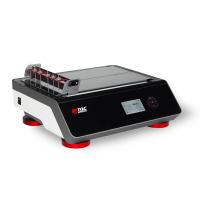
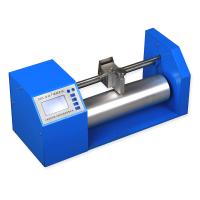
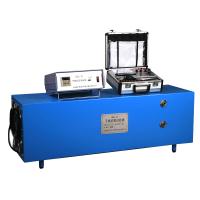
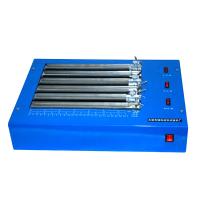
drying time
Unit: hours (h) or minutes (min)
Description:
Under the specified drying conditions of the paint film or putty layer, the time for the surface layer to form a film is the "surface drying" time. The time for the complete formation of the solid coating film is the "actual drying" ("actual drying") time, which can be expressed in hours (h), minutes (min) or seconds (5).
In layman's terms, the drying time refers to the time it takes for the liquid paint to be converted from a flowing wet coating to a solid dry paint film on the surface of the product, which indicates the speed of the paint drying. During the entire coating drying process, it has undergone stages such as surface drying (also known as surface drying, finger touch drying, finger drying), recoating time, actual drying (hard drying) and sanding time, dry hardening and complete drying. For specific paint varieties, the time required for these drying stages is recorded in the paint product instruction manual, but under the specific construction process conditions of furniture companies, how much time these processes take sometimes needs to be tested to determine, because they are related to air humidity, temperature, coating thickness, ventilation conditions, paint varieties and other factors. These drying times have a great impact on the efficiency of coating construction, coating quality, construction cycle, etc.
Drying time refers to the time when a substance starts to dry from coating or application to the surface until it is completely dry. In the fields of coatings, paints, glues, dyes, inks, etc., drying time is a very important parameter, which directly affects the quality and production efficiency of products.
Drying time is affected by many factors, including temperature, humidity, ventilation, paint type, paint thickness, coating method, and more. Generally speaking, the shorter the drying time, the higher the production efficiency, but it may affect product quality. If the drying time is too long, it will prolong the production cycle and increase the production cost.
In practical applications, in order to obtain better drying results, it is necessary to carefully select suitable coatings, control environmental factors, and adjust the thickness and coating method of coatings according to specific conditions. At the same time, it is also possible to shorten the drying time and improve production efficiency by adding desiccant and using radiant heat drying.