1. Purpose
Periodic stability studies are performed on mass-produced products to:
Guarantee the reliable quality of products after sale.
To provide a basis for determining the validity period of the product, and provide data for some products that need to modify the validity period.
2. Scope of application
Long-term tests and accelerated tests of commercial batches of products.
3. Responsibility
Laboratory technicians should strictly follow the operating procedures, and the QC supervisor is responsible for supervising the implementation of the procedures.
4. Definition
RH: RelatedHumidity relative humidity
AT: Accelerated Stability Test
RT: Long-term stability test
Stable product: It means that the product is valid for more than 2 years at a temperature of 30°C, and there will be no significant difference in product quality between storage at a temperature of 30°C and storage at a temperature of 25°C.
Semi-stable product: The product is more stable at 25°C than at 30°C. At about 30°C, the validity period of the product cannot exceed 24 months.
Unstable product: The product cannot have an expiration date at 25°C. In order to make the product stable, the product needs to be frozen or refrigerated.
5. Safety Precautions
none
6. Procedures
6.1. According to the annual production variety and production batch, the QC supervisor arranges the analyst to take any batch number as the annual product review product for long-term stability inspection. The sampling quantity can be determined according to different products.
6.2. For any production changes that may affect product quality, select appropriate batches for long-term or accelerated stability experiments after approval by the QA manager.
6.3. Long-term test and accelerated test sampling plan
6.2.1. Long-term test sampling plan: For stable products, take the product in the market package and place it at a temperature of 302C and a relative humidity of 655%. For semi-stable products, take the product in the market package at a temperature of 252C, relatively Store under the condition of humidity 605%. For unstable products, select appropriate long-term stability test conditions according to the nature of the product, and take samples at 0, 3, 6, 9, 12, 18, and 24 months, and then take samples once a year until The period of validity is determined according to the requirements of the key investigation items of stability in Appendix XIXC of the Chinese Pharmacopoeia 2000 edition.
6.2.2. Accelerated test sampling plan: Take this product in the marketing package and place it under the conditions of temperature 402C and relative humidity 755%, and take samples at the end of 0, 1, 2, 3, and 6 months respectively, according to Appendix XIXC of Chinese Pharmacopoeia 2000 Edition Stability key investigation items require determination. For samples that are unstable under the above conditions, they should be placed at 30±2°C and 65±5% relative humidity.
6.2.3. The sampling volume is 2 times of the full inspection volume.
6.2.4. When conducting commercial batch product stability, fill in the sample sampling plan in the form of Appendix 1. And strictly follow this plan.
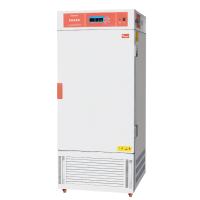
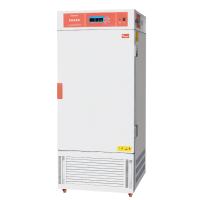
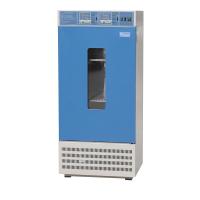
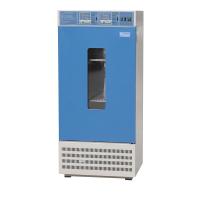
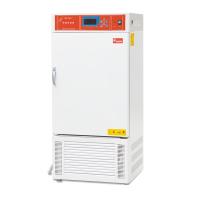
6.4. The Test Chamber used to place stability samples should have a visual test condition monitoring system so as to detect abnormalities in time. The daily personnel in the laboratory will check the operation status of the constant temperature and Humidity Chamber and find any abnormal conditions. Immediately notify the laboratory supervisor of the setting value range, and the laboratory supervisor will contact relevant personnel for maintenance and record the abnormal situation. If the setting range is exceeded continuously for more than 24 hours, all samples in the constant temperature and Humidity Chamber need to be transferred to other constant temperature and Humidity Chambers with the same setting value. And record the abnormal situation.
6.5. After sampling, the person in charge of each product should arrange to carry out inspections within a selected time interval according to the methods specified for different varieties. , take the control sample and store it in the refrigerator (4°C) for future reference.
6.6. Carry out visual inspection and chemical determination of samples at specified intervals, and the person in charge of each product shall prepare a stability test report.
6.7. The QC supervisor audits the report. During the audit, if any product that does not meet the requirements of stability or tends to be unstable is found, it should be reported to the manager of the quality management department. The manager of the quality management department should report the situation and the measures to be taken to the relevant departments.
6.8. For products that have been put on the market, if the prescription, operation method, replacement of inner packaging materials, rework, etc. have been changed, the stability test of the product should be carried out in accordance with SOPPLT002 (Standard Operating Procedures for Product Rework).
6.9. For long-term test samples, a summary of the stability development trend should be made based on the test results.
6.10. For the stability test samples taken out of the constant temperature and Humidity Chamber, all testing work needs to be completed within 7 days.
7. Reference
SOPPLT002 Product Rework Standard Operating Procedures
Chinese Pharmacopoeia 2000 Edition Two Appendix
CAP047/01: Stability Studies
8. Distribution department
Quality Assurance Department
9. Modify history:
1. Specify the treatment method for the constant temperature and Humidity Chamber exceeding the set value.
2. Specify the time to complete the inspection after the stability sample is taken out.