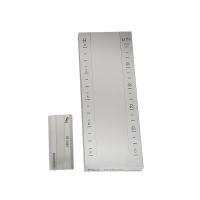
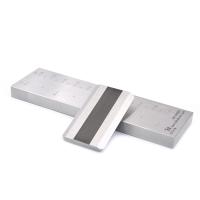
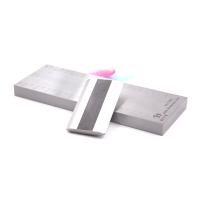
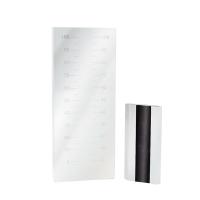
The so-called paint fineness refers to the index of the thickness or uniformity of the pigment particles in the paint, expressed in microns (µn). According to the national GB/T1724-89 paint fineness determination method, use a scraper Fineness Meter to measure the paint fineness. The method is: take a small amount of paint and place it on the Fineness Meter, scrape it evenly with a scraper, and observe how many particles At the position that appears at the same time, read the number at this position on the scraper, which is the fineness of the paint to be measured.
In addition to varnishes, paints (including primers) have a certain amount of organic pigments, inorganic pigments and extender pigments. The use of these pigments requires the fineness of the paint due to the relationship between the selected variety and grinding. By measuring the paint film of the color paint, the degree of dispersion of the pigment in the paint can be seen. The degree of dispersion of pigments in the paint has a great influence on the optical properties, protective properties and storage stability of the paint film, so the fineness of the paint is one of the important indicators of the products shipped by the paint factory.
Generally, the unit of use does not inspect the fineness of the material, but sometimes it is found that when a new bucket of paint is opened, although it has passed through the 150-180 mesh transition net several times, the coating surface is still densely covered with particles. . No matter what measures are taken, it can't be improved. It may be that the manufacturer has a problem with the paint grinding or missed the fineness index. To deal with this situation, if the degree of coarseness is still good, it can be used as a primer. After drying, it can be polished and then sprayed with topcoat. If the coarseness is too serious, it can only be returned to the factory for regrinding and rework.