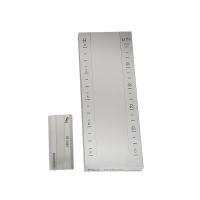
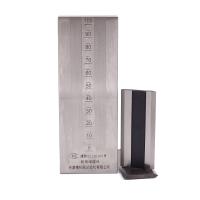
The effect of fineness on other quality fineness
1. Effect on gloss: A certain paint fineness is very good, and the surface of the prepared paint film is as smooth as a mirror. When the light is irradiated on the surface of the paint film at a certain angle, the light can be reflected in a certain direction, so that The gloss of the paint film is strong. If the fineness of the paint is not good, greater than the thickness of the first film, the surface of the finished paint film will not be very smooth, so when the light is irradiated, it will produce random reflections, which will weaken the amount of light reflected in a certain direction, so that the surface of the paint film will not be smooth. The gloss is reduced.
2. The impact on weather resistance, if the fineness of the paint is thicker, exceeding the thickness of the first film (such as the thickness of the paint film is 23μm, and the fineness of the paint is 25-30μm), there will be pigment particles protruding from the paint on the membrane surface. When corroded by various external natural factors or under the action of mechanical force, these protruding particles will become corrosion centers or easily fall off from the paint film to form small holes, and finally due to the entry of water damage and other corrosive media. Corrosion is formed, so that the decorative and protective functions are completely lost.
3. The impact on storage stability: Our country has a vast territory, and the turnover and storage of corresponding materials are also large.
If the fineness of the paint is poor, it means that the pigment is not fully dispersed in the base material during the grinding process, and the pigment particles are not well infiltrated by the base material. If the paint is left for a long time, the pigment will re-flocculate and cause the paint to swell Some pigments even sink to the bottom and form hard lumps, making them unusable and causing waste.
4. The influence of fineness in electrophoretic paint: From the perspective of electrophoretic paint film, it seems that fineness has little effect on paint film, but it is not the case in fact. The pigment in the electrophoretic paint is deposited on the workpiece by dragging the base resin. If the fineness of the paint is too coarse and the pigment particles are large, the resin will not be dragged and will sink to the lower layer, and will not be able to swim on the workpiece. In this way, although the added paint liquid is the same (compared with fineness), but due to the coarseness of the pigment, a part of it is precipitated, so the pigment-base ratio (the ratio of pigment to base resin) participating in electrophoresis is actually small. The amount of pigment on the workpiece is also reduced, which affects the appearance and performance of the electrophoretic paint film, and also causes partial loss of pigment.
In addition, the fineness of the paint also has an impact on many other performance indicators, such as tinting strength, hiding power, leveling and so on. Of course, the fineness is not always the finer the better. Things that exceed its limit will go to the opposite. If the pigment particles are small to a certain extent, that is, less than half of the light wave (0.2μm), the light can pass through the particles without refraction, making the paint film translucent or transparent, and the hiding power will decrease instead. In addition, the fineness should also be treated differently according to the variety and use. For example, the fineness of the primer is generally thicker than that of the topcoat, and the fineness of the primer is too fine, which will affect the combination of the primer and the topcoat. Generally, the fineness of primer is not greater than 50 μm, the fineness of phenolic enamel is not greater than 30 μm, and the fineness of amino and alkyd enamel is not greater than 20 μm (our factory controls it at about 15 μm).