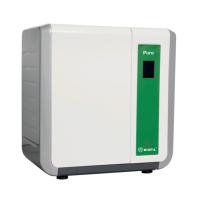
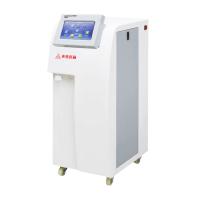
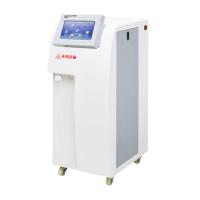
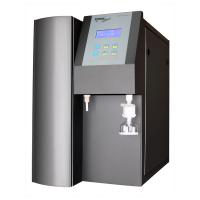
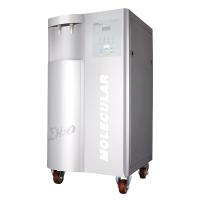
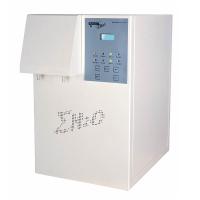
At present, the laboratories of universities, research institutes and other institutions basically use ultra-pure water machines instead of distilled water machines to make water, and units above the city level in the eastern region have reached the level of popularization. Such as: Environmental Monitoring Station, Food and Drug Inspection Institute, Center for Disease Control, Quality Inspection Institute, Agricultural Soil and Fertilizer Station, etc. The laboratories of many enterprise units also use ultrapure water machines instead of distilled water machines to make water, especially in the units with better benefits in the eastern region and the central and western regions.
Compared with electric distilled water or buying water outside, the laboratory ultrapure water machine provides more benefits and convenience, which has been recognized by the majority of chemical analysts, but the instrument is the basic equipment of the laboratory after all. Although many technicians are using ultrapure water machines, they don't know much about ultrapure water machines, and often have misunderstandings in purchasing. How to choose an ultrapure water machine suitable for this unit, please refer to the following content, I hope it will be helpful to you.
1. Water consumption
At present, the water production capacity of ultrapure water machines is generally 15 liters/hour, 30 liters/hour, 63 liters/hour, 94 liters/hour, 125 liters/hour, and the larger industrial type has 250 liters/hour hour, 500 liters/hour, the customer should choose the specifications of the ultrapure water machine according to the actual water consumption, and generally follow the principle of 3 times the relationship. If the water consumption is 45 liters/day, choose a machine with a specification of 15 liters/hour. If the specification is too small, the consumables of the ultrapure water machine will be consumed quickly. If the specification is too large, it will cause waste. If the concentrated water consumption is large, you need to purchase a larger pure water bucket, otherwise the water production will not be able to keep up.
2. Water quality
National laboratory standard water has three water qualities: first-class water, second-class water, and third-class water, but most laboratories can use two kinds of water quality, one is third-class water, such as distilled water, used for cleaning glassware, etc.; It is first-class water, mainly used for chemical analysis or precision instrument analysis such as liquid phase and atomic absorption. Customers should choose the grade of ultrapure water machine according to the actual water quality requirements. The ultrapure water machine with tap water as the water source has two water outlets (two water qualities), one is pure water, that is, third-grade water; the other is primary water, that is, ultra-pure water (strictly speaking, primary water The resistance of the ultrapure water is greater than 10 megohms, while the resistance of ultrapure water is greater than 18 megohms).
Most customers are not clear about their water quality requirements. Although the relevant national departments have various water quality standards, they do not have complete quantitative indicators for specific experimental projects or instrumental analysis of water use. Water quality is often discovered after purchasing an ultra-pure water machine. not to standard. According to experience, you can follow the following purchasing principles, corresponding to it.
1. Experimental content
There are inorganic experiments and organic experiments. Inorganic experiments only need water quality with a resistance greater than 18 megohms, while organic experiments usually need to remove organic substances in the water. Therefore, in addition to resistance greater than 18 megohms, an indicator of total organic carbon is also required. If it is a biological experiment, the bacteria in the water should be removed.
2. Instrument type
Customers can choose ultrapure water machines according to the type of equipment used. The resistance of the liquid phase water is greater than 18 megohms; and organic matter must be removed; the water for atomic absorption, atomic fluorescence and environmental monitoring instruments is greater than 18 megohms; the water for life science instruments such as PCR needs to be sterilized in addition to the resistance greater than 18 megohms. In addition to organic matter, in addition to heat sources.
3. Current water source
If the current water used by the customer is qualified, the ultrapure water machine manufacturer can also be notified of the source of the pure water, and its technicians will suggest the corresponding specifications and models according to the situation.
The above three principles are based on actual application experience and can be used for reference. However, for accurate model selection, try to provide detailed water quality parameters, such as electrical resistance, trace elements, bacteria, and total organic carbon levels.
3. Raw water quality
When purchasing an ultrapure water machine, the customer must provide the manufacturer with the water quality of the raw water, such as a lot of sediment, high hardness, groundwater, etc. The process of the ultrapure water machine is determined according to the quality of the raw water. Many, need to add pretreatment device, high hardness, need to add softening device, high salt content, use two-stage reverse osmosis process, etc. If you choose an ultrapure water machine with pure water as the water source, you only need to provide the water quality requirements and water consumption.
4. The main purpose of pure water
● Final cleaning of labware
● Buffer, chemical reagent preparation water
● Microbial medium preparation water
● Pure water for hydrogen generators, indoor humidifiers, and autoclaves
● Drinking water for humans or experimental animals;
Five, the main purpose of ultrapure water
● Animal and plant cell culture water
● Water for various medical biochemical instruments, analyzers, and hemodialysis instruments
● Analytical reagents and pharmaceutical preparation dilution water
● Water for physiological, pathological and toxicological experiments
● Purified water and high-purity water used in hospitals, pharmaceutical preparation rooms and central laboratories
● Water for atomic absorption spectroscopy
● Water for IVF
● Water for various effective liquid chromatography and ion chromatography
● Various other laboratory water and medical water
Ecopure has the most diverse model configurations. According to different laboratory water consumption patterns and water quality requirements, regardless of the daily water consumption or the maximum single water consumption, Apex has designed a model that can take into account both economic benefits and water requirements. One machine, we will design a cost-effective solution for you.