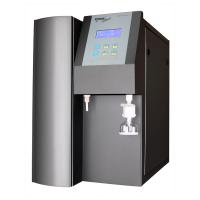
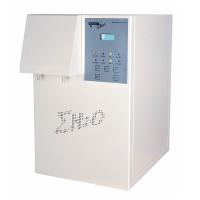
This article mainly makes a brief explanation from the classification of pollutants in water, the general definition of pure water, water purification methods and ultrapure water preparation. The purpose is to facilitate laboratory personnel to choose different water purification methods according to experimental projects and water requirements. Methods, and how to strengthen the daily maintenance of water purifiers.
At present, pure water technology has been widely used in industry, food, medicine , chemistry, hygiene, environmental protection and other fields. The author only summarizes the use of pure water technology in laboratories engaged in chemical analysis and instrument application, tissue culture and molecular biology.
1 Classification and detection of pollutants in water
Usually the tap water we use contains some impurities, mainly including the following 5 kinds.
1.1 Electrolyte
Electrolyte refers to substances that exist in the state of ions in water, including soluble inorganic substances, organic substances and charged colloidal ions, etc., among which cations include H+, Na+, K+, Ca2+, Mg2+, Cu2+, etc.; anions include Cl-, NO3-, HCO3 -, HSiO3-, etc.; charged colloidal particles include iron, silicon, aluminum compounds and organic colloidal compounds; in addition, there are organic acid ions. Since the electrolyte is conductive, the relative content of such impurities can be reflected by measuring the resistivity (MΩ.cm) or conductivity (μs/cm) of water, and the resistivity and conductivity are inversely related to each other.
1.2 Organic matter
Organic matter in water mainly refers to natural sources and synthetic organic substances, such as organic acids, organometallic compounds, etc. Such substances are bulky and often exist in a negative or neutral state. A total organic carbon analyzer is usually used to detect the content of such substances.
1.3 Particulate matter
Particulate matter in water includes sediment, dust, organic matter, microorganisms and colloidal particles, etc. These substances are insoluble and are generally detected by SDI (SiltDensityIndex) instrument.
1.4 Bacteria, microorganisms
Bacteria and microorganisms in water include bacteria, algae and fungi, etc., and their content can be determined by culture method or membrane filtration method.
1.5 Dissolved gas
Dissolved gases in water include N2, O2, Cl2, H2O, CO, CO2, CH4, etc., and their contents can be determined by gas chromatography, liquid chromatography and chemical methods. Since the above pollutants in raw water will directly affect the accuracy of our chemical analysis, molecular biology experiments and instrument tests, pure water should be used in experiments.
2 General definition of laboratory pure water
Usually we divide the pure water used in the laboratory into three grades, grade I water is reagent grade ultrapure water, grade II water is analytical grade water, and grade III water is ordinary experimental water. The specific technical parameters are shown in Table 1.

Different experimental projects require the use of different levels of pure water. For example, the water used for molecular biology experiments, tissue culture, chemical analysis and instrument testing is grade I, and grade II water is generally used for microbial culture medium preparation, buffer preparation, dissolution experiments, For the preparation of biochemical reagents, etc., Class III water is usually used as water for steam sterilization and other equipment, and can also be used for cleaning glassware used in experiments. Different levels of pure water require different purification techniques to achieve.
3 Water purification methods
There are many ways to purify water quality, such as distillation , ion exchange, continuous deionization (EDI), reverse osmosis, ultrafiltration, membrane filtration, activated carbon filtration, UV light irradiation, etc. The project and water use require one or more purification methods. The following is an introduction to some of the commonly used methods.
3.1 Distillation method
According to the distillation vessel, it can be divided into glass, quartz and metal stills. According to the number of distillations, it can be divided into primary, secondary and multiple distillation methods. Distillation can remove most of the pollutants. Because it is difficult to eliminate the incorporation of carbon dioxide during the heating process, the resistivity of water is very low, generally 0.2-1MΩcm, which can only meet the water requirements of ordinary analytical laboratories. The advantage is that this method is easy to operate, but the disadvantage is that it will produce secondary pollution during the heating process, it is difficult to control the water quality, and the water consumption is high.
3.2 Reverse osmosis
Reverse osmosis is currently the most widely used desalination technology. Its working principle is to change the direction of water flow through external pressure, so that water flows from high osmotic pressure to low osmotic pressure. The reverse osmosis membrane can remove pollutants such as inorganic salts, organic matter (molecular weight > 500), bacteria, heat sources, viruses, and suspended solids (particle size > 0.1 μm). Commonly used reverse osmosis membranes include: cellulose acetate membrane, polyamide membrane and polysulfone membrane, etc., and the pore size of the membrane is 0.0001-0.001 μm. The ability to remove impurities is determined by the performance of the membrane and the ratio of incoming and outgoing water. The resistivity of produced water can be nearly 10 times higher than that of raw water. For example, when the resistivity of raw water is 1.6KΩcm (25°C), the resistivity of produced water is about 14KΩcm. Its advantages are low consumption, low operating cost, and no need for strong acid flushing. The limitation is that the reverse osmosis membrane is easily blocked, and the water quality is only suitable for secondary laboratory standards.
3.3 Activated carbon adsorption
Activated carbon is a porous material. It is made of hard wood through long-term heating and carbonization or activation treatment. After activation, the surface area of activated carbon is expanded, and a large number of large and small pores are produced, so that the adsorption capacity is enhanced, and both organic and inorganic substances can be adsorbed by activated carbon. Natural activated carbon will have a small number of particles falling off, which is easy to pollute the water quality. It is only suitable for the pre-filtration of pure water preparation, and is mainly used to remove organic matter and chlorine in tap water. The artificially synthesized activated carbon has uniform particles, little water pollution, can remove organic substances in water, and is generally used for the preparation of ultrapure water.
3.4 Ion exchange resin
Ion exchange resin is a kind of porous sponge-like polymer compound with a three-dimensional three-dimensional space grid structure formed by the polymerization of organic monomer molecules. The ion exchange reaction is the exchange process between the freely exchangeable ions between the resins and the same-sex ions in water. There are two common combinations of ion exchangers:
(1) Double bed type, that is, connect and produce deionized water in the form of yang bed-yin bed-yang bed-yin bed- mixed bed. This method is convenient for resin regeneration.
(2) Mixed bed type (2-5 stages in series), the mixed bed can be regarded as a multi-stage compound bed composed of many anion and cation exchange resins arranged in a staggered manner. The effect of mixed bed deionization is very good, and the resistivity can be greater than 10MΩcm. If two or three mixed beds are used in series, the resistivity is greater than 16MΩcm, and can reach 18MΩcm, but resin regeneration is inconvenient.
After long-term use of the ion exchange resin, the quantity will decrease. At this time, it is necessary to select a regenerant to regenerate it by chemical means. The ion exchange method can obtain more than ten MΩ deionized water. The disadvantage is that at the same time as deionization, the regenerated ion exchange resin may dissolve resin particles, pollute the water quality, and have a high content of inorganic substances. At the same time, the damaged resin particles become It creates a hotbed for microbial growth and affects water quality. At present, the quality of ion exchange resins on the market is uneven, and the price varies from several times to dozens of times. However, if you get ultrapure water, it is recommended to use ion exchange resins with better quality and no regeneration.
3.5 Ultrafiltration The principle of ultrafiltration is the screening effect of the filter membrane, that is, the pores of the filter membrane can pass through water under the action of pressure, and the particles smaller than the pore size of the filter membrane are taken away by the water and the particles larger than the pore size are retained. particles. Common filter membranes are mostly made of tubular, rolled or hollow cellulose membranes with a pore size of 0.001-0.1 μm. Ultrafiltration is very effective in removing particles, colloids, bacteria, pyrogens, various proteases and various Organic matter has a better effect, but it can hardly intercept inorganic ions. The method of ultrafiltration requires regular disinfection and regular flushing of the filter membrane.
3.6 UV light irradiation method
When the wavelength of ultraviolet light is 185nm, photooxidation reaction will occur, and the radiation intensity is the strongest at 254nm. In this range of wavelengths, UV light irradiation can inhibit the reproduction of bacteria in water and kill bacteria. At the same time, ultraviolet radiation will not change the physical and chemical properties of water, and the sterilization speed is fast, the efficiency is high, and the effect is good, which has obvious advantages. Therefore, ultraviolet sterilization has become one of the effective methods to reduce organic matter in water. 3.7 EDI (ElectroDeIonisation) continuous current deionization
EDI是利用离子交换树脂吸附给水中的阴阳离子,同时这些被吸附的离子又在直流电场弱电流的作用下,分别透过阴阳离子交换膜而被去除的过程。此种方法可对内部的树脂通过弱电流的作用连续再生,而不消耗树脂,是水处理中离子交换树脂的有效替代方法。EDI一般用于反渗透之后的纯水处理,需要对水质的堵塞、结垢情况加以有效控制,才能发挥其经济实用的特点。
4超纯水器制备原理
超纯水器制备超纯水的原理和步骤大体如下:
4.1原水
可用自来水或普通蒸馏水或普通去离子水作原水。
4.2机械过滤
通过砂芯滤板和纤维柱滤除机械杂质,如铁锈和其他悬浮物等。
4.3活性炭过滤
活性炭是广谱吸附剂,可吸附气体成分,如水中的游离氯等;吸附细菌和某些过渡金属等。
4.4反渗透膜过滤
可滤除95%以上的电解质和大分子化合物,包括病毒、微生物、细菌、胶体微粒等。
4.5紫外线消解
借助于短波(180-254nm)紫外线照射分解水中的不易被活性炭吸附的小有机化合物,如甲醇、乙醇等,使其转变成CO2和水,以降低TOC的指标。
4.6离子交换单元
已知混合离子交换床是除去水中离子的决定性手段。借助于多级混床获得超纯水也并不困难。但水的TOC指标主要来自树脂床。因此,要选择高质量的、化学稳定性特别好,不分解、不含低聚物、单体和添加剂等的树脂。
4.70.2μm滤膜过滤
滤膜过滤用来去除水中所有大于0.2μm的颗粒物(包括细菌)。
The water produced after the above-mentioned steps is ultrapure water, which can meet the experimental requirements of various instrument analysis, high-purity analysis, trace analysis, etc., and is close to or meets the requirements of laboratory grade I water. 5 Daily maintenance of water purifiers The service life of water purifiers is closely related to water quality and daily maintenance. Poor water quality and not paying attention to daily cleaning and maintenance will aggravate and shorten the service life of the water purifier. Bacterial film is easily produced on the surface of the Water Tank and RO membrane of the water purifier, which will cause problems in the operation of the water purifier, such as filter membrane blockage, internal pressure rise, system leakage, and booster pump damage; The ion exchange resin cannot work normally; the bacterial film will also block the RO membrane, so that the RO membrane cannot work normally. The methods to prevent and control bacterial film include regular disinfection of RO membrane; regular cleaning of Water Tank; timely replacement of consumables. No matter how much water is used, all consumables soaked in water will inevitably form bacterial film. During use, the consumables of the water purifier should be replaced in time according to the situation. , so as to avoid the generation of biofilm and make the water purifier reach a good state, and keep the high consistency of the experimental results under the background of low pollution.